
What if the best way to prevent manager burnout isn’t asking managers to become more resilient, but changing the pressures they face? Heavy workloads, competing demands and responsibility without enough authority or resources can leave even capable leaders struggling to support themselves and their teams. When considering preventing manager burnout strategies, start with the conditions around the role, not another demand to cope better.
If you’re concerned that wellbeing advice puts the burden back on managers, that concern is valid. Individual habits can help, but they can’t make an unmanageable workload sustainable or replace the resources and decision-making power someone needs to do their job. Prevention is a shared responsibility, and practical workplace changes matter.
This guide covers early signs and workplace risks, ways to reduce avoidable pressure, and how to strengthen managers’ control and support. You’ll learn how to review demands, agree realistic adjustments and make space for honest conversations. Mental health support, coaching or an Employee Assistance Programme can complement those changes, but shouldn’t substitute for addressing the causes of burnout at work.
Key Takeaways
- Recognise burnout as a work-related phenomenon involving exhaustion, mental distance from work and reduced professional efficacy, rather than assuming a manager is simply tired.
- Use the Job Demands-Resources model to explore whether ongoing pressures are matched by enough resources and decision-making control.
- Effective preventing manager burnout strategies look beyond individual resilience and consider which workplace conditions need to change.
- Turn concerns into a manageable plan: listen to managers, identify pressures, agree changes, assign owners and review progress.
- Mental health support, life coaching, an Employee Assistance Programme or access to a UK-registered GP can complement organisational action, not replace it.
What manager burnout looks like and why prevention matters
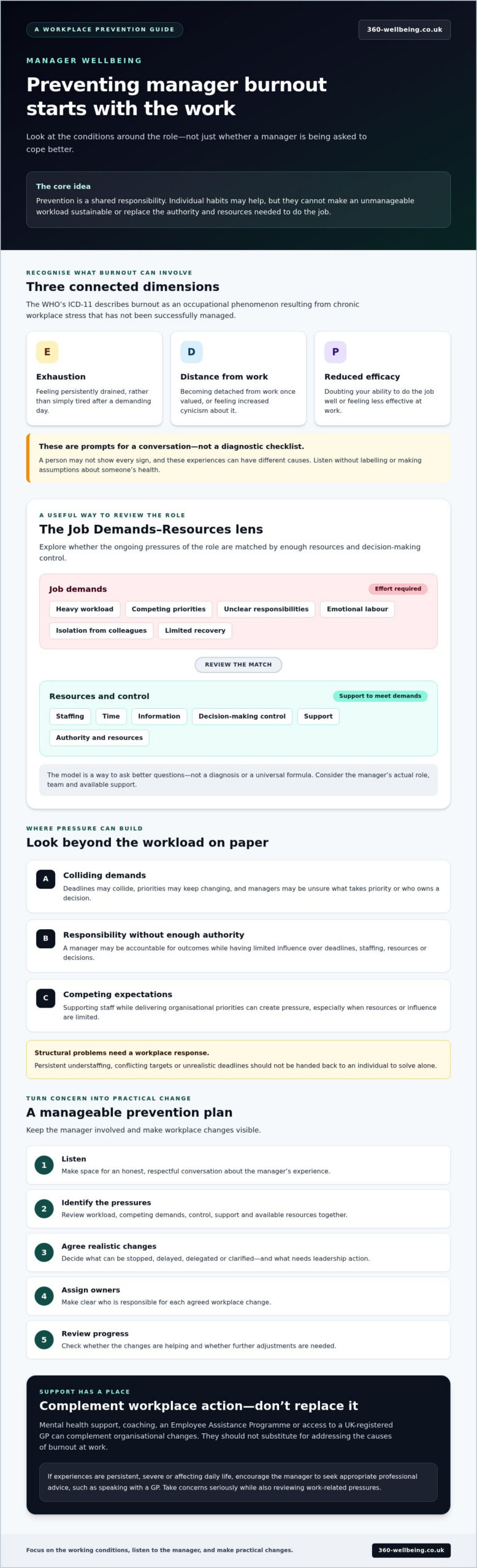
Burnout is an occupational phenomenon resulting from chronic workplace stress that hasn’t been successfully managed. In the WHO’s ICD-11, it is characterised by exhaustion, increased mental distance from work or cynicism about it, and reduced professional efficacy. It relates specifically to work and isn’t simply another name for feeling tired after a demanding day. You can read an overview of occupational burnout, including these core dimensions.
These dimensions are useful prompts for noticing changes, not a diagnostic checklist. A manager might feel persistently drained, become detached from work they previously valued, or doubt their ability to do the job well. Experiences like these can have different causes, and a person may not show every sign. Take concerns seriously without labelling someone or making assumptions about their health.
How burnout differs from everyday work stress
Stress and burnout are related, but they aren’t interchangeable. A stressful period may ease when a deadline passes or priorities change; burnout describes a pattern associated with chronic workplace stress that hasn’t been successfully managed. Duration alone can’t establish what someone is experiencing. A list of signs can’t diagnose burnout, so leave room for the manager to explain their own experience.
If symptoms are persistent, severe or affecting daily life, encourage the manager to seek appropriate professional advice, such as speaking with a GP. This is supportive, not a judgement about their capability. Organisations should also review work-related pressures rather than treating professional help as a substitute for workplace action.
Why managers can face distinct workplace pressures
Managers may be expected to support staff while delivering organisational priorities, sometimes with limited influence over deadlines, staffing or resources. They may also have to resolve competing demands from above and below, or carry responsibility for issues they don’t have the authority to change. These are possible pressures, not universal experiences; the role, team and available support all matter.
That’s why preventing manager burnout strategies should begin with understanding an individual’s working conditions, not assuming they need to cope better. Manager wellbeing matters in its own right. Managers are people whose health deserves attention, not just a route to team outcomes. Early, respectful conversations can reveal whether demands, control or support need closer review, while giving the manager a say in what would help.
What workplace conditions contribute to manager burnout?
There isn’t one workplace pattern that affects every manager in the same way. The Job Demands-Resources (JD-R) model offers a useful lens for exploring how the demands of a role interact with the resources available to meet them. In the foundational model, Demerouti, Bakker, Nachreiner and Schaufeli describe job demands as aspects of work that require sustained effort, while resources can help people manage those demands and support their work goals.
In practice, persistent pressure may be harder to manage when staffing, time, information, decision-making control or support are limited. This framework helps teams ask better questions; it isn’t a diagnosis or a universal formula. Consider the workload alongside unclear responsibilities, the emotional labour of supporting others, isolation from colleagues and opportunities to recover between demanding periods.
Workload, competing priorities and unclear expectations
A workload can look reasonable on paper yet feel unmanageable when deadlines collide or priorities keep changing. A manager, for example, may be expected to deliver a project, respond to urgent team concerns and complete administrative tasks, without guidance on what takes priority. Unclear ownership can add more work when it’s not obvious who should make a decision or where responsibility ends.
Review the work together and ask what could be stopped, delayed, delegated or clarified. Some tasks may be adjusted within the manager’s control. Persistent understaffing, conflicting targets or unrealistic deadlines may require leadership to change priorities or resources. These structural issues shouldn’t be handed back to an individual to solve alone.
Low control, weak support and limited recovery
Responsibility without enough authority, information or resources can leave a manager accountable for outcomes they have little power to influence. A supportive line manager, trusted peers and clear organisational escalation routes may help managers raise obstacles and seek guidance. Check whether these supports are available, accessible and appropriate instead of assuming they are.
Rest and boundaries matter, but personal routines can’t compensate for sustained, avoidable pressure. Review whether meetings, out-of-hours expectations or a lack of cover make it difficult to step away and recover. If wellbeing benefits are part of a wider response, you could also explore 360 Wellbeing employee support as a complement to reviewing working conditions.
Use these factors as prompts for a conversation, not proof that someone is experiencing burnout. The most useful preventing manager burnout strategies start by identifying which pressures can be changed, who has the authority to act and what support the manager needs.
Why resilience tips alone will not prevent manager burnout
Resilience skills can help managers respond to pressure, but they can’t make harmful working conditions sustainable. Advice to take breaks or set boundaries may feel out of reach if meetings fill the day, workloads keep growing or the manager lacks authority to change priorities. Burnout isn’t proof of personal weakness. Prevention needs to consider both individual support and the way work is designed.
What personal strategies can and cannot do
Boundaries, prioritisation, regular breaks and connection with trusted peers can support wellbeing. To use these practices consistently, managers may also need team cover, permission to disconnect and realistic workloads. Personal strategies can’t remove excessive demands or unclear responsibilities on their own.
| Approach | Purpose | Limit |
|---|---|---|
| Individual support, such as breaks, boundaries and peer connection | Help a manager manage day-to-day pressure and access support. | Can’t resolve excessive workload, conflicting priorities or a lack of authority by itself. |
| Organisational changes, such as clarifying roles or reviewing demands | Address workplace conditions contributing to sustained pressure. | Need clear ownership and follow-up; a policy alone doesn’t show whether working conditions have improved. |
What organisations need to change
For a UK workplace framework, the Health and Safety Executive’s Management Standards for work-related stress cover six areas: demands, control, support, relationships, role and change. They offer a structured way to review working conditions, not a diagnosis or a guarantee that any single intervention will prevent burnout.
Use the framework to look beyond individual coping. Are demands manageable? Do managers have appropriate influence over how work is done? Can they access support, resolve relationship difficulties, understand their responsibilities and get clear communication when changes happen? Answers may differ across teams, so involve managers in identifying what’s getting in the way.
Make it safe to speak honestly about barriers, including concerns that a workload or deadline is unrealistic. Agree feasible changes with the people who have authority to make them. This could mean clarifying priorities, adjusting responsibilities, improving access to cover or setting a clearer route for escalating problems.
Then check what happens after a change is introduced. Ask managers and affected staff whether priorities are clearer, support is accessible and the change has eased the pressure it was meant to address. Don’t assume a new policy has solved the problem without feedback. Effective preventing manager burnout strategies combine practical personal support with sustained attention to workplace conditions.
How to put manager burnout prevention strategies into practice
Turn concern into a shared work plan, not another task for the manager to carry alone. A clear process helps identify what needs to change, who can make it happen and how you’ll check whether it’s helping.
- Listen first. Invite the manager to describe their workload and wellbeing in a private, supportive conversation. Explain who will see any notes and how the information may be used. If you gather feedback anonymously, be clear about its limits, particularly in small teams where people may still be identifiable.
- Identify the pressures. Ask which responsibilities are essential, competing or unclear. Explore where decisions are delayed, the manager lacks authority, or support and cover are difficult to access. Review meeting load and recurring urgent requests alongside the formal workload.
- Agree realistic changes. Clarify priorities, stop or defer lower-priority work where possible, review unnecessary meetings and define who can resolve escalated issues. Involve the manager in choosing practical changes, while recognising that some decisions require leadership action.
- Assign owners. Record each action, the person responsible and any support or resources needed. Responsibilities might sit with the manager, their line manager or another leader. Include routes to peer support and appropriate professional help, checking access and eligibility where relevant.
- Set a review point. Agree when to revisit the changes, allowing for the situation and the time needed to put them in place. There’s no single review interval that suits every team. At the check-in, ask what has changed, what remains difficult and whether further action is needed.
A practical workload and support review
Keep the review focused. Together, map essential responsibilities, competing tasks and areas where role expectations or decision-making authority are unclear. Identify what cover is available when the manager is away, who they can consult and what professional support they can access. A written action log makes follow-through visible and helps ensure the plan doesn’t rely on the manager alone to chase every change.
How to check whether changes are helping
Use regular conversations to understand the manager’s experience, and consider anonymous feedback where appropriate. Review progress on agreed work-design actions, such as clarifying priorities or changing meeting load. Where appropriate and lawfully available, relevant absence or workload information may add context, but handle sensitive information carefully and follow organisational processes.
Feedback is a prompt for discussion, not a diagnosis or a performance score. If a change hasn’t helped, revisit the underlying barrier instead of assuming the manager hasn’t applied it. These preventing manager burnout strategies work best when people can speak openly and those with authority act on what they hear. For additional professional support options, explore 360 Wellbeing support.
Where professional wellbeing support fits into a prevention plan
Professional support can give a manager a place to discuss health or personal pressures, but it can’t remove the workplace conditions contributing to strain. Changes to workload, role clarity, resources and decision-making control remain part of a prevention plan. Support for the person and improvements to work design should sit alongside each other, rather than one standing in for the other.
For employers, 360 Wellbeing offers a benefits platform that includes 24/7 access to a UK-registered Virtual GP, mental health support, life coaching and an Employee Assistance Programme (EAP). These options may give managers routes to support, depending on the service’s access arrangements and eligibility. Check current details before communicating what’s available. Don’t present these services as diagnosing or treating burnout, guaranteeing an outcome, or replacing appropriate clinical, urgent or in-person care.
When a manager may benefit from extra support
If distress persists or starts affecting daily life, encourage the manager to seek advice from a GP or qualified mental health professional. Coaching may help someone reflect on challenges and work towards personal or professional goals, but it isn’t a substitute for clinical care. An EAP or other employer support route may also be an option, though provision differs between workplaces. Ask what support the person would find helpful, without pressuring them to share personal details.
Financial strain can add to someone’s overall pressure. Where relevant, point them towards suitable support available through their workplace or other appropriate channels. The guide Financial Support for Employees may also be useful reading.
How employers can make support easier to access
Explain what services are available, who is eligible, how to access them and what confidentiality arrangements apply. Don’t assume employees understand how a benefit works or what information may be shared. Make access practical for managers with limited time, while respecting their privacy and choice. Check current service details and avoid promises about availability or outcomes that haven’t been confirmed.
Support is most useful as one part of a broader response. If a manager seeks help but continues to face unmanageable demands, the working conditions still need attention. Effective preventing manager burnout strategies make both routes visible: professional support for the person and practical action on the pressures at work.
To explore how employee wellbeing support could complement workplace changes, learn about 360 Wellbeing support.
Make manager wellbeing part of how work is designed
Preventing burnout takes more than asking managers to cope with pressure. Start by noticing persistent signs of strain, then look at the conditions behind them: workload, competing priorities, decision-making control and access to support. Resilience practices can help, but they can’t replace practical changes to work.
Turn concern into shared action. Listen to managers, agree realistic adjustments, assign owners and check whether those changes are helping. These preventing manager burnout strategies recognise that managers need both supportive working conditions and accessible routes to professional help.
360 Wellbeing offers UK employers access to a UK-registered GP, with 24/7 access, alongside mental health support, life coaching and an Employee Assistance Programme. These options can complement organisational action, but don’t replace changes to workload or appropriate clinical care. Check current service access and eligibility when considering support for your team.
Explore wellbeing support for your team and take a thoughtful next step towards a healthier, more sustainable workplace. Small, shared changes can help managers feel heard and better supported.
Frequently Asked Questions
What are the early signs of manager burnout?
Possible signs include persistent exhaustion, growing distance or cynicism towards work, and reduced confidence in professional effectiveness. These experiences can have different causes and don’t confirm burnout by themselves. Notice changes over time and ask the manager what’s happening at work, without making assumptions or trying to diagnose them. If distress persists or affects daily life, encourage them to seek appropriate professional support, such as advice from a GP or qualified mental health professional.
How can managers prevent burnout when they are already overloaded?
Start by identifying which demands are urgent, which can be paused or delegated, and where priorities conflict. Raise structural barriers with someone who can influence workload, staffing or deadlines. Personal time-management techniques alone can’t resolve excessive demands or unclear responsibilities. Agree practical support and a review point with the manager and the person who can act. If their health or daily functioning is affected, encourage them to consider speaking with a GP or qualified professional.
Can resilience training prevent manager burnout?
Resilience training may help some people develop useful ways to respond to pressure, but it can’t remove excessive demands, unclear roles or insufficient control. Treat it as one possible support within a broader plan, not a complete solution. Employers should also examine working conditions, involve managers in identifying practical changes and check whether those changes are helping. Preventing manager burnout strategies should address preventable workplace pressures rather than making individuals responsible for adapting to them.
What should an employer do if a manager reports burnout?
Listen without judgement, discuss immediate workload and safety concerns, and agree practical next steps with the manager. Review priorities, decision-making control, resources and available support rather than assuming a wellbeing course will resolve the issue. Respect confidentiality and explain how any information will be handled. Signpost appropriate professional help when needed, then follow up on agreed work changes. Depending on the circumstances, consider seeking advice from HR or occupational health.
How does the HSE Management Standards framework help prevent burnout?
The HSE Management Standards give UK employers a framework for considering work-related stress factors: demands, control, support, relationships, role and change. They can help structure workplace conversations and reviews, including identifying where working conditions may need attention. The framework isn’t a diagnostic test or a guarantee against burnout. Check current HSE guidance and consider how its principles apply to your organisation and managers’ actual working conditions.
When should a manager speak to a GP about burnout symptoms?
Consider speaking to a GP if exhaustion, low mood, anxiety, sleep disruption or other difficulties persist, worsen or interfere with everyday life. A GP can discuss symptoms and appropriate next steps; the right support depends on the person’s circumstances. If there’s immediate danger or an urgent health crisis, use an appropriate urgent support service rather than waiting for a routine appointment. Managers can also ask about qualified mental health support available through their workplace, if offered.