
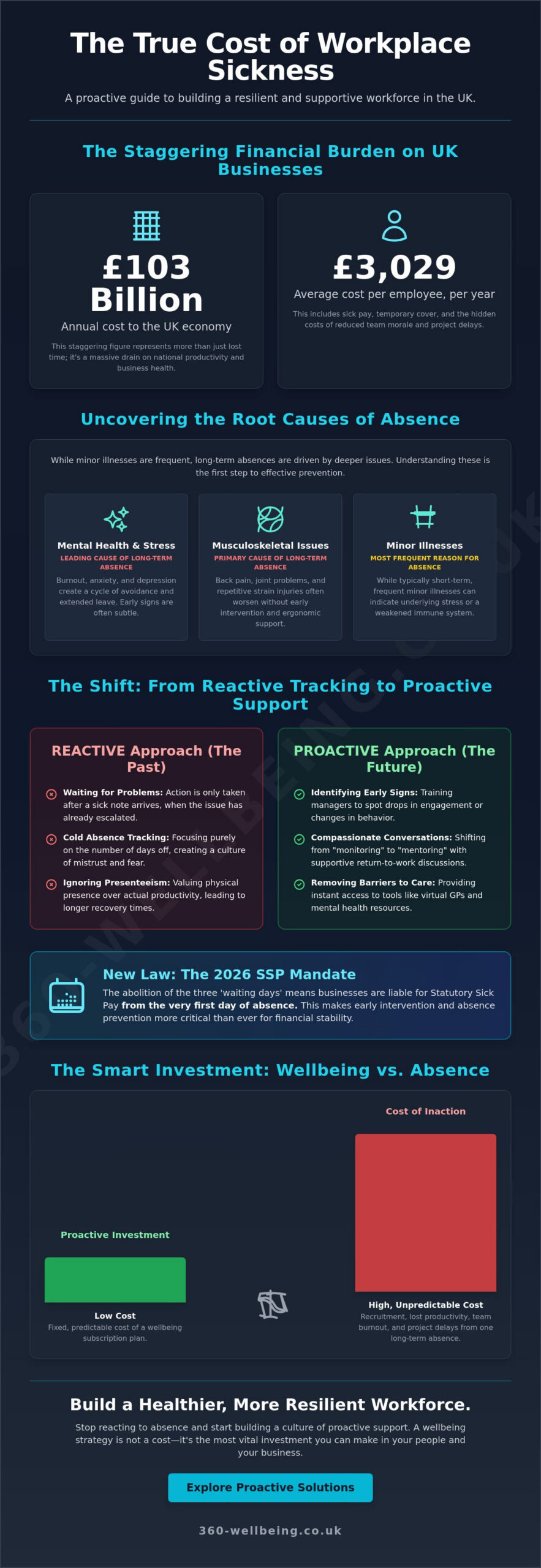
Did you know that workplace sickness now costs the UK economy an estimated £103 billion annually, averaging roughly £3,029 for every single employee? It’s a staggering figure that reflects more than just lost time. It represents the heavy burden of statutory sick pay and the quiet strain on your remaining team members who must step up to fill the gaps. When you focus on reducing sickness absence in the workplace, you aren’t just protecting your bottom line. You’re building a culture where people feel supported before they reach a breaking point.
We understand the delicate balance you’re trying to strike between operational needs and genuine compassion. It’s challenging to manage rising costs, especially with the 2026 abolition of the three waiting days for SSP. This guide will help you move away from reactive tracking and toward a proactive wellbeing strategy that identifies health risks early. You’ll discover how to provide a clear framework for staff support, from virtual healthcare access to mental health resources, ensuring your business stays stable and your people remain resilient.
Key Takeaways
- Identify the underlying triggers of absenteeism, specifically mental health and musculoskeletal concerns, to provide support before a crisis occurs.
- Shift your approach from monitoring to mentoring by training managers to lead compassionate, non-judgmental return-to-work conversations.
- Discover how immediate access to digital health tools, such as virtual GPs, plays a vital role in reducing sickness absence in the workplace by removing barriers to care.
- Evaluate the long-term stability of your business by comparing the cost of proactive wellbeing subscriptions against the high price of a single long-term absence.
The Financial and Operational Impact of Workplace Sickness in 2026
The UK landscape for employee health has shifted significantly following the Employment Rights Act 2025. As of April 2026, the abolition of the three waiting days for Statutory Sick Pay (SSP) means you’re now responsible for payments from the very first qualifying day of illness. With the current SSP rate set at £123.25 per week and the removal of the Lower Earnings Limit, more of your part-time and lower-paid staff are eligible for support. This makes reducing sickness absence in the workplace a vital priority for maintaining your company’s financial health and operational steady state.
While the direct payroll costs are easy to track, the “contagious” nature of burnout is harder to quantify. When a team member goes off sick, the remaining staff often shoulder the extra workload. This doesn’t just lower morale; it creates a ripple effect where healthy employees become overstretched, leading to further absences down the line. We also see the damaging impact of presenteeism, where staff struggle through the day while unwell. This often results in longer recovery times and reduced productivity, proving that having a person physically at their desk isn’t the same as having them truly present and engaged.
Calculating the True Cost of Absenteeism
The “absence tax” on UK small businesses is the total sum of direct sick pay, the cost of temporary cover, and the invisible loss of momentum on critical projects. Gaining a deeper understanding of absenteeism helps you see that a single lost week can derail a client deadline or delay a product launch. When you add recruitment costs for replacing staff who leave due to unmanaged stress, the financial burden becomes clear. You aren’t just paying for a day of rest; you’re paying for the disruption of your entire business rhythm.
The Shift from Reactive to Proactive Management
Waiting for a formal doctor’s note is a reactive strategy that often comes too late. By the time a sick note arrives, the employee’s health issue has usually reached a peak, making the path back to work longer and more difficult. Modern 2026 workplace expectations require a partnership based on foresight and empathy. Proactive management involves identifying subtle patterns, such as a sudden drop in engagement or frequent short-term absences, before they escalate into long-term health challenges.
This health-first approach isn’t about being intrusive; it’s about removing the barriers to care. By providing pathways to support before a crisis hits, you foster a culture of durability and trust. It’s a move away from the cold, traditional methods of absence tracking toward a more compassionate vision of workplace harmony where every individual’s wellbeing is seen as a professional necessity.
Identifying and Addressing the Root Causes of Absenteeism
To make meaningful progress in reducing sickness absence in the workplace, we must look beyond the symptoms and understand the underlying drivers. In 2025, while minor illnesses remained the most frequent reason for time off, mental health conditions and musculoskeletal problems continued to be the primary causes of long-term absence in the UK. These aren’t just clinical categories; they’re human experiences that often overlap. A physical back injury can lead to the isolation of depression, just as chronic stress can manifest as physical pain or a weakened immune system.
Understanding these drivers requires a panoramic viewpoint. It isn’t enough to simply record a “sick day” in a ledger. We need to ask why the absence happened in the first place. Often, the answer lies in a combination of physical strain, psychological pressure, and external life stressors that bleed into the working day. By identifying these root causes early, you can move from a culture of monitoring to one of genuine support and durability.
Mental Health and Stress in the Workplace
Mental health is no longer a peripheral concern for employers. It’s the leading cause of extended leave. Spotting the early signs of stress in your team requires an attentive, human touch. You might notice a normally collaborative employee becoming withdrawn, or a high performer suddenly struggling with routine decisions. These are often the first indicators that a person’s capacity is being tested. When staff feel they can’t speak up about their pressure levels, they may resort to avoidance based sickness absence as a coping mechanism for social anxiety or burnout.
Creating a psychologically safe environment is a professional necessity. Following Acas guidance on reducing absence, it’s clear that fostering open dialogue is essential. If your team feels that admitting to a mental health struggle is a professional risk, they’ll wait until a total breakdown occurs before seeking help. By then, the road to recovery is much longer and more expensive for your business.
The Impact of Financial Wellbeing on Physical Health
We often overlook the “secret sickness” that keeps people away from work: financial anxiety and legal worries. There is a direct, scientific link between debt related stress and physical health. Chronic worry triggers a persistent cortisol response, which leads to insomnia, digestive issues, and immune system suppression. An employee who seems to catch every seasonal cold may actually be suffering from the physiological toll of financial instability.
This is where holistic care becomes a vital preventative measure. Providing financial support, such as debt advice and legal guidance, directly supports an employee’s physical ability to show up and perform. When you address the root cause of a person’s sleepless nights, you’re investing in their long term health and productivity. Integrating these services into your Employee Assistance Programme ensures that your support strategy is as complete and balanced as the people it’s designed to protect.
Building a Supportive Culture through Manager Training and Policy
A sickness policy is often the first thing an employee looks at when they feel unwell. If that document focuses solely on triggers and disciplinary stages, it sends a clear message that illness is a failure. To succeed in reducing sickness absence in the workplace, your policy must breathe empathy. It should be a roadmap for support, detailing exactly how the company will help an individual stay in work or return safely when they’re ready. This shift in focus builds a sense of security and trust, which is the foundation of a resilient team.
Consistency is equally important. Every staff member needs to know they’ll be treated with the same level of care, regardless of their role or the nature of their illness. When health isn’t treated as a taboo subject, transparency becomes the norm. People start to feel comfortable discussing their needs before a minor issue turns into a week of leave. This open culture doesn’t just happen; it’s built through steady, methodical leadership that views wellbeing as an essential human entitlement rather than a luxury.
The Role of the Line Manager as a First Responder
Line managers are on the front line of your company’s health strategy. They’re often the first to notice when a team member’s engagement dips or when they seem physically strained. We need to equip these managers with the language to handle sensitive health topics with confidence and care. During weekly 1-to-1 meetings, they can look for “absence triggers” like increased irritability or a sudden struggle with deadlines.
The goal is to move from a “policing” mindset to one of active partnership. Instead of asking “Why were you off?” which puts people on the defensive, managers can ask “How can we support your return?”. This simple change in dialogue makes the employee feel seen and supported. It turns a potentially stressful conversation into a professional consultation where the focus is on identifying solutions together.
Return-to-Work Meetings: A Tool for Prevention
Return-to-work meetings are your best opportunity to prevent a relapse. These shouldn’t be formal or intimidating; they’re a chance to check in and make adjustments. Use these dialogues to identify practical changes, such as temporary flexible hours or ergonomic equipment. Perhaps a staff member needs a phased return to regain their confidence after a period of mental health leave.
By documenting these agreements, you ensure long-term support durability. It creates a clear, structured path forward that both the manager and the employee can rely on. This isn’t about tracking days; it’s about identifying the underlying factors that caused the absence and removing them. When you treat the return-to-work process as a supportive intervention, you’re looking out for the long-term interests of the individual and the business alike.
Leveraging Digital Health Interventions to Prevent Absence
In 2026, the speed of care is the most significant differentiator in reducing sickness absence in the workplace. Traditional absence management often relies on paper-based policies that only kick in once an employee is already at home. For small and medium-sized enterprises (SMEs), the delay between a staff member feeling unwell and receiving medical advice can be the difference between a quick recovery and a fortnight of lost productivity. Digital health interventions bridge this gap, providing immediate pathways to recovery that don’t depend on local GP waiting lists.
This approach moves your strategy from reactive tracking to proactive prevention. By integrating clinical expertise with accessible technology, you create a safety net that catches health issues before they escalate. It’s about giving your team the tools they need to manage their health with foresight and durability. When support is immediate, the path back to full vitality is much shorter.
The 24/7 Virtual GP: Removing Barriers to Healthcare
Waiting days or even weeks for a standard appointment is a major driver of extended absence. When employees can access a 24/7 Virtual GP from their phone, they receive clinical guidance at the first sign of symptoms. This convenience factor is transformative for modern teams. Consultations fit around the working day, allowing staff to speak with a professional during a break rather than taking time off to travel to a clinic. By providing this immediate access, you effectively reduce the need for “half-day” absences that frequently occur just to secure a prescription or a basic diagnosis. It’s a methodical way to ensure your team stays healthy and present without the stress of navigating traditional healthcare hurdles.
Mental Health Therapy and Life Coaching
Mental wellbeing requires the same level of rapid response as physical health. Early access to therapy is critical for managing workplace stress, preventing minor anxieties from escalating into a total inability to work. Life coaching also plays a vital role here, acting as a proactive tool to build employee resilience and durability. These digital-first channels offer a level of confidentiality that reduces the stigma often associated with seeking help. When support is just a few clicks away, employees are more likely to engage with it early, often resolving issues before they require a formal leave of absence.
Integrated Support and Data Trends
A modern Employee Assistance Programme (EAP) should be a panoramic resource. It should offer 24/7 support for the mental, financial, and legal hurdles that we previously identified as root causes of absence. By using digital platforms, you can also track anonymised health trends within your organisation. This foresight allows you to spot if a specific department is struggling with burnout or if musculoskeletal issues are rising, enabling you to intervene with targeted support. Providing these tools isn’t just a perk; it’s a strategic investment in your team’s long-term vitality.
Integrating Holistic Wellbeing into Your Absence Management Strategy
Fragmented perks often fail because they treat health as a series of disconnected problems. A discount here or a phone number there doesn’t create a culture of vitality. To succeed in reducing sickness absence in the workplace, you need a unified ecosystem that addresses the whole person. When physical health, mental resilience, and financial stability are managed through a single, cohesive platform, employees feel a sense of completeness and balance. This integrated approach ensures that no part of their wellbeing is left to chance, making it much easier for them to stay healthy, engaged, and productive.
The financial argument for this shift is clear. With workplace sickness costing UK employers an estimated £3,029 per employee annually, the return on investment for preventative care is substantial. Comparing a monthly subscription for a comprehensive wellbeing platform against the cost of just one long term absence reveals the true value of foresight. By investing in durability now, you’re protecting your business from the high costs of temporary cover and the administrative drain of managing chronic absenteeism. It’s a methodical way to move from the uncertainty of reactive pay-outs to the stability of a healthy workforce.
Creating an All-Encompassing Care Ecosystem
An effective strategy merges every aspect of an individual’s life into a single narrative of wellness. We’ve seen how financial anxiety can manifest as physical illness; therefore, your support must include debt advice alongside physiotherapy and mental health support. This panoramic viewpoint is what makes a strategy durable. By including 360 Rewards, you also boost daily engagement. These incentives do more than just provide discounts; they improve overall life satisfaction and can significantly reduce “duvet day” absences by making staff feel valued and seen. When wellbeing is treated as a professional necessity, it stops being a luxury and becomes a cornerstone of your company culture.
Next Steps for UK Employers
The path to a more resilient workplace starts with an honest audit of your current situation. Look at your absence rates and try to identify the primary “why” behind the numbers. Are people struggling with burnout, or is there a trend of musculoskeletal issues? Once you understand the underlying factors, you can introduce a wellbeing platform that directly addresses those needs. To get maximum buy-in from your team, present the new tools as an essential human entitlement and a partnership in their long-term success. This isn’t just another policy; it’s a commitment to their vitality.
Building a healthy, stable business requires the right partner to guide you through the complexities of modern occupational health. Explore how 360 Wellbeing can reduce your sickness absence levels today and help you create a workplace where everyone has the support they need to thrive.
Transforming Workplace Health into Strategic Success
Building a resilient business means looking beyond the immediate challenges of statutory sick pay and administrative burden. By embracing a proactive care ecosystem, you move away from the high costs of reactive absence management toward a future of durability and balance. Removing barriers to care through 24/7 UK-registered Virtual GP access and comprehensive mental health support prevents minor issues from becoming long-term absences. Wellness is an entitlement, not a luxury.
True success in reducing sickness absence in the workplace comes from recognizing that health is a professional necessity. When you integrate financial and legal helplines alongside life coaching, you provide the panoramic support your team deserves. This holistic approach doesn’t just lower absenteeism; it fosters a culture of trust and vitality that protects your bottom line and your people.
We’re ready to partner with you in this journey toward workplace harmony. Book a demo to see how our wellbeing platform reduces absence and discover a structured path toward a healthier, more stable future. You have the power to create a workplace where everyone feels empowered to thrive.
Frequently Asked Questions
What is the most effective way to reduce sickness absence in the workplace?
Shifting from reactive tracking to proactive prevention is the most effective approach for any modern business. This involves identifying health risks early and providing your team with immediate access to professional medical and mental health support. By focusing on reducing sickness absence in the workplace through early intervention, you address the root causes of illness before they escalate into long-term leave.
Can an employer ask for proof of illness for short-term absence?
In the UK, employees are entitled to “self-certify” for the first seven days of any sickness period. Employers generally cannot require a formal doctor’s fit note for absences shorter than this duration. You can, however, ask staff to complete a simple self-certification form upon their return to work to document the nature of their illness for your internal records.
How does a Virtual GP service help reduce employee absenteeism?
A Virtual GP service reduces absenteeism by providing 24/7 access to medical advice without the typical wait times of local clinics. This immediate care allows employees to receive diagnoses or prescriptions during their breaks or outside of standard working hours. It removes the common need for staff to take a full or half-day off just to secure a routine appointment.
What are the most common causes of long-term sickness absence in the UK?
Mental health conditions and musculoskeletal problems remain the leading drivers of long-term absence across the UK workforce. While minor illnesses like colds are more frequent, these chronic issues often require several weeks of recovery. Data from 2025 shows that sickness rates are also consistently higher among women, older workers, and those in part-time roles, suggesting a need for tailored support.
How can I support an employee returning to work after mental health leave?
Supporting an employee returning from mental health leave requires a structured phased return plan and open, compassionate communication. You might offer adjusted hours, lighter duties, or a temporary change in responsibilities to help them rebuild their professional confidence. Ensuring they have ongoing access to life coaching or counseling provides a vital safety net during their transition back to the team.
Is it legal to offer incentives for 100% attendance?
Offering incentives for 100% attendance is generally legal, but it carries a high risk of being viewed as discriminatory. Such policies can unfairly penalize employees with disabilities, chronic health conditions, or those who are pregnant. It’s often more effective to reward engagement with your wellbeing platform rather than focusing purely on attendance records, which can inadvertently encourage presenteeism.
How much does sickness absence cost UK businesses annually?
Workplace sickness is estimated to cost the UK economy £103 billion annually as of 2026. For the average employer, this equates to roughly £3,029 per employee each year in direct and indirect costs. These figures reflect the urgent financial necessity of reducing sickness absence in the workplace to protect your company’s long-term stability and operational efficiency.
What role does financial stress play in workplace sickness?
Financial stress acts as a hidden driver of physical illness by triggering persistent cortisol responses that lead to insomnia and immune system suppression. When employees are burdened by debt or legal anxieties, they become more susceptible to minor infections and burnout. Providing integrated financial guidance and debt advice helps resolve these underlying worries, directly improving the physical resilience of your staff.