Support should be steady, voluntary and separate from conciliation itself. When a workplace dispute is ongoing, it’s understandable to worry that a caring conversation or wellbeing record could influence the process. Supporting employee wellbeing during acas conciliation doesn’t mean discussing the merits of the dispute or asking an employee to share more than they choose.
Acas acts as a neutral facilitator, helping both parties explore whether they can reach an agreement. Employers can respect that independence while still offering appropriate support. The essentials are to make help available without pressure, protect the employee’s privacy and keep managers’ and HR’s roles clear.
This guide covers practical ways to check in, signpost optional mental health or Employee Assistance Programme support, and keep wellbeing conversations separate from conciliation discussions. It also explains how to handle records thoughtfully and maintain support before, during and after the process, so employees can access care without feeling that it depends on the outcome of their dispute.
Key Takeaways
- Understand how workplace uncertainty may affect wellbeing, and check current ACAS guidance when confirming the conciliation process.
- Supporting employee wellbeing during acas conciliation means offering respectful check-ins and practical support without pressing for details or a particular outcome.
- Keep wellbeing conversations separate from investigations, settlement discussions and communications about conciliation.
- Agree an adaptable support plan with the employee, then follow up while respecting their choice to decline support.
- Make support part of a consistent workplace approach, with clear signposting to suitable wellbeing resources where available.
Supporting employee wellbeing during ACAS conciliation starts with understanding the strain
A workplace dispute can affect more than the immediate issue. Uncertainty about what happens next, difficult conversations and changes to day-to-day working relationships may all weigh on an employee. Each person responds differently: one may welcome a brief check-in, while another may prefer space and practical information.
Supportive employer practice during ACAS conciliation means offering voluntary, respectful wellbeing support while keeping it separate from the conciliation and its outcome. A manager can ask what would help without asking the employee to explain their case, share personal details or agree to a particular resolution. Wellbeing support doesn’t decide the dispute and shouldn’t be used to influence discussions.
What is ACAS Early Conciliation?
Early Conciliation gives an employee and employer the opportunity to explore whether they can settle an employment dispute before an employment tribunal claim. Acas acts as a neutral facilitator, not as a representative for either party. Learn more about Acas (Advisory, Conciliation and Arbitration Service) and its role in UK workplace relations.
For cases notified to Acas on or after 1 December 2025, the maximum Early Conciliation period is 12 weeks. Taking part in conciliation discussions is voluntary, and an agreement isn’t guaranteed. An Acas Early Conciliation certificate is generally a procedural step before most tribunal claims can be made. Eligibility and the steps involved depend on the circumstances, so check current Acas guidance rather than relying on assumptions about a particular case.
Why a workplace dispute can affect wellbeing
A dispute may leave someone unsure how to work with colleagues, what to expect from meetings or how the situation might develop. Even routine communication can feel more difficult while the issue remains unresolved. That doesn’t mean every employee will feel distressed or want to discuss their wellbeing.
Start with a calm, non-judgemental question, such as, “Would a check-in or any practical support be useful right now?” Listen without pressing for details. If the employee doesn’t want to discuss how they’re feeling, respect that choice and let them know they can raise support needs later.
Keep the boundaries clear. A wellbeing conversation is not an investigation, a settlement discussion or a channel for influencing what either party says to Acas. For employers, supporting employee wellbeing during acas conciliation means making appropriate support available while allowing the process to remain independent.
What practical wellbeing support can employers offer during ACAS conciliation?
Useful support is often straightforward: make time to listen, agree how to stay in touch and help the employee find relevant resources. The employee should remain in control of whether they discuss their wellbeing. Keep the conversation focused on what would help at work, not on what they have said or might say during conciliation.
How should a manager check in with an employee?
Agree a suitable method and frequency together. A brief scheduled conversation may feel easier than repeated, unexpected approaches. Ask open questions such as, “Is there anything practical that would make work more manageable?” or “Would you prefer to check in by email or talk?” Don’t ask for conciliation details or assume the employee wants to discuss how they feel.
Before making notes or sharing information, explain what needs to be recorded, who may see it and why, in line with your organisation’s policies. Be clear about any limits to privacy rather than promising absolute confidentiality. Record only relevant information and keep wellbeing support records distinct from records about the dispute.
Which wellbeing resources may be helpful?
Depending on the employee’s needs, signpost them to the workplace’s Employee Assistance Programme (EAP), mental health support or occupational health process. They may also choose to speak with their GP. Explain how to access each option, check eligibility and service scope, and encourage the employee to review the provider’s confidentiality terms. These are optional routes to support, not part of ACAS conciliation or a guarantee of a particular outcome.
If the employee says financial worries are adding pressure, you could point them to this guide on financial support for employees. Where benefits include an EAP or mental health support, confirm how those services work before describing them. The 360 Wellbeing platform also includes access to a UK-registered GP, subject to its access arrangements.
Practical support might include:
- Agreeing a regular check-in at the employee’s preferred time and in their preferred format.
- Discussing whether a different meeting arrangement or communication channel would help, then checking what can be approved.
- Explaining which support is available and how to access it.
- Following up on agreed actions without asking for conciliation updates.
For current procedural information, refer to the Acas early conciliation process. Respectful manager support can sit alongside wider employee benefits. Employers exploring ongoing options can review employee wellbeing support options.
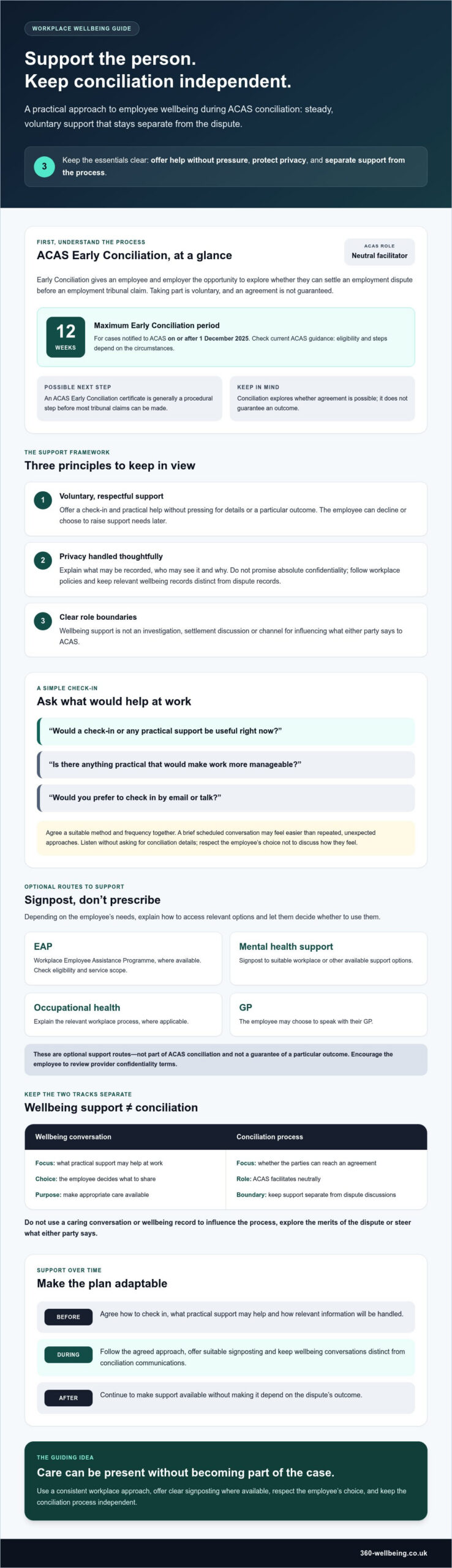
How to support wellbeing without influencing ACAS conciliation
Make the purpose of each conversation clear. A manager can respond to an employee’s wellbeing needs without asking them to explain their position, report what was discussed with Acas or consider a particular settlement. Support should remain available whether the employee continues with conciliation, reaches an agreement or takes another step.
Clear boundaries help protect trust and impartiality. For example, a manager might say, “I’m here to discuss what support you need at work, not to ask about your conciliation discussions.” If the employee raises the dispute, listen without probing, then direct case-specific questions to the appropriate HR contact or independent adviser.
What should managers avoid saying or doing?
Don’t ask an employee to reveal confidential communications, justify their position or share what they plan to tell Acas. Avoid language that could make support seem conditional, such as linking access to an EAP or another resource to withdrawing a claim or accepting an offer. Don’t promise complete secrecy. Explain that information may need to be handled or shared in line with organisational policies and obligations.
Managers should also avoid assurances about the case outcome or legal conclusions. A supportive response can be simple: “You don’t need to discuss the details with me. Is there a work-related support need I can help raise through the right channel?”
How can HR protect privacy and fair treatment?
Agree a consistent process for handling wellbeing information. Tell the employee what will be noted, why it is relevant and who may access it, using the organisation’s policies to explain any limits. Keep notes factual and proportionate. Where policy permits, store wellbeing records separately from dispute documentation and limit access to people who need the information for an appropriate purpose.
Clear records can help HR show what support was offered without turning a wellbeing conversation into evidence about the underlying dispute. If information needs to be shared, explain the reason to the employee where appropriate and follow internal procedures. Don’t assume every detail disclosed in a support conversation belongs in the case file.
For broader workplace mental health principles, consult the Acas framework for positive mental health. It can help managers and HR keep wellbeing on the agenda while maintaining appropriate boundaries. Supporting employee wellbeing during acas conciliation doesn’t require managers to interpret the case. Check current Acas guidance and seek qualified HR or legal advice when a situation raises case-specific questions.
Create a practical support plan before, during, and after conciliation
A simple plan can make support more predictable without turning wellbeing check-ins into updates about the dispute. Agree it with the employee, keep it flexible and revisit it if their needs change. They can decline an offer or ask for a different kind of support; that choice shouldn’t affect how they’re treated at work.
Keep practical work arrangements distinct from decisions about the case. For example, discuss a suitable way to share routine work updates, while making clear that any change to duties, hours or meetings depends on the organisation’s normal approval process. Don’t present an adjustment as a condition of taking part in conciliation or as a signal about its likely outcome.
Before and during conciliation: agree support and communication
Start by asking what would help the employee feel supported at work. Agree who their named contact will be, how they would prefer to check in and what practical arrangements can be considered. Set a review point that suits both of you, then revisit the plan without asking for reports on conciliation discussions.
- Before conciliation: Explain available support options and agree how the employee can raise a new need.
- During conciliation: Follow the agreed contact approach and check whether it still works for them.
- If needs change: Discuss possible work arrangements through the appropriate workplace process, without promising approval before it is confirmed.
Write down only the agreed actions and relevant follow-up, in line with your organisation’s information-handling policies. This gives the employee and their contact a shared reference point without requiring details about the case.
After conciliation: continue support without assuming the outcome
Once conciliation ends, don’t assume the employee wants to discuss what happened or how it concluded. A gentle check-in can focus on current needs: “Would you like to review the support we agreed, or keep things as they are?” Let them decide what they wish to share.
Handle formal case decisions through the appropriate process, separately from conversations about ongoing work and wellbeing. If concerns continue, revisit relevant support options and explain how to access them. Support should continue regardless of the conciliation result.
For employers looking to make wellbeing resources part of a consistent support plan, explore employee wellbeing support options and check which services and access arrangements are suitable for your organisation.
Make employee wellbeing support part of a wider, consistent approach
Wellbeing needs don’t necessarily end when conciliation does. Employees may need support at other points in their working lives, so make clear that help is available beyond a single dispute. A consistent approach also reduces the risk that someone feels singled out or that support is offered only because a formal process is under way.
Build a repeatable and compassionate support approach
Give managers practical guidance on how to start a supportive conversation, where to refer questions they can’t answer and how to respect privacy. A clear escalation route helps managers respond calmly when an employee needs additional support, while leaving case-specific matters with the appropriate HR contact or adviser.
Make support options easy to find. Explain what each service is, how employees can access it and any eligibility or service conditions to check. Review whether staff can locate and use the options, and consider feedback or access barriers without collecting unnecessary personal details or identifying individual employees.
Manager confidence matters, too. Short guidance and consistent signposting can help ensure employees receive the same respectful response whichever manager they approach. This makes supporting employee wellbeing during acas conciliation part of a broader culture of care, rather than a one-off response to a dispute.
Where an employee wellbeing platform may fit
An employee benefits platform can complement thoughtful manager support by giving employees additional routes to explore. 360 Wellbeing offers access to a UK-registered GP, mental health support and an Employee Assistance Programme (EAP). These are potential wellbeing resources, not part of ACAS conciliation, and they don’t guarantee a particular outcome.
Before signposting an employee, check the relevant service’s access arrangements, scope and confidentiality terms, then explain these accurately. Don’t assume every service is available to every employee or promise privacy beyond the terms that apply. Keep the employee’s choice central: share information clearly and let them decide whether to use the resource.
A sustainable approach brings together capable managers, clear routes to support and services employees can understand. That helps employers offer a steadier experience during disputes and throughout working life, while keeping wellbeing support distinct from decisions about any case. To review the available options, explore 360 Wellbeing’s employee support.
Keep compassionate support moving forward
Supporting employee wellbeing during acas conciliation means offering steady, voluntary care while keeping wellbeing conversations separate from the dispute and its outcome. A clear check-in plan, thoughtful handling of personal information and practical signposting can help employees feel supported without pressure to disclose or decide anything before they’re ready.
That care shouldn’t end when conciliation does. Make support part of your wider workplace approach, and ensure managers know how to listen, explain available options and direct case-specific questions to the right adviser.
Where suitable, employee benefits can offer additional routes to support. 360 Wellbeing provides 24/7 access to a UK-registered GP, mental health support and an Employee Assistance Programme. Check access arrangements and service terms before signposting employees, so they can make an informed choice.
Explore supportive wellbeing options for your team and consider how they could complement respectful manager support. Small, consistent actions can help create a workplace where people feel valued during difficult periods and beyond.
Frequently Asked Questions
Can an employer offer wellbeing support during ACAS conciliation?
Yes. An employer can offer respectful, voluntary wellbeing support while conciliation is ongoing. This may include a check-in, a conversation about practical needs at work or information about available support services. Keep the offer separate from the dispute, and don’t make it conditional on the employee sharing information or accepting a particular resolution. Supporting employee wellbeing during acas conciliation means listening without pressure and letting the employee decide what support, if any, they want.
Should a manager ask an employee about their ACAS conciliation?
A manager can ask whether the employee needs practical support at work, but shouldn’t press them for conciliation updates. Keep questions open and focused on wellbeing, such as, “Would a different check-in arrangement help?” If the employee volunteers information, listen without probing or offering a view on the case. Explain that they don’t need to share conciliation discussions to access workplace support.
What should an employer avoid doing during ACAS conciliation?
Avoid asking the employee to disclose communications with Acas, justify their position or report on settlement discussions. Don’t link support, work opportunities or treatment to withdrawing a claim, accepting an offer or reaching a particular outcome. Managers should also avoid giving case-specific legal conclusions or promising absolute confidentiality. Refer questions about the case or the organisation’s process to the appropriate HR contact or qualified adviser.
Can an employee use an EAP during ACAS conciliation?
Yes, an employee may be able to use an Employee Assistance Programme (EAP) during conciliation if it’s available through their workplace and they meet its access conditions. An EAP is a potential support route, not part of the ACAS process. Before signposting it, explain how to check eligibility, what the service covers and which confidentiality terms apply. Don’t promise a particular service or outcome without verifying the details.
Does supporting an employee affect ACAS conciliation?
Offering impartial wellbeing support doesn’t decide the conciliation outcome. The important safeguard is to keep support separate from case investigation, settlement discussions and communications with Acas. Don’t use check-ins to influence what the employee says or the decision they make. If you’re unsure whether a proposed action could affect the process or appear pressuring, pause and seek appropriate HR or legal advice before proceeding.
How can an employer protect an employee’s privacy during conciliation?
Explain what information you may record, why it’s needed and who may access it, following your organisation’s policies. Keep notes factual and limited to relevant support actions, and share information only through appropriate channels. Don’t promise secrecy beyond the organisation’s verified policies and obligations. Before making or sharing sensitive records, check the applicable internal process and explain any limits clearly to the employee.
What support can an employer offer after ACAS conciliation ends?
Continue to ask about workplace needs without assuming how conciliation ended or expecting the employee to discuss it. Review any practical arrangements, offer access to relevant workplace support and signpost suitable resources if concerns continue. Handle formal case decisions separately through the appropriate process. A considerate follow-up can help the employee understand that support remains available, whatever the conciliation outcome, while leaving them in control of what they share.