
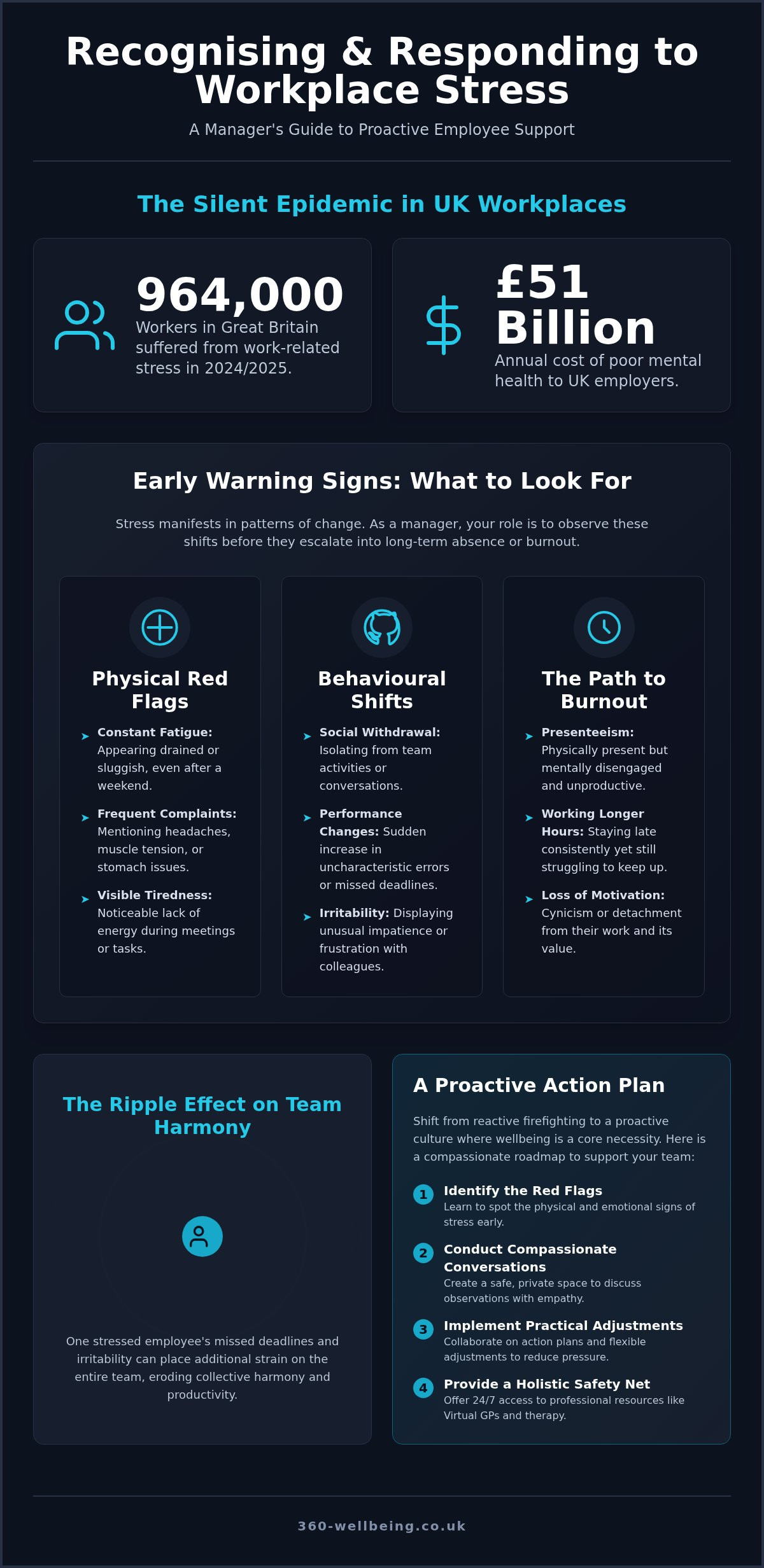
Did you know that 964,000 workers in Great Britain suffered from work-related stress during the 2024/2025 period, more than double the rate seen two decades ago? Poor mental health now costs UK employers approximately £51 billion annually, proving that the traditional “stiff upper lip” approach is both outdated and expensive. You likely feel the weight of this responsibility, perhaps worrying about rising absenteeism or the legal complexities of HSE enforcement. It’s difficult to know exactly how to support employees with stress when you aren’t a trained medical professional yourself.
This guide provides a clear, compassionate roadmap to help you bridge that gap. You’ll learn how to identify the subtle, early signs of burnout and build a holistic support system that protects both your people and your business’s future. We’ll explore the HSE Management Standards, documented risk assessments, and how providing 24/7 access to professional resources like UK-registered Virtual GPs and mental health therapy can transform your workplace culture. By the end, you’ll have a proactive action plan to foster a happier, more productive team where wellbeing is treated as an essential human entitlement.
Key Takeaways
- Learn to identify the physical and emotional red flags of workplace stress, such as chronic fatigue and digestive issues, before they lead to long-term burnout.
- Master the art of conducting compassionate, private conversations that allow you to address performance changes with empathy and professional care.
- Discover practical strategies for how to support employees with stress through collaborative action plans and flexible workplace adjustments tailored to individual needs.
- Understand why traditional signposting is no longer enough and how providing a holistic safety net, including 24/7 access to UK-registered GPs, provides immediate reassurance.
- Shift your organizational strategy from reactive firefighting to a proactive culture where wellbeing is integrated as a core professional necessity and human entitlement.
Recognising the Physical and Emotional Signs of Stress
Work-related stress isn’t just a fleeting mood; it’s the specific adverse reaction people have to excessive pressures or demands placed on them. As a manager, you aren’t expected to be a clinical psychologist, but adopting the perspective of an expert caregiver allows you to spot shifts before they escalate into long-term absence. It’s about looking for patterns of change rather than judging an isolated bad day. When you understand how to support employees with stress, your first priority is developing the foresight to see these patterns early.
Stress often manifests physically long before an employee feels comfortable discussing their mental health. Recognising these physical indicators is a crucial part of knowing how to support employees with stress, as it allows for a partnership-based approach to wellbeing before the situation becomes unmanageable. Watch for the following signs in your team members:
- Constant fatigue: Appearing drained or sluggish even after a weekend break.
- Physical complaints: Mentioning frequent headaches, muscle tension, or digestive issues during casual conversation.
- Behavioural shifts: Withdrawal from team activities, a sudden increase in uncharacteristic errors, or unusual irritability.
A once-collaborative colleague who suddenly isolates themselves is often signaling a need for help. These aren’t just minor ailments; they’re often red flags of a body under sustained pressure that lacks the necessary balance to recover.
The Subtle Indicators of Employee Burnout
Burnout is the final stage of unmanaged chronic workplace stress. Before reaching that point, employees often exhibit “presenteeism,” where they’re physically at their desk but mentally disengaged from meetings and tasks. You might see changes in working patterns, such as an employee staying late every night yet still missing deadlines. These shifts suggest that the individual’s coping mechanisms are failing, making it essential to intervene with a supportive, non-judgmental approach.
Understanding the Impact on Team Harmony
Identifying Psychosocial hazards within your department is a professional necessity. One stressed employee often creates a ripple effect, as their missed deadlines or irritability places additional strain on colleagues. It’s vital to distinguish between healthy pressure, which can be motivating and short-lived, and harmful stress that erodes vitality. Proactive management requires the foresight to identify these risks before they result in formal grievances or long-term sick leave. By addressing these factors early, you protect the collective harmony and durability of your entire team.
Conducting Compassionate Conversations: A Manager’s Guide
Initiating a dialogue about mental wellbeing can feel daunting, yet it’s the most effective way to demonstrate your commitment to your team’s health. When considering how to support employees with stress, your preparation is as important as the words you choose. Select a neutral, private environment where the individual feels safe and unobserved. Avoid the clinical atmosphere of a formal boardroom; instead, opt for a quiet space that encourages an open, equal exchange. This setting signals that the meeting is a partnership focused on their vitality rather than a disciplinary review.
Start the conversation with warmth and specific observations. Phrases like “I’ve noticed you haven’t been yourself lately and I wanted to check in” move away from performance criticism and toward genuine care. Your role is to provide a panoramic view of the support available while maintaining a professional boundary. You’re a supportive manager, not a therapist, and acknowledging this distinction protects both you and your employee. Practice active listening by allowing space for them to share without interruption or immediate judgment.
The Art of the Stress Support Meeting
Use open-ended questions to uncover the root cause of the pressure. Is it a temporary workload spike, a lack of clarity in their role, or perhaps a challenge in their personal life? Uncovering these factors is the first step toward agreeing reasonable adjustments that can actually make a difference to their daily experience. While you should offer a high degree of confidentiality, be clear about the limits of HR reporting. Explain that your goal is to create a psychologically safe space where they can be honest without fear of negative repercussions for their career durability.
Overcoming Common Communication Barriers
You may encounter resistance if an employee denies they are stressed despite clear signs. In these moments, remain calm and empathetic. If emotions run high, offer a break or a fresh glass of water. Silence is often a request for more time to process, not a refusal to talk. If the employee isn’t ready to open up, don’t force the issue. Instead, remind them that wellbeing is a professional necessity and provide information on how they can access your Employee Assistance Programme (EAP) or mental health support independently. By doing so, you maintain the relationship while ensuring they have a path toward professional medical care when they are ready to take it.
Implementing Practical Workplace Adjustments and Action Plans
Once you’ve opened the dialogue, the next step in understanding how to support employees with stress involves moving from empathetic listening to collaborative action. This phase isn’t about imposing solutions. Instead, it’s a partnership where the employee’s insights guide the adjustments. You’re building a bridge back to productivity and vitality by identifying what needs to change in their daily environment to restore balance.
A fundamental tool in this process is the Stress Risk Assessment. Under the Management of Health and Safety at Work Regulations 1999, UK employers have a legal requirement to conduct these assessments to identify environmental triggers. For businesses with five or more employees, this risk assessment must be documented. By looking at the six HSE Management Standards, you can pinpoint whether the pressure stems from excessive demands, a lack of control, or poor workplace relationships. This methodical approach provides a sense of safety and order for both you and your team member.
Tailoring Adjustments to Individual Needs
Adjustments should never be one-size-fits-all. Some employees may benefit from a temporary workload reduction, while others might require a more permanent role restructuring to ensure long-term durability. For neurodivergent staff, simple sensory-friendly adjustments like providing “quiet zones” or noise-cancelling headphones can significantly reduce daily friction. Integrating professional Life Coaching into this process can also be invaluable. It helps the individual navigate these changes with foresight, ensuring the adjustments feel like a positive step toward growth rather than a temporary fix.
Formalising the Stress Support Plan
Documenting your agreed changes is a professional necessity that ensures clarity for both parties. A written plan should outline specific actions, such as flexible working hours or adjusted task distribution, and set realistic timeframes for review. This isn’t a static document; it’s a living strategy that you’ll monitor through regular, low-pressure check-ins. By formalising these steps, you demonstrate that you are meeting your legal duty of care while providing the employee with a clear, structured path forward. This level of customization and foresight is what distinguishes a truly supportive workplace culture from one that merely reacts to crises. It ensures that how to support employees with stress becomes a core part of your management durability, protecting the individual’s wellbeing and the business’s overall harmony.
Providing a Holistic Safety Net: Beyond Traditional Support
Traditional signposting to external services often leaves employees stranded on lengthy waiting lists, which can exacerbate their anxiety and physical symptoms. Learning how to support employees with stress requires looking beyond the office walls to provide a truly all-encompassing safety net. While a manager can offer empathy and workplace adjustments, they aren’t qualified to provide clinical or financial advice. A modern, proactive approach involves giving your team immediate access to professional resources that address the root causes of their pressure before it leads to long-term absence.
This panoramic view of health integrates physical, mental, and social wellbeing into a single, unified narrative. By providing tools that handle complex health and life challenges, you remove the burden from the individual and the manager alike. It’s about moving away from reactive “firefighting” and toward a durable strategy that treats wellbeing as an essential human entitlement rather than a luxury for the few.
The Role of Technology in Wellbeing
Digital platforms have transformed the speed at which employees can receive expert care. A 24/7 UK-registered GP service acts as a “Doctor at Hand,” offering immediate reassurance for staff who might otherwise spend weeks worrying while waiting for a local appointment. This rapid access significantly reduces health-related anxiety and helps prevent minor physical issues from spiraling into chronic conditions. By offering anonymous, 24/7 support through a digital platform, you ensure that help is always available, even outside of standard working hours. This foresight reduces absenteeism and demonstrates a deep investment in the long-term success of every team member.
Addressing Financial and Legal Stress
Stress doesn’t exist in a vacuum; home-life burdens frequently bleed into the professional environment. Financial worries and legal complexities are often the silent drivers of workplace burnout. Providing access to debt advice and legal helplines can prevent these external pressures from overwhelming an employee’s ability to focus. For a deeper dive into these systemic pressures, read our guide on financial support for employees. The reassurance provided by complimentary will writing and life coaching further strengthens this safety net, helping staff navigate life’s transitions with confidence. When you provide these professional medical and mental health supports, you fulfill your duty of care while fostering a culture of workplace harmony. Explore our full range of Employee Assistance Programme (EAP) services to see how a holistic partnership can protect your business’s future.
Cultivating a Proactive Culture of Workplace Harmony
Cultivating a culture of harmony means moving beyond reactive “firefighting” to a proactive model of prevention. If you’re exploring how to support employees with stress, the goal isn’t just returning someone to work after a crisis. It’s about creating an environment where crises are less likely to occur. This shift requires foresight and a commitment to training managers as Mental Health Champions. These leaders act as the first line of support, equipped with the skills to identify psychosocial risks and foster open, supportive dialogue before pressure becomes unmanageable. By empowering your management team with clinical expertise and a warm, human touch, you build a foundation of trust that protects the business’s long-term interests.
Social health is a vital but often overlooked component of this panoramic approach to workplace wellness. Boosting morale through rewards and perks, such as 360 Rewards, helps build a sense of belonging and appreciation across the department. This isn’t just about “perks” in the traditional sense; it’s about validating the employee’s contribution and reinforcing their value as a person. Measuring the ROI of these initiatives is essential for any modern corporate strategy. You’ll likely see a clear correlation between structured wellbeing support and improved retention rates, alongside a more vibrant workforce that feels empowered to perform at their best.
Standardising Wellbeing with ISO 45003
ISO 45003 is the international standard for managing psychological health and safety at work. It provides a rigorous framework for identifying the conditions, circumstances, and workplace demands that can impact employee mental health. By adopting a structured wellbeing platform, your business can meet these global standards with ease. This transition reframes mental health support from a luxury perk into a professional necessity and an essential human entitlement. It ensures your strategy is both scientifically grounded and deeply personal, providing a clear path forward for your team’s durability.
Long-term Resilience Strategies
True resilience comes from promoting a healthy work-life integration rather than just a simple “balance.” Integration acknowledges that our professional and personal lives are inextricably linked. Encouraging the use of Employee Assistance Programmes (EAPs) and mental health support as a daily resource, rather than a last resort, ensures staff have the tools to manage minor stresses before they escalate into burnout. This proactive habit builds durability into your team’s DNA, moving away from fear-based health warnings toward a positive vision of workplace harmony.
Learn how 360 Wellbeing can transform your stress support strategy and help you build a culture where every individual can thrive.
Building a Future of Workplace Vitality
Managing workplace pressure effectively requires a shift from reactive problem solving to a panoramic strategy of total wellness. You’ve seen that spotting early physical red flags and conducting compassionate, private dialogues are the first steps toward restoring team harmony. However, true durability for your business comes from providing professional resources that go beyond the manager’s traditional remit. Understanding how to support employees with stress means ensuring they have access to clinical and practical help the moment they need it, rather than waiting for a crisis to deepen.
By integrating a comprehensive safety net, you protect your staff’s mental, physical, and financial health simultaneously. This proactive approach transforms wellbeing from a luxury perk into a professional necessity that empowers every individual to thrive. It’s about building a culture where health is an entitlement and every team member feels genuinely seen and supported.
Empower your team with 24/7 health and wellbeing support, including immediate access to UK-registered GPs, integrated mental health therapy, and expert financial and legal advice. Together, we can create a workplace where vitality and harmony are the standard, not the exception. Your journey toward a more resilient workforce starts with a single, supportive step.
Frequently Asked Questions
How do I tell if an employee is stressed or just having a bad day?
Identify patterns of behavior over time rather than judging isolated incidents. A “bad day” is usually temporary, while stress manifests as sustained changes in irritability, fatigue, or withdrawal. You should monitor for “presenteeism,” where the staff member is physically present but mentally disengaged from their tasks. Understanding how to support employees with stress starts with identifying these persistent shifts in their baseline durability and daily vitality.
What is my legal responsibility as an employer regarding workplace stress?
Under the Management of Health and Safety at Work Regulations 1999, you have a legal duty to conduct “suitable and sufficient” risk assessments for work-related stress. If you have five or more employees, this assessment must be documented. You are also required to make reasonable adjustments under the Equality Act 2010 if stress leads to a long-term mental health condition, ensuring you protect the individual’s professional necessity and human entitlements.
Can I ask an employee about their mental health directly?
Yes, you can ask about an employee’s wellbeing if you have noticed changes in their performance or behavior, but you must do so with empathy and clinical-style sensitivity. Use open-ended questions like “I’ve noticed you haven’t been yourself lately; is everything okay?” Avoid forcing a medical disclosure. Your role is to create a psychologically safe environment where they feel comfortable discussing how to support employees with stress without fear of career repercussions.
How does a Virtual GP help with workplace stress?
A Virtual GP provides immediate, 24/7 access to UK-registered GPs, which significantly reduces the anxiety associated with waiting weeks for a traditional appointment. This rapid medical reassurance helps employees address physical symptoms like headaches or digestive issues before they escalate. By offering “Doctor at Hand” services, you provide a panoramic safety net that handles health concerns privately and efficiently, minimizing the time staff spend worrying about their physical wellbeing.
What are some low-cost ways to support employees with stress?
Implementing flexible working hours or creating a “quiet zone” in the office are effective, low-cost adjustments that improve daily vitality. You can also encourage regular breaks and foster a culture of open communication where staff feel valued. Standardising support through a subscription-based wellbeing platform often proves more cost-effective than reactive firefighting, especially given that the average return on investment for EAPs in the UK is £10.85 for every £1 spent.
What should I do if an employee refuses help for their stress?
If an employee refuses help, you should respect their autonomy while maintaining a supportive and observant presence. Remind them that professional resources like mental health therapy or life coaching are available anonymously whenever they feel ready. Continue to monitor their performance and safety, ensuring you fulfill your duty of care. Sometimes, silence is simply a request for more time to process their situation rather than a permanent refusal to engage with support.
How does financial support reduce workplace stress?
Financial support reduces stress by addressing external burdens that frequently bleed into the professional environment. Debt advice and financial helplines provide employees with practical tools to manage home-life pressures, preventing them from becoming overwhelmed. When a manager understands that wellbeing is an all-encompassing narrative, providing these social health resources becomes a professional necessity. It ensures that staff can focus on their roles without the heavy weight of financial or legal burdens.
What is the difference between an EAP and a wellbeing platform?
An Employee Assistance Programme (EAP) typically focuses on reactive support, such as counseling and crisis helplines. In contrast, a holistic wellbeing platform provides a panoramic suite of proactive tools, including 24/7 Virtual GP access, life coaching, and financial advice. While an EAP is a vital component of support, a modern platform integrates physical, mental, and social health into a single, unified experience that promotes long-term durability and workplace harmony rather than just crisis management.