
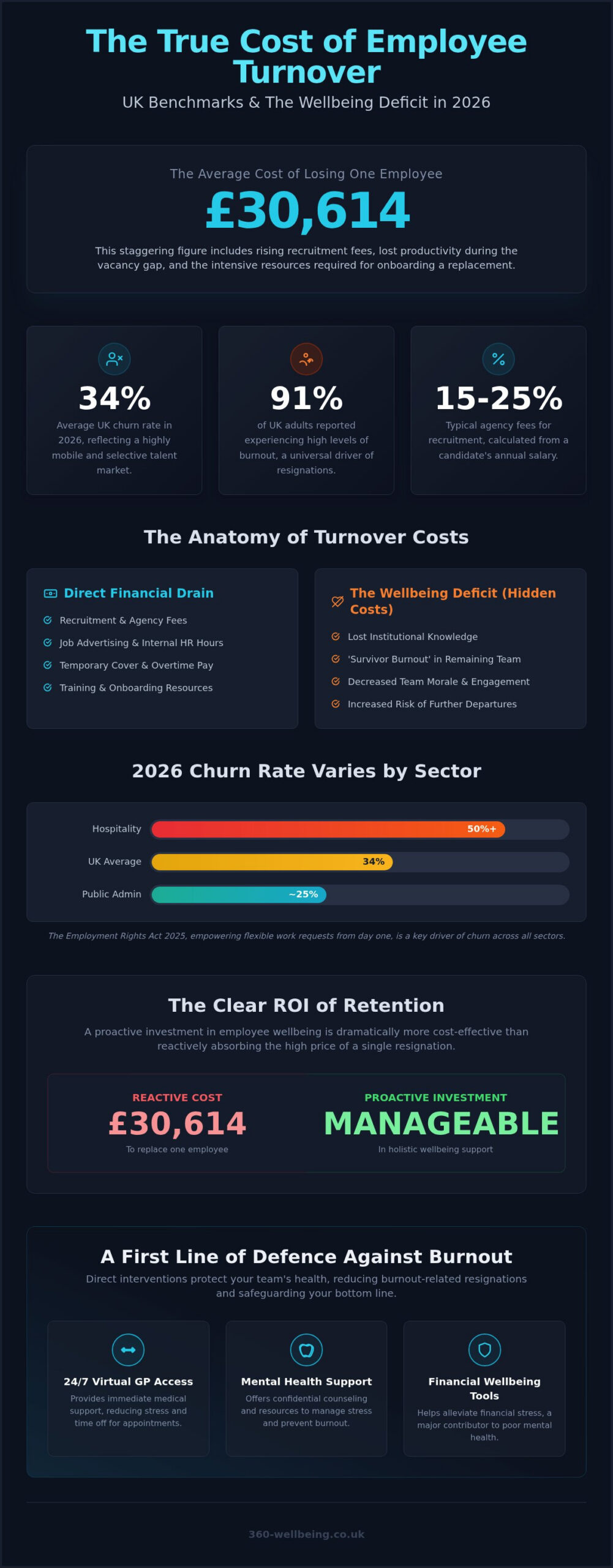
Did you know that the average cost of employee turnover uk has climbed to a staggering £30,614 per person in 2026? When you factor in rising recruitment fees, lost productivity, and the intensive resources required for onboarding, a single resignation represents a significant financial deficit. It’s a heavy burden for any HR leader to carry, especially when you’re also navigating the survivor burnout and lowered morale that often ripples through the remaining team after a departure.
We believe that your staff are your most valuable asset, and seeing them leave is both a professional challenge and a personal concern. You likely want clear, clinical data to prove that supporting your team’s health is a strategic necessity rather than a luxury. This guide will help you quantify the hidden financial and psychological costs of staff churn while showing you how a holistic wellbeing strategy can protect your bottom line. We will explore the breakdown of direct and indirect expenses, provide evidence for a proactive investment case, and offer actionable steps to build a more durable and harmonious workplace.
Key Takeaways
- Understand why the true cost of employee turnover uk now averages over £30,000 per person when factoring in recruitment, onboarding, and lost institutional knowledge.
- Identify the hidden wellbeing deficit caused by staff churn, including the impact of survivor burnout on your remaining team’s morale and productivity.
- Learn how to calculate the ROI of retention strategies by comparing the high price of a single resignation against the manageable cost of proactive health platforms.
- Discover how direct interventions like 24/7 Virtual GP access and mental health support can act as a vital first line of defense against burnout-related resignations.
- Gain a panoramic view of your workforce health to move from reactive recruitment to a sustainable strategy that protects your company’s long-term vitality.
Defining Employee Turnover: 2026 UK Benchmarks
Understanding the true cost of employee turnover uk starts with a clear definition of what is actually happening within your workforce. At its simplest, employee turnover is the proportion of staff who leave an organisation over a specific period, usually measured annually. We often view Defining Employee Turnover through two distinct lenses: voluntary turnover, where an employee chooses to resign for personal or professional reasons, and involuntary turnover, which occurs through redundancies or dismissals. It’s helpful to think of turnover as the revolving door effect that drains corporate knowledge and capital, often leaving remaining team members feeling stretched and uncertain.
In 2026, the UK is witnessing an average churn rate of 34%, a figure that reflects a highly mobile and selective talent market. A significant driver of this movement is the full implementation of the Employment Rights Act 2025. This legislation has empowered workers with a robust ‘Right to Request’ flexible working from day one, fundamentally shifting how employees view their relationship with the office. If an organisation cannot meet these modern expectations for balance and vitality, staff are increasingly likely to seek a partner who will.
Turnover vs. Attrition: Why the Distinction Matters
While people often use the terms interchangeably, there’s a vital difference between turnover and attrition that affects your bottom line. Attrition is the natural reduction of a workforce through retirement or the decision not to fill a vacated role. Because the position isn’t being replaced, the financial impact is often neutral or even a saving. Turnover, however, is far more intensive because it requires active recruitment to maintain operational capacity. To find your own pulse, you can calculate your turnover rate by taking the total number of leavers in a year, dividing it by your average number of employees, and multiplying by 100.
Industry Benchmarks: From Hospitality to Public Admin
The experience of churn varies significantly across the UK landscape. Hospitality sectors are currently navigating a challenging 50% or higher churn rate, whereas public administration remains more stable at around 25%. However, regardless of the sector, a staggering 91% of UK adults reported experiencing high levels of burnout in 2026, making it a universal driver of resignations. Because of this, many forward-thinking HR leaders are moving away from simple turnover metrics and focusing on ‘tenure’ as a critical KPI. This shift highlights a commitment to durability and the long-term success of every individual within the team.
The Direct Financial Drain: Recruitment and Onboarding
When an employee hands in their notice, the clock starts on a series of expenses that quickly escalate. The visible cost of employee turnover uk often begins with recruitment. Agency fees typically range between 15% and 25% of the candidate’s annual salary; for a mid-level role, this can instantly wipe thousands of pounds from your budget. Beyond these fees, you must account for job board advertisements and the significant volume of internal HR hours required to sift through applications and coordinate schedules. We understand that these figures are more than just numbers on a spreadsheet. They represent a diversion of resources that could otherwise be used to nurture your existing team.
There is also the often-overlooked ‘Leaver Admin’ phase. Managing exit interviews, recovering company equipment, and processing final payroll adjustments all require meticulous attention from your administrative staff. If a new hire fails to settle and leaves within the first six months, the financial risk is amplified. In these cases, your initial investment is essentially a total loss, and the cycle of expenditure begins all over again.
The Hidden Cost of Temporary Cover
The period between a departure and a new arrival, known as the ‘vacancy gap’, often creates a silent financial drain. You might find yourself paying a premium for agency staff or specialist contractors to maintain essential services. If you don’t use external help, your existing staff often take on the extra workload. This leads to increased overtime costs and, more concerningly, heightens the risk of burnout among your most loyal people. Supporting your team’s stability through robust financial support for the business can help mitigate these sudden spikes in operational expenditure.
Training and Management Time
Onboarding a new colleague involves more than just a welcome pack. It requires a significant investment of time from senior managers who must mentor and train the new hire until they reach full competency. This creates a ‘lost opportunity’ cost where your leaders are focused on basic training rather than strategic growth or innovation. During periods of high churn, you may also require additional legal support to manage frequent contract amendments and ensure compliance with evolving regulations. By implementing long-term employee retention strategies, you can protect your leadership’s time and keep your focus on the future. Exploring proactive wellbeing tools can help you break this cycle of reactive spending and build a more durable workforce.
The Wellbeing Deficit: Invisible Costs of High Turnover
The true cost of employee turnover uk extends far beyond recruitment invoices, manifesting as a clinical deficit in your organisation’s collective health. While spreadsheets capture agency fees, they often miss the ‘departure slump’ that occurs the moment an employee decides to leave. Their focus naturally shifts from long-term growth to short-term completion, leading to a measurable dip in output during their notice period. This isn’t a lack of professionalism; it’s a natural psychological transition. Similarly, the loss of institutional knowledge is a profound drain. When a long-tenured colleague exits, they take with them the nuanced understanding of internal processes and the delicate threads of client relationships that take years to weave. This knowledge gap often forces remaining team members into a reactive state, where they are constantly firefighting rather than innovating, further depleting their mental reserves.
In the competitive 2026 talent market, high churn also creates significant reputational damage. Prospective hires now scrutinise social platforms and professional networks for signs of stability. If your organisation appears to have a revolving door, you’ll find it increasingly difficult to attract the top-tier specialists you need to thrive. Stability is no longer just an HR metric; it’s a hallmark of a healthy, trustworthy brand.
The Psychology of the ‘Survivor’ Staff
Seeing a respected colleague leave often triggers a wave of anxiety among those who remain. It’s common for ‘survivor’ staff to wonder if the ship is sinking, which can lead to a destabilising domino effect where one resignation quickly leads to several more. Survivor burnout isn’t just about an increased workload; it’s about the emotional toll of losing a workplace support network. Providing robust Mental Health support during these transitions is essential. It helps stabilise the team, validates their feelings of loss, and prevents the exhaustion that occurs when remaining staff are forced to pick up the slack without a clear path forward.
Customer and Client Impact
High turnover is rarely contained within your internal walls; your clients feel it too. Broken continuity in client-facing roles often leads to service errors and a gradual loss of trust. If a client has to explain their history to a third account manager in a single year, they may start looking for a more stable partner. We believe in maintaining an expert caregiver tone when communicating these changes, ensuring clients feel reassured that their interests remain protected. Protecting your staff’s wellbeing is ultimately the best way to protect your client contracts and ensure long-term service excellence.
Calculating the ROI of Retention vs. Recruitment
Let’s examine the numbers. Replacing a team member who earns £35,000 costs your business approximately £30,614 in total. This isn’t a speculative guess; it’s the clinical reality of the current cost of employee turnover uk when you combine recruitment fees, the intensive training period, and the inevitable dip in output. Contrast that one-off £30,000 loss against the modest monthly investment required for a holistic platform like 360 Wellbeing. For a typical UK SME with 50 staff, reducing your annual churn by just 5% can save you nearly £80,000 every single year. These are funds that can be directly reinvested into your company’s growth, innovation, and long-term vitality.
We’ve also observed that ‘stay interviews’ are becoming far more valuable than traditional exit interviews in 2026. While an exit interview tells you what went wrong in the past, a stay interview focuses on the present and the future. By asking your people what keeps them here while they’re still part of the team, you can identify small friction points before they escalate into reasons to leave. This proactive approach establishes an immediate partnership between you and your staff, showing them that you’re deeply invested in their professional success and personal harmony.
The Cost of ‘Presenteeism’ in High-Churn Environments
Presenteeism is a quiet drain on your resources, occurring when staff are physically at their desks but are unable to work effectively due to stress, anxiety, or physical ill health. In high-churn environments, this often goes unnoticed as managers focus solely on filling empty seats. Our 24/7 Virtual GP access allows your team to address health concerns quickly and discreetly, reducing the time taken off for minor issues or the ‘brain fog’ that comes with untreated symptoms. When your people feel physically supported and emotionally secure, their productivity and engagement naturally rise, creating a more durable and focused workforce.
Financial Stress as a Turnover Driver
Financial stress is a major driver of turnover, with many employees feeling forced to leave for a marginal pay rise elsewhere simply because they’re struggling with the cost of living. This type of churn is a significant contributor to the high cost of employee turnover uk for modern businesses. Providing Financial Support and debt advice acts as a powerful retention anchor, helping your team manage their ‘money worries’ before they reach a breaking point. It demonstrates that you view their wellbeing as a professional necessity rather than a luxury. Additionally, 360 Rewards offers a comprehensive discount marketplace that effectively stretches an employee’s take-home pay. This provides a practical, daily boost to their vitality without requiring a massive salary overhead for your business.
If you’re ready to protect your bottom line by investing in your people, you can explore our holistic wellbeing solutions today.
The 360 Wellbeing Solution: Protecting Your Bottom Line
We’ve explored the financial strain and the psychological toll that churn takes on your organisation. It’s clear that the cost of employee turnover uk businesses face in 2026 is a clinical wellbeing failure that requires a proactive, holistic response. Our platform isn’t just a collection of benefits; it’s a strategic shield designed to nurture your team’s health and protect your company’s future. By integrating physical, mental, and social support into a single narrative of wellness, we help you move from reactive recruitment to a culture of sustainable durability.
Our 24/7 Virtual GP acts as your first line of defense against burnout-related churn. When staff can access a UK-registered doctor at any time, they address health concerns before they escalate into chronic issues or long-term absence. Similarly, our mental health therapy and Life Coaching sessions are vital for preventing ‘quiet quitting.’ By providing a safe space for employees to process stress and find purpose in their roles, you foster a sense of belonging that makes them far more likely to stay. To complement these clinical tools, our 360 Rewards marketplace builds a ‘sticky’ company culture. It provides tangible, daily value that employees don’t want to leave behind, effectively stretching their take-home pay and enhancing their overall vitality.
Clinical Support for Long-Term Retention
Longevity in a role is often tied to how supported an individual feels during life’s inevitable challenges. We provide Virtual GP access to ensure your people don’t have to choose between their health and their work commitments. For those seeking professional growth or a renewed sense of direction, our Life Coaching services help them find long-term harmony within your organisation. We also recognise that personal stressors often bleed into professional lives. By offering dedicated legal and financial helplines, you ensure your staff have the expert guidance they need to manage ‘big stressors’ like debt or legal disputes, keeping them focused and secure in their positions.
Building an Empathetic Employer Brand
In the competitive 2026 talent market, your reputation as an employer is defined by your empathy. Offering complimentary will writing and a robust Employee Assistance Programme (EAP) signals a deeply caring culture that values the person, not just the worker. This positioning transforms your business into a modern, forward-thinking employer of choice, attracting top-tier talent who prioritise workplace harmony. When you view wellbeing as a professional necessity and a human entitlement, you create a workforce that is loyal, resilient, and ready for the future. Discover how 360 Wellbeing can transform your staff retention.
Building a Durable Workforce for the Future
Viewing staff retention through a panoramic lens allows you to see that turnover is rarely just about salary. It’s often a signal that the delicate balance of physical, mental, and social health has been disrupted. By shifting your focus from reactive hiring to proactive care, you can transform your organisation into a sanctuary of stability and growth. Addressing the total cost of employee turnover uk requires more than just a recruitment budget; it demands a genuine commitment to the vitality of every individual in your team.
We’re here to act as your expert partner, providing the clinical expertise and human support your business needs to thrive. With 24/7 Virtual GP access for all staff, comprehensive Mental Health therapy, and Life Coaching, we offer UK-based expert support tailored specifically for the needs of modern SMEs. Investing in your people isn’t just a professional necessity; it’s a powerful statement of value that builds long-term loyalty and workplace harmony.
Support your team’s long-term health with 360 Wellbeing
You have the power to protect your bottom line by nurturing the very heart of your business. Let’s work together to create a future where your team feels empowered, secure, and ready to succeed.
Frequently Asked Questions
What is the average cost of employee turnover in the UK for 2026?
The average cost of employee turnover uk has reached approximately £30,614 per person in 2026. This figure, based on research from Oxford Economics, accounts for direct recruitment fees and the intensive training required to bring a new hire to full competency. It also includes the lost productivity during the vacancy period. For senior or specialist roles, these expenses can often climb significantly higher, sometimes exceeding £100,000 depending on the complexity of the position.
How do you calculate the staff turnover rate?
You can determine your staff turnover rate by taking the total number of employees who left your organisation during a set period and dividing that by your average headcount for the same timeframe. Multiply the result by 100 to get your percentage. For example, if you have 50 staff and 5 leave, your turnover rate is 10%. Monitoring this monthly helps you identify seasonal trends or sudden shifts in team morale.
What are the most common reasons for high employee turnover in the UK?
Burnout is the leading driver of churn in 2026, with 91% of UK adults reporting high stress levels. Beyond health concerns, many employees leave due to financial stress or a lack of flexible working arrangements. If an organisation doesn’t offer robust support for mental health or cost-of-living pressures, staff are increasingly likely to move to competitors who prioritise these essential human needs as part of their core corporate strategy.
Is staff turnover the same as staff attrition?
No, they are distinct concepts with different financial implications. Staff turnover refers to the cycle of employees leaving and being replaced, which incurs significant recruitment and onboarding costs. Attrition describes the natural reduction of a workforce, such as through retirement or the decision to leave a role vacant. While turnover requires active capital and time to manage, attrition is often a neutral event that doesn’t trigger the high cost of employee turnover uk.
How does employee wellbeing impact retention rates?
Employee wellbeing is a fundamental pillar of modern retention. When you provide access to clinical support and mental health therapy, you address the root causes of resignations before they reach a breaking point. Staff who feel physically healthy and emotionally secure are more engaged and less likely to experience the ‘quiet quitting’ phenomenon. A holistic approach signals that you view your team as individuals, not just resources, which builds deep, long-term loyalty.
Can a Virtual GP service really help reduce staff turnover?
A Virtual GP service acts as a vital first line of defense against absenteeism and burnout. By providing 24/7 access to UK-registered doctors, you allow staff to address health concerns quickly without the stress of waiting for traditional appointments. This convenience reduces the time taken off for minor illnesses and prevents health issues from becoming chronic. It also demonstrates a tangible commitment to your team’s vitality, which is a powerful retention anchor.
What is the ‘hidden’ cost of employee turnover for SMEs?
For SMEs, the hidden costs often manifest as ‘institutional knowledge drain’ and ‘survivor burnout.’ When a key team member leaves, they take with them client relationships and nuanced internal processes that are difficult to replace. The remaining staff often suffer from increased workloads and anxiety, which can lead to a domino effect of further resignations. These invisible factors can double the total financial impact of a departure beyond just the recruitment fees.
How does the Employment Rights Act 2025 affect employee retention?
The Employment Rights Act 2025 has fundamentally shifted the retention landscape by granting workers the ‘Right to Request’ flexible working from their first day of employment. This legislation makes workplace balance a professional necessity rather than a luxury. Organisations that fail to adapt to these legal requirements or ignore the demand for flexibility will likely see higher churn rates as talent migrates toward more modern, forward-thinking employers who respect their personal time.