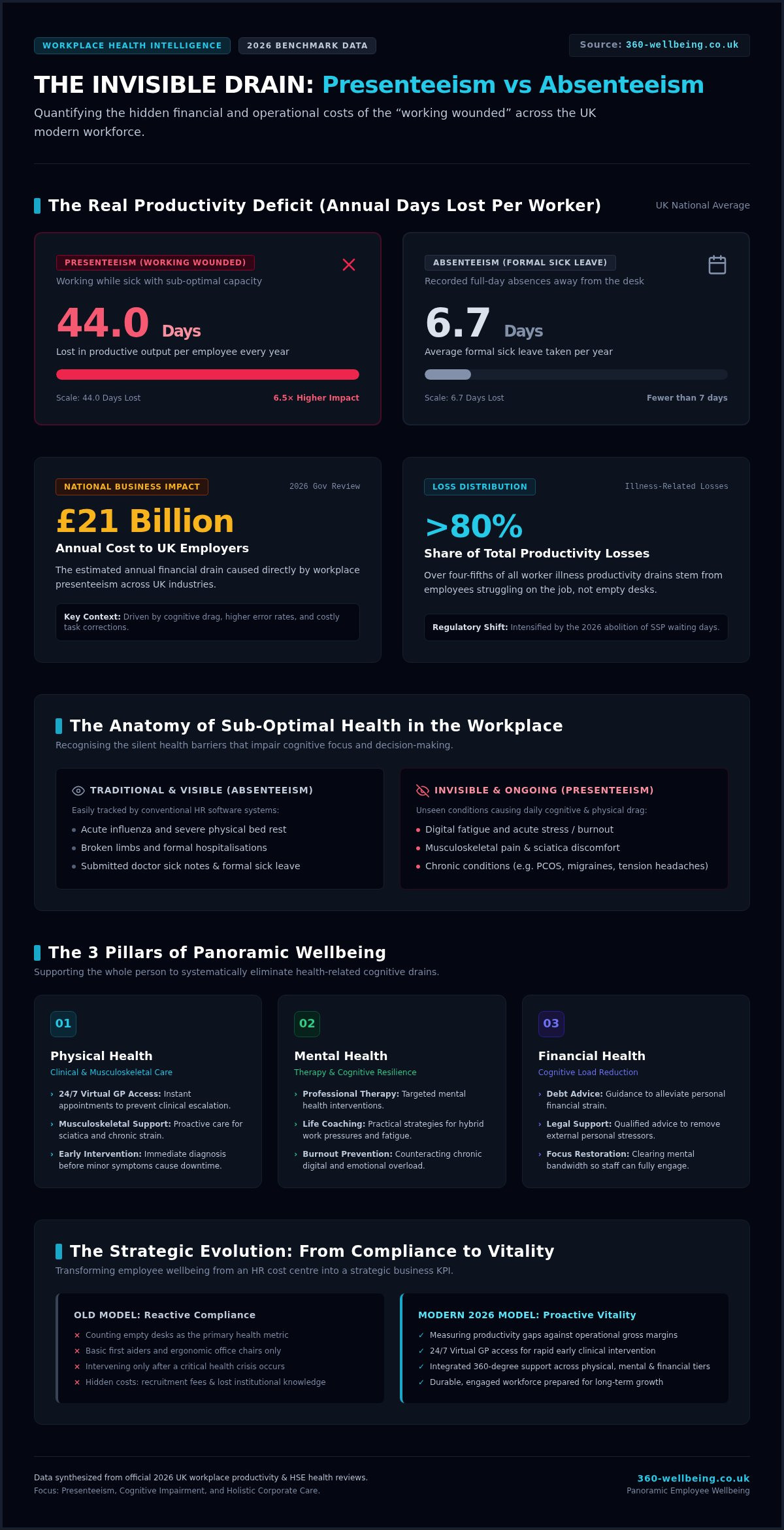
Did you know the average UK worker now loses 44 days of productivity every year to presenteeism, while formal sick leave accounts for fewer than seven? You’ve likely noticed the shift in your own office; it’s the quiet struggle of the “working wounded” who log on while unwell but can’t perform at their best. With the 2026 abolition of SSP waiting days and rising mental health challenges, the financial weight of productivity loss from poor employee health has become impossible to ignore.
We understand that behind every statistic is a person whose vitality is essential to your business’s success. This guide will help you identify the hidden financial drains within your team and show you how to calculate the true ROI of a proactive wellbeing strategy. We’ll explore the transition from reactive sick pay to panoramic health support, offering actionable steps to build a more resilient, engaged workforce that feels supported, valued, and ready to thrive.
Key Takeaways
- Learn why presenteeism, or the “working wounded” phenomenon, accounts for a significant portion of productivity loss from poor employee health in the modern UK workplace.
- Discover how to move beyond basic sick pay to calculate the hidden indirect costs of ill-health, including recruitment fees and lost institutional knowledge.
- Understand the strategic value of providing 24/7 Virtual GP access to reduce time away for medical appointments and support early clinical intervention.
- Explore how a panoramic wellbeing approach integrating physical, mental, and financial support creates a more durable and loyal workforce.
- Gain a clear, structured path to auditing your current health data and implementing scalable wellbeing solutions that support your long-term business goals.
The Invisible Drain: Defining Productivity Loss in 2026
Traditionally, many organisations measured workplace health by counting the days people weren’t at their desks. In 2026, that metric is outdated. We now recognise that productivity loss from poor employee health represents the widening gap between a team member’s potential output and their actual performance when they’re struggling with sub-optimal health. It’s a silent drain on your bottom line that often goes unnoticed because it doesn’t always result in an empty chair. As your partner in wellbeing, we view health as both a fundamental human entitlement and a strategic business necessity. A workforce that isn’t thriving simply can’t innovate at the pace modern industry demands.
The Shifting Landscape of Workplace Health
The definition of being “unwell” has evolved significantly. It’s no longer just about the flu or a broken limb. We’re seeing a rise in digital fatigue and the persistent impact of chronic conditions that don’t necessarily require bed rest but do hinder cognitive function. For instance, an employee managing the daily discomfort of sciatica or the hormonal fluctuations of PCOS might never take a formal sick day. However, their ability to focus and maintain high-level output is inevitably compromised. This phenomenon, often termed presenteeism in the workplace, means staff are physically present but mentally or physically unable to engage fully with their tasks. In this context, productivity loss from poor employee health is a measurable business KPI that tracks the cost of these invisible health barriers against your operational gross margin.
Why Traditional Health and Safety is No Longer Enough
Basic health and safety compliance, such as having a designated first aider or an ergonomic chair, is merely the baseline in a post-2025 regulatory environment. To truly protect your organisation, you’ve got to move toward a culture of proactive vitality. Relying on reactive measures means you’re only intervening when a crisis has already occurred, which is often too late to prevent significant disruption. A panoramic viewpoint on employee care allows you to see the whole person, looking beyond immediate physical symptoms to understand how mental stress or financial anxiety might be the root cause of a performance dip.
By integrating support for the three pillars of wellbeing, you build a more durable workforce:
- Physical health: Addressing everything from minor ailments to long-term musculoskeletal support to keep the body functioning at its best.
- Mental health: Providing therapy and life coaching to counteract the burnout often associated with digital fatigue and hybrid work pressures.
- Financial health: Offering debt advice and legal support to remove the heavy cognitive load of external stressors that distract from core work.
This holistic approach ensures that your team isn’t just surviving the week, but is actually empowered to excel. Moving from reactive compliance to proactive vitality isn’t just a kind gesture; it’s a fundamental shift in how successful UK businesses operate.
The Science of Presenteeism vs. Absenteeism
While absenteeism is easily tracked through traditional HR software, presenteeism is a more subtle, pervasive drain on your organisation. It occurs when employees are physically present but their performance is compromised by ill health. This “Working Wounded” phenomenon often feels like a display of commitment, yet it frequently results in a significant productivity loss from poor employee health. When a team member struggles through a migraine or pushes through acute stress, they aren’t just working slower; they’re more likely to make errors that require costly corrections later. It’s a quiet struggle that often goes unnoticed until it impacts the bottom line.
Presenteeism: The Hidden £21 Billion Problem
Presenteeism accounts for over 80% of total productivity losses tied to worker illness in the UK. Official government reviews from 2026 estimate that lost productivity from workplace presenteeism costs UK employers £21 billion annually. To put this in perspective, UK workers lose an average of 44 days of productivity per year by working while sick, compared to just 6.7 days taken as formal sick leave. These figures align with broader HSE statistics on working days lost, which highlight how mental health and musculoskeletal issues dominate the landscape of workplace illness. Physical symptoms of chronic stress, such as persistent fatigue or tension headaches, directly impair executive function and decision-making. Providing immediate clinical access through a 24/7 Virtual GP helps catch these issues before they spiral into total burnout.
The Ripple Effect on Team Dynamics
The impact of poor health isn’t contained within a single individual. When one person is underperforming due to illness, the burden inevitably shifts to their colleagues. This creates a secondary wave of stress, as healthy team members must manage increased workloads, often leading to resentment and a decline in overall team engagement. Mental health challenges, including social anxiety or depression, can lead to “quiet” productivity loss where communication breaks down and collaboration stalls. These factors contribute to a cycle of fatigue that can damage your workplace culture if left unaddressed.
Addressing these root causes requires a panoramic approach that treats mental and physical health as a single, unified narrative. By fostering an environment where employees feel empowered to seek help early, you’re preventing the long-term productivity loss from poor employee health that stems from untreated chronic stress. You can explore how a holistic employee benefits platform supports this proactive culture by providing the tools your team needs to stay resilient, focused, and truly present.
Calculating the Hidden Costs: Beyond the Sick Note
While Statutory Sick Pay (SSP) currently sits at £123.25 per week, calculating the true productivity loss from poor employee health requires looking far beneath the surface of payroll figures. In 2026, the total cost of workplace ill health to UK employers has reached an estimated £85 billion annually. Direct costs, such as mandatory sick pay and the expense of hiring temporary cover, represent only the tip of the iceberg. The more substantial drain on your resources comes from indirect factors: lost economic output, recruitment fees, and even health-related employment litigation. By adopting a panoramic view of these expenses, you can begin to see preventative care not as a luxury, but as a vital protection for your gross margin.
Early intervention is the most effective way to mitigate these costs. When you provide immediate clinical or mental health support, you often prevent a minor issue from escalating into a long-term absence. This proactive stance is supported by the NICE workplace mental wellbeing guidance, which emphasises that strategic organisational interventions are essential for a healthy bottom line. Investing in your team’s vitality today ensures the durability of your business tomorrow.
The Recruitment and Retention Connection
When a valued team member leaves because they don’t feel supported during a health struggle, the cost to your business is immense. It isn’t just the agency fee to find a replacement; it’s the loss of intellectual property and the disruption to team momentum while a new hire is trained. In the 2026 talent market, comprehensive health support is a key differentiator that attracts high-calibre candidates. Providing robust employee benefits is an investment in your organisation’s long-term durability, not a mere overhead cost.
Financial Wellness: The Productivity Link
Financial anxiety is a silent thief of focus. When an employee is struggling with debt or the legal complexities of family life, their cognitive bandwidth for work tasks shrinks significantly. This mental load often manifests as poor concentration and a higher risk of error. By offering services like complimentary will writing and debt advice, you provide a sense of security that allows staff to bring their full selves to work. Reducing these external stressors is a proven method for lowering overall absenteeism. You can find more detail in our guide on Financial Support for Employees, which explores how financial stability underpins professional performance and helps prevent productivity loss from poor employee health.
Strategic Interventions: Turning Health into a Competitive Advantage
To mitigate productivity loss from poor employee health, you’ve got to shift from merely observing trends to actively shaping them. Start by auditing your current absenteeism data alongside regular employee sentiment surveys. This dual approach reveals the “why” behind the numbers; it helps you identify if a spike in leave is due to seasonal illness or systemic burnout. Once you have this clarity, you can implement a structured framework for intervention that prioritises accessibility and education. Training managers to spot the physical signs of stress, such as persistent fatigue or uncharacteristic irritability, ensures that support reaches those who need it most before a crisis occurs.
Fostering a culture where proactive health management is celebrated rather than hidden is essential. When leadership openly supports wellbeing, it removes the stigma often associated with mental health or chronic conditions. This transparency creates a more resilient workforce where employees feel empowered to manage their vitality as a professional necessity. By following these steps, you transform health from a potential liability into a genuine competitive advantage.
- Step 1: Audit absenteeism data and employee sentiment.
- Step 2: Implement a low-friction, 24/7 access point for medical advice.
- Step 3: Train managers to recognise early signs of physical and mental stress.
- Step 4: Build a culture that rewards and celebrates proactive wellbeing.
Implementing a 24/7 Virtual GP Service
Traditional GP appointments often require staff to take half a day off or wait weeks for a consultation. By providing a 24/7 Virtual GP service, you give your team immediate access to a UK-registered doctor from the comfort of their home or office. This low-friction access significantly reduces time off for routine appointments and offers immense psychological reassurance. Knowing a professional is available at any time empowers employees to address minor symptoms early. This foresight prevents small ailments from escalating into conditions that cause significant productivity loss from poor employee health.
Leveraging Mental Health Champions and EAPs
An Employee Assistance Programme (EAP) is a cornerstone of early mental health intervention. By offering life coaching and therapy sessions, you provide a safe space for employees to navigate personal or professional challenges before they become overwhelming. These proactive measures align with ISO 45003 standards for psychological safety, ensuring your workplace culture is both supportive and compliant. When managers are trained to spot subtle signs of stress, they can guide team members toward these resources earlier. This methodical approach prevents minor mental health hurdles from becoming long-term absences. You can explore how to implement these strategic interventions to protect your team and your business’s future.
The 360-Degree Solution: Proactive Wellbeing in the Digital Age
Managing the productivity loss from poor employee health in 2026 requires a shift away from fragmented, “bolt-on” perks toward a unified ecosystem of care. When health benefits are scattered across different providers, employees often struggle to find the help they need at the moment they need it most. A 360-degree solution brings physical, mental, and financial support into a single, accessible narrative. This integrated approach ensures that whether a team member needs a 24/7 Virtual GP, a session with a life coach, or urgent debt advice, the path to support is clear and immediate. By treating wellbeing as a panoramic necessity, you build an organisation that isn’t just surviving, but is fundamentally durable.
Proactive care is no longer a luxury reserved for the largest corporations. Our SaaS-based model provides an affordable and scalable framework that works just as effectively for growing SMEs as it does for established national firms. It allows you to offer high-level clinical expertise and holistic support without the administrative burden of traditional schemes. Finalising your strategy with this level of foresight is the most effective way to future-proof your organisation’s productivity against the evolving challenges of the modern workplace.
Why a Holistic Platform Beats Fragmented Benefits
The primary advantage of a unified platform is the removal of friction. Employees benefit from a single login that connects them to a suite of services, from physiotherapy to mental health therapy. This simplicity encourages early usage, which is essential for catching minor health concerns before they escalate. For HR teams, the benefits are equally significant. A consolidated platform simplifies administration and provides clear, anonymised reporting on engagement levels. This data allows you to identify trends and adjust your strategy with precision. Rather than just providing a one-off service, you become a partner in your team’s long-term vitality.
Beyond clinical intervention, lifestyle wellness plays a vital role in maintaining a healthy workforce. Features like 360 Rewards and discount marketplaces make healthy living more accessible and rewarding for your staff. These tools help integrate wellness into daily life, fostering a culture where vitality is a shared value.
Next Steps for UK Employers
Your journey toward a healthier workforce starts with an honest assessment of your current “productivity gap.” Identify where the biggest health drains are occurring, whether it’s through short-term absence spikes or noticeable drops in engagement. Trialling a digital wellbeing platform is a straightforward process that doesn’t need to disrupt your daily operations. It provides an immediate safety net while you build a more resilient culture for the future. If you’re ready to bridge the gap and support your team’s total wellness, you can book a consultation to see how 360 Wellbeing can protect your productivity and help your business thrive.
Building a Durable Future Through Proactive Care
In 2026, the landscape of workplace health has shifted from simple compliance to a strategic commitment to vitality. We’ve explored how the hidden drain of presenteeism costs UK businesses far more than empty desks ever did. By moving beyond traditional sick pay and adopting a panoramic view of employee wellness, you can effectively mitigate the productivity loss from poor employee health. True durability comes from recognising that your team’s wellbeing is your organisation’s greatest asset.
At 360 Wellbeing, we act as your dedicated partner in this journey. We provide a unified platform offering 24/7 access to UK-registered GPs alongside holistic mental, physical, and financial support. Our expert-led care is designed specifically to help SMEs and larger firms thrive by providing the empathetic, professional guidance your staff deserves.
It’s time to transform your approach to corporate health. Secure your team’s health and your company’s productivity with 360 Wellbeing. Together, we can build a healthier, more engaged workforce that is ready to meet the challenges of tomorrow with confidence.
Frequently Asked Questions
How do you measure productivity loss from poor health?
Measuring this requires looking at the productivity gap through a combination of absence data and employee engagement scores. This helps identify the hidden productivity loss from poor employee health that traditional metrics often overlook. By using human-capital accounting, you can frame health as a core driver of your operational gross margin rather than just an overhead cost.
What is the biggest cause of productivity loss in the workplace?
Mental health conditions, including stress, anxiety, and depression, are the most significant causes. They account for 52% of all work-related ill health cases in the UK. These conditions led to 22.1 million lost working days in the latest reporting period, highlighting the need for proactive psychological support and early intervention strategies.
How much does absenteeism cost UK businesses annually?
UK businesses spend roughly £10 billion annually on direct statutory and occupational sick pay. This is part of a much larger £85 billion total cost to employers from workplace ill health. These figures include lost economic output, recruitment fees, and the expenses associated with health-related employment litigation and conflict resolution.
Can an Employee Assistance Programme (EAP) really improve productivity?
An EAP creates a vital safety net that identifies and addresses personal or professional challenges before they escalate. By providing immediate access to therapy and life coaching, it prevents minor stresses from becoming chronic issues. This early intervention is a proven method for reducing the long-term productivity loss from poor employee health across your organisation.
What is the difference between absenteeism and presenteeism in financial terms?
In financial terms, absenteeism costs UK employers about £10 billion in direct sick pay, while presenteeism costs a staggering £21 billion. Presenteeism is often more damaging because it’s harder to track and indicates a workforce that is working wounded rather than recovering fully. This hidden drain accounts for over 80% of total productivity losses.
How does a Virtual GP service reduce workplace productivity loss?
Providing a 24/7 Virtual GP service allows staff to consult a UK-registered doctor without the need for lengthy travel or time away from their desk. This immediate clinical access encourages employees to seek medical advice early. It prevents minor ailments from developing into long-term absences that disrupt team momentum and output.
Is financial stress considered a health issue in the workplace?
Financial anxiety is a significant component of holistic health because it directly impacts mental clarity and cognitive bandwidth. We integrate debt advice and legal support into our panoramic wellbeing solutions because financial stability is an essential human entitlement that underpins professional performance. Removing these external stressors allows employees to focus fully on their roles.
What are the first signs of health-related productivity decline in a team?
The first signs often include uncharacteristic errors, a withdrawal from team collaboration, or the rise of leavism where staff work during their annual leave. Identifying these subtle shifts early allows you to intervene before they lead to a significant productivity loss from poor employee health. Early clinical or mental health support can often reverse these trends quickly.