What good is a wellbeing benefit if staff can’t use it around a late finish, an early start or a changing rota? For hospitality employers, wellbeing benefits for hospitality industry workers need to fit the realities of service, not just look comprehensive on a benefits list. Shift patterns can make some support harder to access, and the needs of kitchen, front-of-house and management teams may differ.
Choosing where to start can be difficult when you’re balancing staff needs with the day-to-day demands of running a hospitality business. A useful benefits offer makes support practical to access and relevant to employees’ physical, mental and financial wellbeing.
This guide explores the needs that can arise across hospitality roles, the types of support employers can consider and how to compare options using clear criteria. It also covers practical ways to introduce and communicate benefits so staff understand what’s available and how it fits around their shifts.
Key Takeaways
- Identify how role demands and changing shifts can affect staff wellbeing and access to support.
- Compare wellbeing benefits for hospitality industry workers by relevance, accessibility, confidentiality and ease of use.
- Use a clear comparison framework to assess which benefit types could suit different roles across your team.
- Plan a practical rollout that listens to staff, communicates across shifts and reviews whether support is being used.
- See how bringing physical, mental and financial support together can create a more complete benefits offer.
Why wellbeing benefits matter for hospitality industry workers
Workplace wellbeing benefits provide structured support to help employees look after their health and manage personal challenges. Unlike informal perks, such as a staff meal or social event, they offer practical help employees can access when they need it. They can support different areas of life, as reflected in descriptions of workplace wellness programs.
For hospitality teams, access matters as much as the benefit itself. Rotating shifts, late finishes and early starts can make services with limited access hours harder to use. Customer-facing work can bring emotional demands, while kitchen, housekeeping and other operational roles have distinct physical pressures. A useful offer recognises these differences rather than assuming one approach will suit everyone.
What wellbeing needs can arise across hospitality roles?
Front-of-house staff may manage demanding guest interactions while spending long periods on their feet. Kitchen teams can face sustained physical effort, heat and time pressure; housekeeping staff may do repetitive, physically tiring tasks. Managers often balance team support with operational responsibilities of their own. These pressures affect people differently, but they can influence what support feels relevant and accessible.
Fatigue, emotional strain, physical discomfort and financial worries can also interact. Ongoing money concerns may add to stress, for example, while physical discomfort can make a demanding shift harder. Listening helps employers identify where staff see the greatest need. Short confidential surveys, conversations across different shifts and feedback from varied roles can reveal useful priorities without presuming what people need.
How can benefits support staff and employers?
Wellbeing benefits for hospitality industry workers can make it easier to seek guidance or support for concerns that might otherwise be put off. When staff know what’s available, how to access it and what confidentiality means, they can make more informed choices. That can contribute to a more positive experience at work, although a benefit’s value depends on whether it meets real needs and fits staff schedules.
Wellbeing benefits are practical forms of support for employees’ connected physical, mental, social and financial health. For employers, a considered offer may support attendance, retention and productivity, but it can’t guarantee those outcomes on its own. Clear communication and attention to the wider working experience matter too. Benefits work best as part of a thoughtful approach to staff wellbeing, not as a substitute for listening and responding to everyday concerns.
Which wellbeing benefits can support hospitality workers?
A useful benefits mix starts with the needs it aims to address, not a long list of labels. The right combination of wellbeing benefits for hospitality industry workers depends on staff feedback, working patterns and whether support is practical to access around shifts. The CIPD’s UK workplace wellbeing trends offer broader context, but employers still need to understand the experiences of their own teams.
Physical and mental health support
Different services meet different needs, so they shouldn’t be treated as interchangeable. A virtual GP gives employees access to a UK-registered GP for health concerns. Physiotherapy focuses on physical needs, while therapy provides mental health support. An Employee Assistance Programme (EAP) offers another route to support, with a distinct role in a benefits package. Explain what each service is for and how staff can access it, without promising a particular health outcome.
Everyday, financial and practical support
Wellbeing reaches beyond healthcare. Life coaching can help with personal or work-related goals, while financial support and debt advice address money pressures. Legal support and complimentary will writing can help employees manage practical life matters. A discount marketplace can complement these services with savings opportunities, but it doesn’t replace health or specialist support. For more context on money-related support, see this financial support guide for UK employers.
- Physical health: consider GP access and physiotherapy for different health concerns.
- Mental wellbeing: consider therapy and EAP support, and explain how each differs.
- Practical guidance: consider coaching and legal support for personal or work-related challenges.
- Financial wellbeing: consider debt advice, will writing and discounts as distinct forms of support.
Compare options by their relevance to staff roles, ease of access around shifts, clarity about confidentiality and simplicity of use. Digital services can help employees find support without being on site, while handover briefings and staff noticeboards can make benefits easier to discover. Neither approach suits everyone, so combine accessible digital information with familiar workplace channels. Explain what employees can expect when they use each service.
Once you’ve identified the needs and practical criteria that matter to your team, explore wellbeing support from 360 Wellbeing as one way to bring different forms of employee support together.
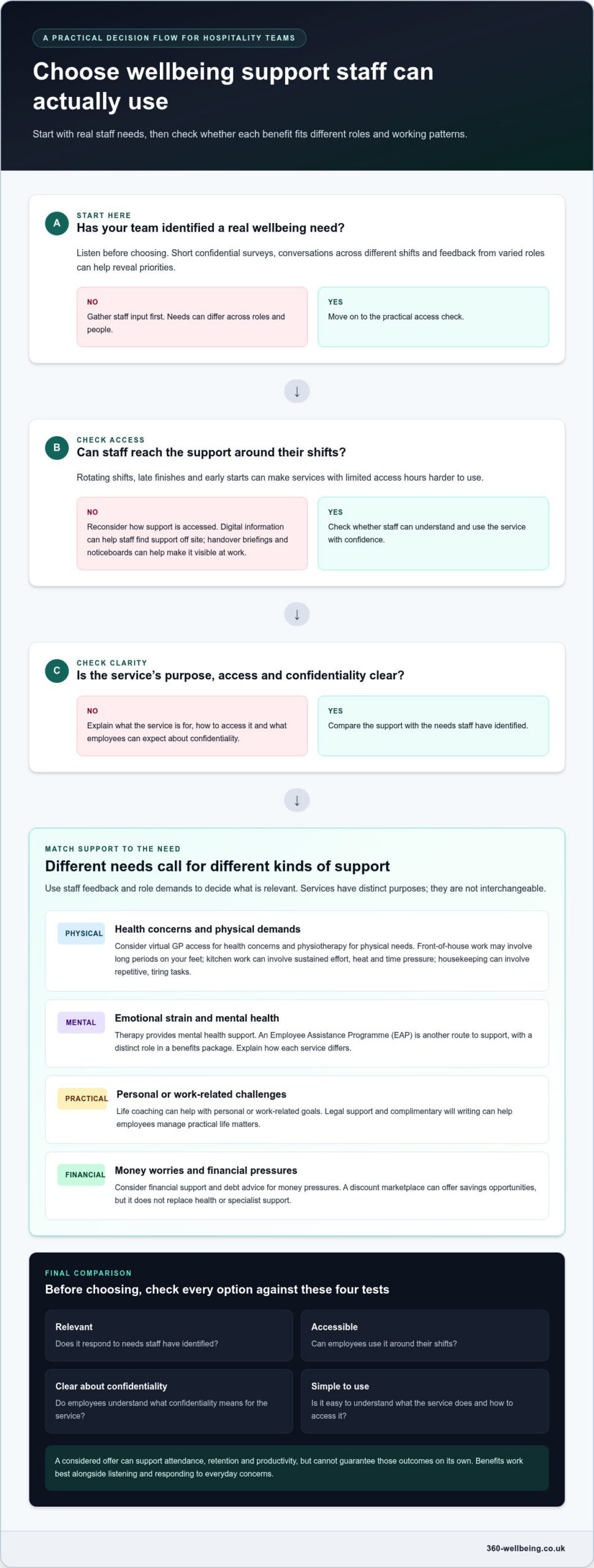
How to compare wellbeing benefits for hospitality teams
A clear comparison turns a broad list of options into a package that fits how your team works. Assess each benefit against staff needs, role relevance and practical access, rather than judging it by its name or headline alone. For wellbeing benefits for hospitality industry workers, ask whether employees across different roles and shifts can understand and use the support.
What should employers assess before choosing benefits?
Start with workforce feedback and existing support gaps. Consider team size, locations, shift patterns and the mix of roles. Then check whether staff can find out what each service offers and how to access it. Communications should accurately explain eligibility, privacy and relevant limits, so employees can make informed choices and understand what happens when they seek help.
Separate three measures: whether a service is available, whether employees use it and whether there is evidence of its impact. Availability alone doesn’t show that staff know about a benefit or find it useful. Track uptake where appropriate, invite feedback and avoid attributing changes in attendance, retention or wellbeing to a benefit without evidence.
How do different benefit approaches compare?
Standalone services can provide focused support for a particular need, while a platform bringing several types of support together can make a broader range easier to find in one place. Digital access may suit staff who can’t attend a workplace session, while in-person activities can create opportunities for shared communication and participation. These approaches can complement one another; neither is automatically the right fit for every employee.
| Benefit type or approach | Employee need | Access route | Practical considerations |
|---|---|---|---|
| Virtual GP | Help with health concerns | Digital service | Explain eligibility, access steps and the service’s scope. |
| Physiotherapy | Support for physical needs | Digital or arranged service, depending on the benefit | Clarify how employees access support and what it covers. |
| Mental health support or EAP | Emotional support or guidance | Service access and clear workplace signposting | Describe confidentiality accurately and distinguish the services. |
| Financial support and debt advice | Guidance with money pressures | Digital or other stated access route | Make eligibility and access information easy to find. |
| In-person wellbeing activity | Shared information or participation | At the workplace | Consider whether timing and location include different shifts and roles. |
The best-fit package reflects your workforce’s needs and access, not the longest benefits list. Use the comparison to identify gaps, then review whether staff can find and understand the support on offer.
How to introduce wellbeing benefits around hospitality shifts
A thoughtful launch helps turn a benefits offer into support staff can understand and use. For wellbeing benefits for hospitality industry workers, plan around changing rotas rather than relying on a single announcement or launch meeting.
- 1. Listen. Ask staff across roles and shifts what support they need and what might make it difficult to access. Offer more than one way to share feedback so people who can’t attend a meeting can still contribute.
- 2. Prioritise. Review the feedback and identify the needs the offer should address first. Consider whether different teams face different access barriers, and be clear about what the benefits can and can’t provide.
- 3. Choose. Select support that responds to those priorities and fits your workforce’s working patterns. Check the access steps, eligibility and privacy information for each benefit before sharing it with staff.
- 4. Communicate. Explain what each benefit is, who can use it, when it may help and how to access it. Repeat the information through shift handovers, staff channels, onboarding and manager briefings.
- 5. Review. Set a planned time to check whether staff know about the benefits, can access them and find them relevant. Use feedback to improve communication or address barriers.
How can employers make benefits accessible across shifts?
Repeat key messages at different times and make the instructions easy to revisit after a briefing. A short digital guide or staff-channel post can complement handover conversations and onboarding information. Keep the language clear and give staff a simple route to find each service. Invite feedback from different roles and shift patterns, since a communication method that reaches one team may miss another.
Managers can help by signposting support consistently, but they shouldn’t be expected to explain details they haven’t been given. Provide concise briefing notes covering access, eligibility and confidentiality accurately. Make sure employees can find the same information independently, too.
How should employers review whether support is working?
Before launch, ask whether staff know what support is available, understand how to access it and feel it’s relevant to their needs. At planned intervals, review their responses alongside appropriate anonymised service-use information and further staff feedback. Treat privacy with care and share only information appropriate for the purpose.
Awareness and service use show engagement, not proof that a benefit caused changes in attendance, retention or productivity. Keep those measures distinct and use findings to refine the offer rather than promise outcomes. To explore a benefits platform that brings different forms of support together, visit 360 Wellbeing.
How 360 Wellbeing can support a more complete staff benefits offer
The comparison framework above can help you identify the types of support that matter to your team. 360 Wellbeing brings a range of employee benefits together in one platform, helping employers consider physical, mental and financial wellbeing as connected parts of the staff experience. This range can be relevant in hospitality, where needs and working patterns vary across roles.
What support does the 360 Wellbeing platform bring together?
Support includes 24/7 access to a UK-registered GP, mental health therapy sessions, life coaching and physiotherapy. An Employee Assistance Programme provides another form of support, while financial support and debt advice can help employees facing money concerns. Legal support and complimentary will writing address practical life matters. Each has a distinct purpose, so clear descriptions help staff understand which service may be relevant to them.
The platform also includes 360 Rewards, a discount marketplace with thousands of offers that can complement health and guidance services. It serves a different purpose from clinical or personal support, so present it as one part of a broader offer rather than a replacement for other wellbeing benefits. Together, these options give employers a range of support to compare with the needs they’ve heard from their workforce.
How can employers make the next step manageable?
Begin with the needs and access challenges identified through staff feedback. Consider whether digital access could help employees with varied shifts find support, and make sure teams know how to use the services relevant to them. A joined-up platform can bring different support types together, while clear communication helps employees understand what each one offers.
360 Wellbeing uses an employee-per-month subscription model. This gives employers a clear structure for considering the offer in relation to their workforce, without assuming every benefit will be used by every employee. As you plan, consider which needs you want to address, how the services fit your team and how you’ll explain access and eligibility.
A thoughtful benefits offer brings relevant support together and makes it practical for staff to understand and access. Explore 360 Wellbeing for your team.
Build a wellbeing offer that works for your team
The most useful wellbeing benefits for hospitality industry workers are shaped around real staff needs and practical to access across different roles and shifts. Start by listening, then compare support by relevance, clarity and ease of use. A thoughtful launch matters too: repeat information through shift handovers, staff channels, onboarding and manager briefings, then review awareness and feedback over time.
360 Wellbeing brings different types of support together, including 24/7 access to a UK-registered GP, mental health therapy sessions, physiotherapy and life coaching. Financial and legal support can also help address practical pressures alongside health and wellbeing needs. Clear communication helps employees understand what’s available and how to access it.
Every hospitality workforce is different, so begin with the needs your team has shared and build from there. Explore 360 Wellbeing support for your team and take a practical step towards a more connected benefits offer.
Frequently Asked Questions
What wellbeing benefits are most useful for hospitality workers?
The most useful benefits respond to staff needs and are straightforward to access around shifts. A balanced offer might include physical health support, such as physiotherapy; mental health support, such as therapy or an Employee Assistance Programme; and practical guidance, such as life coaching or debt advice. Ask staff what would help rather than assuming one package suits every role, and explain clearly how each benefit works.
Why is employee wellbeing important in the hospitality industry?
Employee wellbeing matters because hospitality work can involve varied shifts, physical demands and frequent customer interaction, though experiences differ by person and role. Support that reflects these realities can help staff access guidance for health or life pressures and feel more informed at work. Wellbeing benefits for hospitality industry workers may contribute to a positive staff experience, but they’re not a substitute for listening to employees or addressing workplace concerns.
How can hospitality businesses support staff mental health?
Businesses can support mental health by making help easier to find, explaining access and privacy arrangements clearly, and encouraging respectful conversations. Options may include mental health therapy, an Employee Assistance Programme or life coaching, each with a distinct purpose. Managers can share accurate information and listen without trying to act as clinicians. Regular feedback can help employers understand whether staff know about the support and can use it.
Can digital wellbeing benefits work for employees on shifts?
Digital benefits can give shift workers a practical way to find information and access support without relying only on a scheduled workplace session. For example, 24/7 access to a UK-registered GP provides an option beyond standard workplace communication times. Digital services still need clear instructions and consistent promotion. Pair them with handover briefings, onboarding and staff channels so employees can learn about support in different ways.
How can a small hospitality business offer employee wellbeing benefits?
A small hospitality business can start by asking staff what support they value and identifying access barriers across roles and rotas. It can then prioritise a manageable mix of benefits rather than trying to offer everything at once. 360 Wellbeing provides an employee benefits platform for small businesses, sole traders and larger organisations, with an employee-per-month subscription model. Clear communication helps staff understand the services and how to access them.
How can employers measure whether wellbeing benefits are being used?
Employers can review staff awareness, feedback and appropriate anonymised information about service use. Before launch, ask whether employees know what support is available and how relevant they find it, then repeat those questions at planned intervals. Treat availability, awareness and uptake as separate measures. Usage can show engagement, but it doesn’t prove that a benefit caused changes in attendance, retention or productivity. Handle information with care and respect privacy.
What is the difference between employee perks and wellbeing benefits?
Employee perks are additional offerings that can make work more enjoyable, such as a staff meal or discount. Wellbeing benefits provide structured support for employees’ health or practical needs, such as physiotherapy, mental health support or debt advice. The distinction depends on the purpose and design of the offer. Perks can complement wellbeing support, but they don’t necessarily provide the guidance or access to services that a specific need calls for.