
Financial literacy is about making confident decisions with money, not mastering complicated financial jargon. Well-designed financial literacy programs for the workplace help employees understand practical topics such as payslips, budgeting, debt, savings and workplace benefits, so they can make more informed choices at different stages of life.
Money can be difficult to manage when everyday costs, changing priorities and unfamiliar financial terms compete for attention. Clear, accessible education can help employees build practical knowledge without judgement, while helping employers make wellbeing support more relevant to their teams.
This article explains what workplace financial education can cover, how employers can shape a programme around employees’ needs, and where benefits providers can offer practical support. You’ll also learn how financial guidance can help with payslips, money management and debt, and what to consider when building a thoughtful, ongoing approach.
Key Takeaways
- Shape financial education around employees’ needs and different levels of confidence, rather than relying on a one-size-fits-all programme.
- Use workshops, digital learning and benefits support to make money guidance accessible across different career stages.
- Help employees build practical skills for understanding payslips, managing debt and making informed everyday money decisions.
- Connect financial support with wider wellbeing resources when money pressures affect an employee’s peace of mind.
What are Employee Financial Education Programs?
Employee financial education builds practical knowledge for making informed money decisions. Financial literacy programmes for the workplace can be tailored to an employer’s needs and delivered face to face or online.
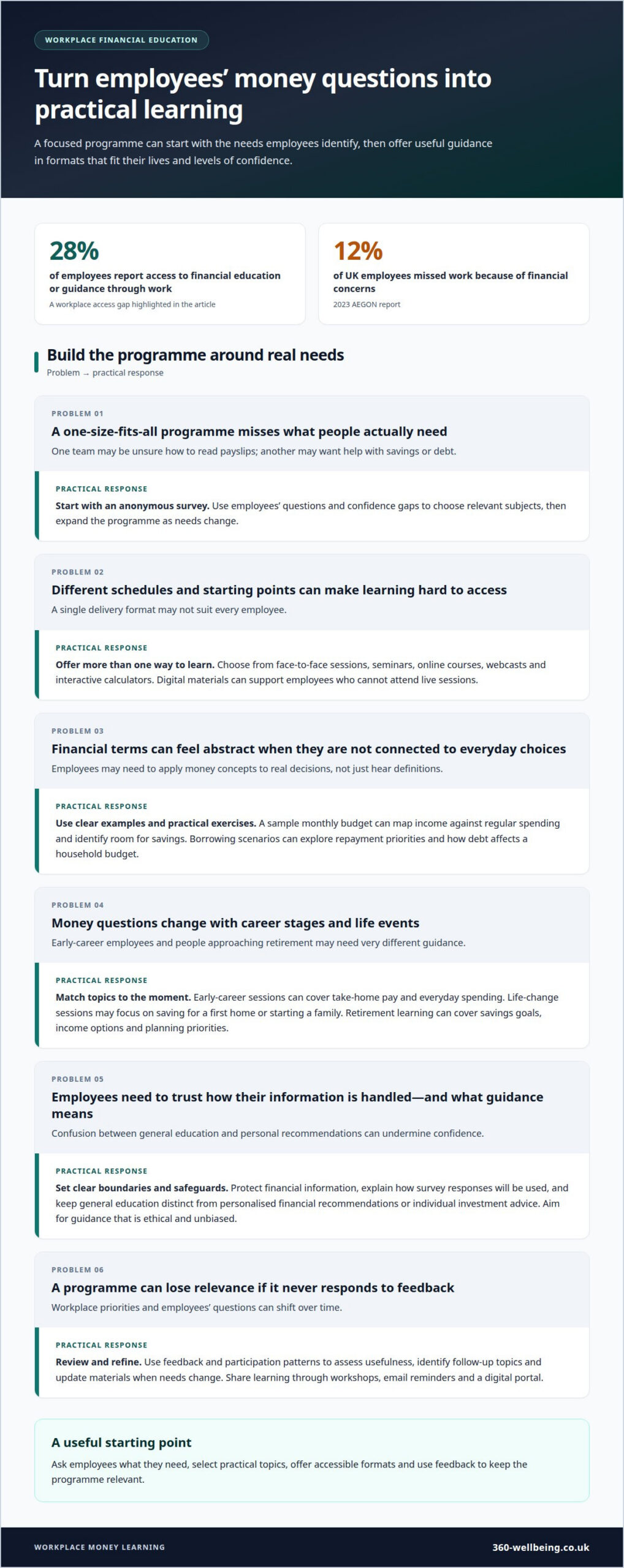
Only 28% of employees report access to financial education or guidance through work. For small and medium-sized employers, a focused programme can address relevant topics without requiring a one-size-fits-all approach.
Employee Needs and Programme Formats
Start with an anonymous survey to identify employees’ questions and confidence gaps. A small business might find that staff need help understanding payslips, while another team prioritises savings or debt management. Use the results to choose seminars, online courses, webcasts or interactive calculators. Offer different formats so employees can learn in ways that suit their schedules and starting knowledge.
For UK employers, distinguish general education from personalised financial recommendations. Protect employees’ financial information, explain how responses will be used, and make sure guidance is ethical and unbiased. These safeguards help build trust and encourage participation.
Personal Finance Topics
Useful topics include reading payslips, setting budgets, building savings, managing debt and understanding workplace benefits. Early-career employees may need guidance on take-home pay and everyday spending; those facing a major life change may value sessions on saving for a first home or starting a family. Clear examples make unfamiliar terms easier to apply.
Small and medium-sized employers can begin with the subjects employees identify, then expand the programme as needs change. Use feedback and participation patterns to assess whether sessions are useful, and update materials when financial topics or workplace priorities shift.
Programme costs depend on factors such as delivery format, tailoring, educator time and digital tools. Providers set costs after a quote request, based on the programme’s scope and requirements.
Partnering with benefits providers and financial education services
Providers can combine practical financial education with support for specific employee questions. A clear plan connects learning to life stages, from managing borrowing to preparing for retirement.
UK employers can choose workshops, online courses and seminars from education providers or universities. Workplace services may also include a financial helpline, where staff can discuss general queries and possible next steps.
Debt, Credit, Savings and Budgeting
Build sessions around decisions employees face in their personal finances. A budgeting workshop, for example, can show how to map income against regular spending and identify room for savings. Debt education can explain repayment priorities and how borrowing affects a household budget. Credit sessions can clarify common terms so employees understand their choices before taking on new commitments.
Use practical exercises instead of abstract explanations. A sample monthly budget or borrowing scenario gives employees a safe way to practise making informed decisions.
Retirement Saving and Pension Education
Retirement education can help employees review savings goals and understand how pension changes may affect their plans. For employees several years from retirement, sessions can cover tax efficiency, retirement income options and planning priorities. Those approaching retirement within the next year or two may need focused guidance on accessing savings, considering risks and planning income.
Keep general education distinct from individual investment advice. A session can explain which questions to consider and how to seek further financial guidance when personal circumstances call for it.
Employers can coordinate workshops with peer learning, such as informal discussions or mentoring. Employees may share practical approaches to saving while an educator clarifies complex topics and corrects misunderstandings. Schedule sessions around relevant moments, such as pension changes, redundancy or a share scheme launch. Gather feedback afterwards to identify useful follow-up topics, and offer digital materials for employees who cannot attend live sessions.
For a connected approach, explore workplace financial wellbeing support alongside education and peer learning.
What is financial literacy?
Financial literacy means understanding and using money skills to make informed financial decisions. At work, it can cover personal finances as well as how individual choices affect an organisation’s financial health. For example, employees who understand budgets can better see how spending decisions connect with team priorities.
Workplace financial education can support wellbeing by helping employees approach money concerns with practical skills. A 2023 AEGON report found that 12% of UK employees missed work because of financial concerns. Financial worries are also linked with stress, lower productivity and absenteeism, so education can form one part of a considered wellbeing approach.
Programmes can benefit employees while strengthening financial accountability and transparency. Employees can learn to interpret a profit and loss account, balance sheet and cash flow statement. Managers can develop skills in budgeting against forecasts and using financial ratios to assess profitability, liquidity and solvency. These topics connect financial understanding with organisational resilience and informed planning.
Communication matters. Share learning through workshops, email reminders and a digital portal, then use short feedback surveys to identify questions employees still have. Webcasts, animations and interactive calculators make topics easier to revisit at an individual pace. For example, a calculator can show how regular saving affects a future goal without requiring employees to share personal account details.
Make participation accessible and private. Offer sessions at different times, explain how feedback will be used, and avoid asking employees to disclose personal financial information in group settings. Consider attendance, survey responses and programme feedback together. If employees continue to raise questions about debt or savings, use those themes to shape follow-up education rather than assuming one session meets every need.
Financial education is an ongoing process, not a one-off event. Update materials as employee concerns and financial topics change, and use feedback to refine future sessions. This steady approach can help employees make everyday decisions with greater confidence and support a more financially informed workplace.
Early-career money management, payslips and debt
For employees starting their careers, workplace financial education can connect a first payslip with everyday money choices. A practical session can explain gross pay, take-home pay and deductions, then show how to plan spending around the amount received. Employees can practise identifying each item on a sample payslip without discussing their own finances.
Budgeting exercises can help new employees compare regular costs, such as rent, travel and bills, with income. A simple monthly plan can include savings alongside essential spending, making trade-offs easier to see. These skills help employees make informed choices as their income, living arrangements or responsibilities change.
Debt education should explain how borrowing fits into a budget and why interest affects the amount repaid. For example, a session can compare two sample repayment plans and show how payment amounts and interest affect progress. Credit education can also help employees understand the ongoing cost of borrowing before taking on a new commitment.
Keep group education separate from personal debt advice. Employees may need a confidential conversation about missed payments, competing debts or a budget that no longer balances. A clear route to individual support helps them explore practical next steps without sharing sensitive details in a team session.
Financial stress can make it harder to concentrate and may affect productivity at work. Financial wellness sessions should offer useful learning without implying that employees must disclose personal circumstances. Make attendance accessible, explain confidentiality clearly and provide written materials for later reference. Follow-up feedback can show whether employees want more guidance on payslips, credit or debt.
For tailored help with money concerns, explore financial guidance and debt support as a next step beyond general education.
360 Wellbeing: Financial Support & Debt Advice
360 Wellbeing offers Financial Support & Debt Advice for employees who need help moving from general money education to a personal concern. Debt helplines can give employees a place to discuss financial worries and consider practical next steps. This support can complement workplace learning, especially when someone’s questions involve their own debts or circumstances.
Financial pressures can affect wellbeing beyond money management. Employees may also find Mental Health Support helpful when financial concerns weigh on them. Employers can present these options as part of a broader benefits approach, while keeping personal conversations private and separate from group education.
For support with workplace financial wellbeing, contact 360 Wellbeing to discuss the options available.
Make financial wellbeing part of the next step
Build financial literacy programs for the workplace into an ongoing approach to employee wellbeing. Use emerging questions and feedback to shape what comes next, keeping support relevant as employees’ needs change. This helps create a culture where money concerns are addressed with care as part of wellbeing conversations.
For employers seeking connected benefits, 360 Wellbeing also offers Mental Health Support, a 24/7 Virtual GP and 360 Rewards. These sit alongside financial support as different ways to support employees’ wellbeing, while each benefit addresses a distinct need.
A thoughtful next step is to consider how financial support can complement the wellbeing approach already in place. Contact 360 Wellbeing to discuss support for your organisation.
Frequently Asked Questions
Is Financial Stress Costing Your Business?
Yes. Financial stress can contribute to absence, reduced focus and lower productivity. To understand its effect in your organisation, review absence patterns alongside confidential employee feedback rather than assuming every absence has the same cause. Look for recurring concerns, such as difficulty managing bills or debt, and consider whether existing wellbeing support addresses them. This gives leaders a practical basis for prioritising education and assessing its relevance.
Why could employee money worries be increasing absenteeism?
Money worries can contribute to absenteeism because financial pressure may affect concentration and make it harder to manage work alongside urgent personal concerns. An employee dealing with overdue bills, for example, may need time to address them or find it difficult to focus during the working day. Financial concerns are associated with stress, lower productivity and absence, so accessible support can form part of a wider wellbeing response.
What are workplace financial literacy programmes and what topics do they cover?
Workplace financial literacy programmes teach employees practical skills for making informed money decisions. Alongside budgeting, debt and savings, sessions can explore how to respond to a change in income, plan for an upcoming expense or understand the financial choices involved in a life event. Employers can use employee questions to set priorities, then offer relevant learning through seminars, digital resources or guided discussions.
What are the benefits of financial wellbeing programmes for UK employers and employees?
Employees can gain confidence in everyday financial decisions and feel better equipped to address money concerns. For employers, a programme can support a more open wellbeing culture and help employees understand how their choices relate to workplace benefits and organisational priorities. Accessible support may also strengthen engagement and retention by showing that employee wellbeing matters to the overall working experience.
How can UK employers assess employees’ financial literacy and identify training needs?
Use an anonymous survey to ask which money topics employees find difficult, then group responses into themes such as payslips, saving or borrowing. Offer a separate way to suggest topics so people can raise concerns without discussing personal circumstances publicly. Compare feedback across roles or career stages where appropriate, and use session questions and follow-up comments to identify gaps the initial survey may have missed.
How should an employer design and implement a workplace financial literacy programme?
Set a clear aim first, such as improving employees’ understanding of payslips or helping them navigate workplace benefits. Use employee feedback to select relevant topics, then choose suitable formats and educators. Explain how participation and feedback will be handled, and keep personal financial details private. After delivery, review attendance, comments and follow-up questions to refine future sessions and keep the programme useful as needs change.