
Did you know that the average UK worker suffering from a musculoskeletal disorder loses 14 working days each year? With 40.1 million working days lost recently to ill health and injury, the impact on your business isn’t just a figure on a spreadsheet; it’s felt in the quiet desks and the mounting pressure on your remaining team. Understanding the specific workplace physiotherapy benefits available to your staff is no longer a luxury. It’s a strategic necessity for 2026.
You likely see the effects of “tech neck” and chronic back pain every day, especially as hybrid work remains the standard. It’s difficult to watch talented people struggle with preventable physical strain while traditional medical insurance feels too costly to offer everyone. This article explores how integrating physiotherapy into your core benefits package can slash absenteeism, boost morale, and protect your business from the rising costs of musculoskeletal issues. We’ll preview how a proactive, digital-first approach to physical health builds a more resilient workforce and strengthens your employer brand to attract the very best talent.
Key Takeaways
- Understand the significant impact of musculoskeletal disorders on your bottom line, including the average loss of 14 working days per affected employee.
- Discover how specific workplace physiotherapy benefits can transition your team from chronic discomfort to peak performance while boosting long-term employee retention.
- Learn why proactive early intervention is more effective and cost-efficient for businesses than traditional “wait and see” occupational health models.
- Explore how digital-first platforms provide a scalable and affordable way for SMEs and remote teams to access expert care across the UK.
- See how integrating physical health with mental and social support creates a panoramic wellbeing strategy that fosters a truly resilient and healthy workforce.
The Growing Impact of Musculoskeletal (MSK) Health on UK Business Productivity
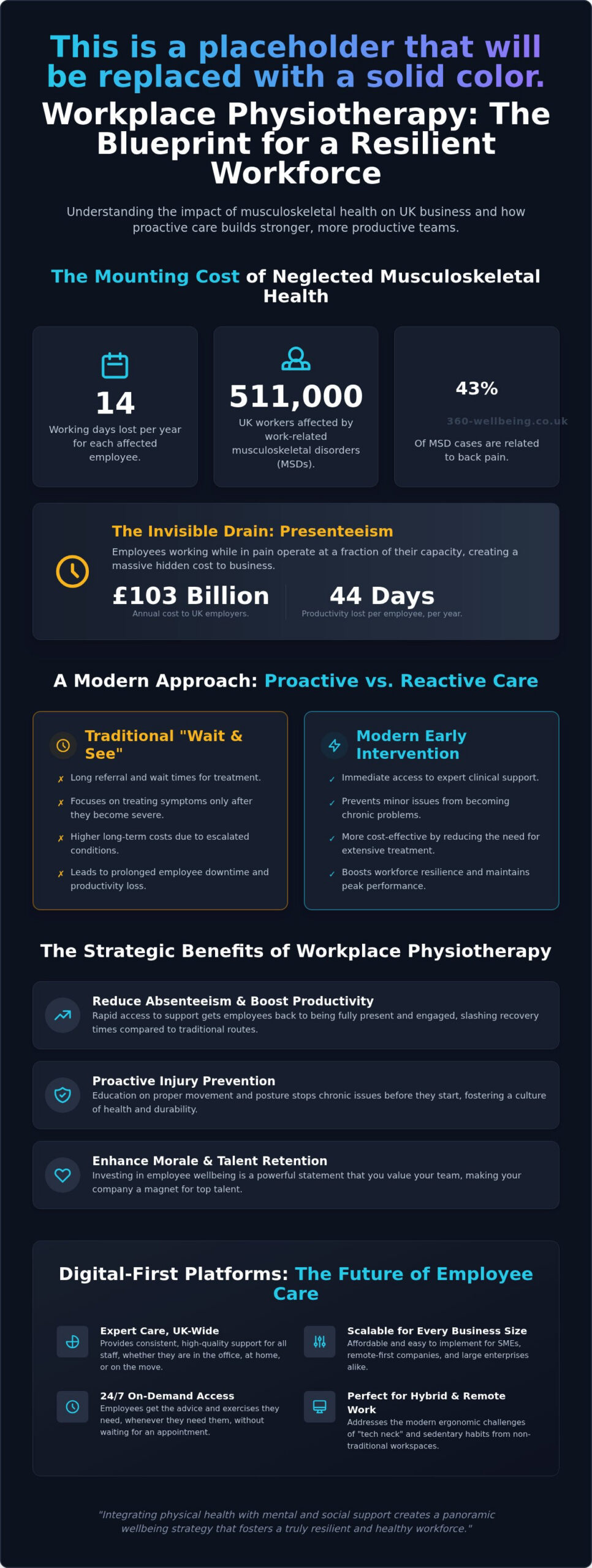
Musculoskeletal disorders (MSDs) aren’t just clinical diagnoses; they’re the everyday aches that hinder your team’s ability to focus and thrive. In the modern UK workplace, these conditions encompass everything from carpal tunnel syndrome to chronic lower back pain, often triggered by prolonged sitting or repetitive movements. As of 2026, the scale of this issue is immense. Recent data shows that approximately 511,000 workers in the UK suffered from a work-related musculoskeletal disorder during the 2024/25 period. Back pain alone accounts for 43% of these cases, turning simple daily tasks into significant hurdles for your staff. Understanding the value of workplace physiotherapy benefits helps leaders identify these physical challenges before they escalate.
The shift to hybrid working has blurred the lines between ergonomic office setups and “working from the sofa.” This transition has led to a surge in “tech neck,” a condition caused by looking down at devices for hours on end, which places immense strain on the cervical spine. Beyond total absence, there’s the invisible drain of presenteeism. This occurs when employees continue to work while in pain, operating at a fraction of their usual capacity. In fact, presenteeism is estimated to cost UK employers the equivalent of 44 lost working days per employee each year, creating a hidden economic burden of £103 billion annually across the country.
The Economic Cost of Absenteeism in SMEs
In a small team, every person’s contribution is vital. When one member is sidelined by a long-term MSK issue, the pressure shifts immediately to their colleagues. This often triggers a ripple effect that impacts the whole organization:
- Reduced capacity to meet critical client deadlines.
- Increased stress and eventual burnout for the remaining staff.
- Potential for secondary absences as the team’s resilience wanes.
The average cost of MSK-related absence is best measured by the 14 working days lost per affected employee each year. For an SME, this isn’t just a loss of productivity; it’s a disruption to the very rhythm of the business that can stall growth and damage team morale.
Sedentary Work and the Rise of Repetitive Strain
Managing Occupational safety and health in 2026 requires a shift in perspective. Sedentary work is the new physical challenge, as sitting for eight hours a day can be as taxing on the body as manual labour if ergonomics are ignored. Without proper support and proactive education, poor posture quickly evolves into long-term chronic pain conditions. This is why 24/7 digital access to health advice is no longer a luxury. It’s a professional necessity. Providing workplace physiotherapy benefits ensures your team has the tools to correct habits before they become injuries, moving your strategy from reactive fixes to a culture of durability and care.
Top Workplace Physiotherapy Benefits for Employers and Staff
Providing rapid access to clinical support does more than just fix a sore back; it restores an individual’s quality of life. When employees transition from constant discomfort to peak mobility, their performance naturally follows. One of the primary workplace physiotherapy benefits is the speed of recovery. Instead of waiting weeks for a traditional referral, staff can address symptoms as they appear. This immediate intervention moves them from a state of distraction and pain back to being fully present and engaged in their roles.
Prevention is equally vital. By educating staff on movement and posture, you stop injuries before they start. This proactive approach aligns with broader national efforts like the UK government’s WorkWell scheme, which highlights how targeted health support keeps people in work and thriving. When your team sees that you value their physical health enough to provide these tools, morale rises. They feel seen as human beings, not just resources. This sense of being valued is a powerful driver for retention, making your company an attractive home for top talent who prioritise their wellbeing.
The Physical-Mental Health Connection
Chronic pain rarely stays physical. It often carries a heavy emotional weight, leading to secondary challenges like anxiety, disrupted sleep, and low mood. By offering workplace physiotherapy benefits, you address the root cause of this mental load. Our holistic approach ensures that physical recovery supports mental resilience, creating a sense of balance and ease. Providing a clear, professional path to recovery removes the stress of uncertainty, allowing employees to focus on their growth rather than their limitations.
Empowering Employees Through Self-Management
Durability comes from knowledge. When employees learn specific exercise programmes and postural adjustments, they gain agency over their own health. This foresight is essential for long-term vitality. Research consistently shows that preventative physiotherapy significantly reduces the likelihood of complex surgeries or long-term disability later in life. It builds a culture where health is a shared professional necessity. By choosing a partner that offers an integrated health platform, you give your team the lasting tools they need to manage their own physical wellbeing with confidence.
Why Early Intervention Physiotherapy Outperforms Traditional Occupational Health
The traditional “wait and see” approach to employee health is a trap that many businesses fall into, often with costly consequences. When a staff member reports a minor back twinge, waiting for a standard NHS referral can be devastating for both the individual and the company. As of early 2026, the NHS waiting list stands at 7.25 million cases, with a median wait of 13.6 weeks. For a business, thirteen weeks isn’t just a clinical timeline; it’s a quarter of lost productivity, potential long-term absence, and a significant disruption to team dynamics. Early intervention through workplace physiotherapy benefits breaks this cycle by providing immediate support before a minor strain becomes a chronic limitation.
Reactive care focuses on treating an injury after it has already caused a work stoppage. In contrast, a proactive model identifies symptoms early, allowing for adjustments that keep the employee in their role. Digital-first physiotherapy platforms provide this essential triage, offering immediate reassurance to staff who might otherwise be anxious about their symptoms. When you compare the modest investment in early clinical advice to the staggering cost of a three-month absence, the business case becomes clear. Rapid support isn’t just about clinical outcomes; it’s about maintaining the operational rhythm of your firm.
Speed of Access: The Critical Factor
When pain strikes, the biggest hurdle to recovery is often uncertainty. Employees don’t know if they should rest, exercise, or seek urgent care. This anxiety can amplify the physical experience of pain. By pairing physiotherapy with 24/7 access to a Virtual GP, you provide a safety net that is always available. This immediate clinical feedback prevents minor issues from escalating. It’s much easier to correct a postural habit during a quick digital consultation than it is to manage a complex spinal issue that has been left to worsen for months.
Preventative vs. Reactive Care Models
Shifting your corporate mindset from “injury management” to “vitality and harmony” transforms the way your team views their health. This panoramic approach includes regular DSE assessments and preventative advice tailored for the hybrid workplace. It’s about building durability into your workforce. Beyond the physical benefits, this foresight provides essential financial support for employees by preventing the loss of earnings associated with long-term sick leave. When you invest in workplace physiotherapy benefits, you aren’t just buying a service; you’re securing the long-term resilience and financial stability of your entire team.
Implementing Physiotherapy as a Scalable Employee Benefit for SMEs
For many small business owners, the idea of offering clinical support often feels out of reach. There’s a common assumption that comprehensive health packages are reserved for corporate giants with massive budgets. However, the rise of SaaS-based platforms has dismantled this cost barrier. By moving to a model that utilizes a fixed fee per staff member, even sole traders and small firms can now provide workplace physiotherapy benefits that were once inaccessible. This shift allows you to offer high-value care without the financial unpredictability of traditional medical models.
In 2026, the hybrid work model is the standard. Traditional on-site clinics are often impractical for teams spread across the UK. Digital-first access ensures that whether an employee is at their kitchen table or in a central office, they can receive expert clinical advice immediately. This national coverage is essential for maintaining a sense of equity across your entire workforce. Integrating these services into a wider Employee Assistance Programme (EAP) creates a unified support system where physical, mental, and social health are addressed in one place.
Success depends on engagement. If your team doesn’t know the benefit exists, they can’t use it. Clear, empathetic communication about how to access support through a centralized platform is the first step toward a healthier office. When employees understand that help is just a few clicks away, they’re more likely to seek support early, preventing minor aches from becoming major disruptions.
The SaaS Advantage for Workplace Wellbeing
SaaS models provide a level of foresight that traditional insurance cannot match. Instead of managing complex, individual policies with varying premiums, a unified platform offers predictable costs and high value. This scalability is a significant advantage. As your business grows from a team of five to 500, your wellbeing strategy expands with you, maintaining a consistent level of care for every new hire without increasing your administrative burden.
Building a Health-First Workplace Culture
Integrating physical health into your company culture supports broader safety standards, such as ISO 45003. It’s about creating a panoramic view of safety that includes physical durability. By encouraging movement breaks and providing postural resources through the platform, you foster a sense of order and safety. Employees feel supported knowing there’s a structured path forward whenever they face a health challenge. Explore how our SaaS-based wellbeing platform makes clinical care affordable and accessible for your entire business.
Enhancing Workforce Durability with 360 Wellbeing’s Integrated Platform
The 360 Wellbeing approach moves away from fragmented health services toward a single, unified narrative of total wellness. True workforce durability isn’t achieved by treating symptoms in isolation. It requires a panoramic view of an employee’s life. By integrating physical, mental, and social health, we ensure that your team receives support that is both scientifically grounded and deeply personal. This all-encompassing care is essential for business success in 2026, where the lines between professional necessity and human entitlement have merged into a proactive vision of workplace harmony.
Our platform ensures that workplace physiotherapy benefits don’t sit in a silo. If an employee consults our 24/7 Virtual GP about persistent discomfort, the journey to recovery is immediate and structured. This synergy extends to our Mental Health support, acknowledging that physical limitations often weigh heavily on a person’s emotional state. We also provide Financial Support and Legal Support because we know that external stressors often manifest as physical tension. By addressing these underlying factors, we reduce the overall burden on your staff, fostering a culture of vitality and resilience.
Holistic Care: The 360 Wellbeing Difference
The journey from a Virtual GP consultation to expert physiotherapy advice is seamless within our ecosystem. This partnership between the provider and the user establishes a sense of reliability that traditional, disjointed services simply can’t match. To complement this clinical care, our “360 Rewards” and discount marketplaces encourage a healthy lifestyle outside of work hours. It’s about empowering employees to take proactive steps toward their own health, supported by a partner who is genuinely invested in their long-term success rather than just providing a one-off service.
Getting Started: A Clear Path Forward
Onboarding your team to the 360 Wellbeing platform is a methodical and calm process designed to minimize administrative friction. We provide a structured path that makes complex wellbeing topics feel accessible and manageable for organizations of all sizes, including sole traders. Every interaction is guided by UK-registered professionals who bring the personality of an expert caregiver to every consultation. This reassurance is vital when your staff are navigating physical limitations or workplace stress. To begin building a more resilient team, Book a demo or view our plans to protect your workforce today.
Securing Your Team’s Future with Proactive Health Care
Prioritizing physical health is a fundamental strategy for business durability in 2026. We’ve explored how early clinical intervention prevents minor strains from becoming long-term absences. We also looked at how digital-first access ensures every team member stays supported, regardless of where they work. By integrating workplace physiotherapy benefits into your core strategy, you protect your most valuable asset while building a culture of trust and genuine care.
Our platform is designed specifically for SMEs and sole traders. It offers a predictable fixed-fee model that provides 24/7 access to UK-registered GPs alongside mental health support and financial advice. This all-encompassing care approach ensures your workforce remains resilient, balanced, and focused on growth. Discover how 360 Wellbeing can transform your workplace health and productivity and start your journey toward a more vibrant, healthy organization today.
Frequently Asked Questions
Is workplace physiotherapy considered a taxable benefit in the UK?
In many cases, workplace physiotherapy isn’t considered a taxable benefit if it’s provided to help an employee return to work after an injury or to prevent a work-related condition. The UK government offers specific exemptions for health-related interventions that support workforce durability. It’s always best to consult with a tax professional to ensure your specific programme meets the criteria for these tax-free welfare benefits.
How does virtual physiotherapy work compared to in-person sessions?
Virtual physiotherapy focuses on clinical triage, postural assessments, and guided exercise programmes through high-definition video calls. While in-person sessions involve manual therapy, digital-first access allows specialists to observe your home or office setup in real-time. This immediate clinical feedback is often more practical for remote teams. It empowers employees to manage their own recovery through expert-led movement strategies and specific corrective exercises tailored to their environment.
Can small businesses with fewer than 10 employees offer physiotherapy benefits?
Absolutely, small businesses and even sole traders can easily offer workplace physiotherapy benefits through SaaS-based platforms. Unlike traditional corporate insurance, these models use a fixed fee per staff member, making professional care scalable and predictable. This ensures that even the smallest teams have access to the same high-quality clinical advice as large corporations, protecting your business from the operational disruption caused by musculoskeletal issues.
What is the difference between an Employee Assistance Programme (EAP) and physiotherapy?
An Employee Assistance Programme (EAP) is a holistic support system that typically covers mental health, legal, and financial advice. Physiotherapy is a clinical intervention specifically focused on physical health and musculoskeletal recovery. While they serve different needs, they work best when integrated into a single platform. This panoramic approach ensures that if a physical injury causes mental stress, the employee can access both forms of support seamlessly.
Can physiotherapy help with workplace stress and mental health?
Yes, there’s a profound link between physical comfort and mental wellbeing. Chronic pain is a significant driver of workplace stress and anxiety, as it drains an employee’s emotional resilience. Physiotherapy helps alleviate this mental load by removing the physical source of discomfort. By restoring mobility and reducing pain, employees often experience improved sleep and a more positive outlook, which directly contributes to a more harmonious workplace.
How quickly can an employee access a specialist through a digital health platform?
Access is typically much faster than traditional routes. Through a digital health platform, employees can often receive an initial clinical triage or consultation within a matter of hours rather than waiting weeks for an appointment. This speed is a core pillar of effective care, as it prevents minor strains from escalating. Having 24/7 access to health professionals ensures that reassurance and expert advice are always available when they’re needed most.
Does offering physiotherapy reduce the cost of business insurance?
While it depends on your specific provider, many insurers view proactive health interventions favourably. By offering workplace physiotherapy benefits, you’re actively reducing the risk of long-term disability claims and workplace injuries. This commitment to safety and employee durability can lead to lower premiums over time. It demonstrates to insurers that you’re managing occupational risks effectively, which creates a more stable and lower-risk environment for your business.