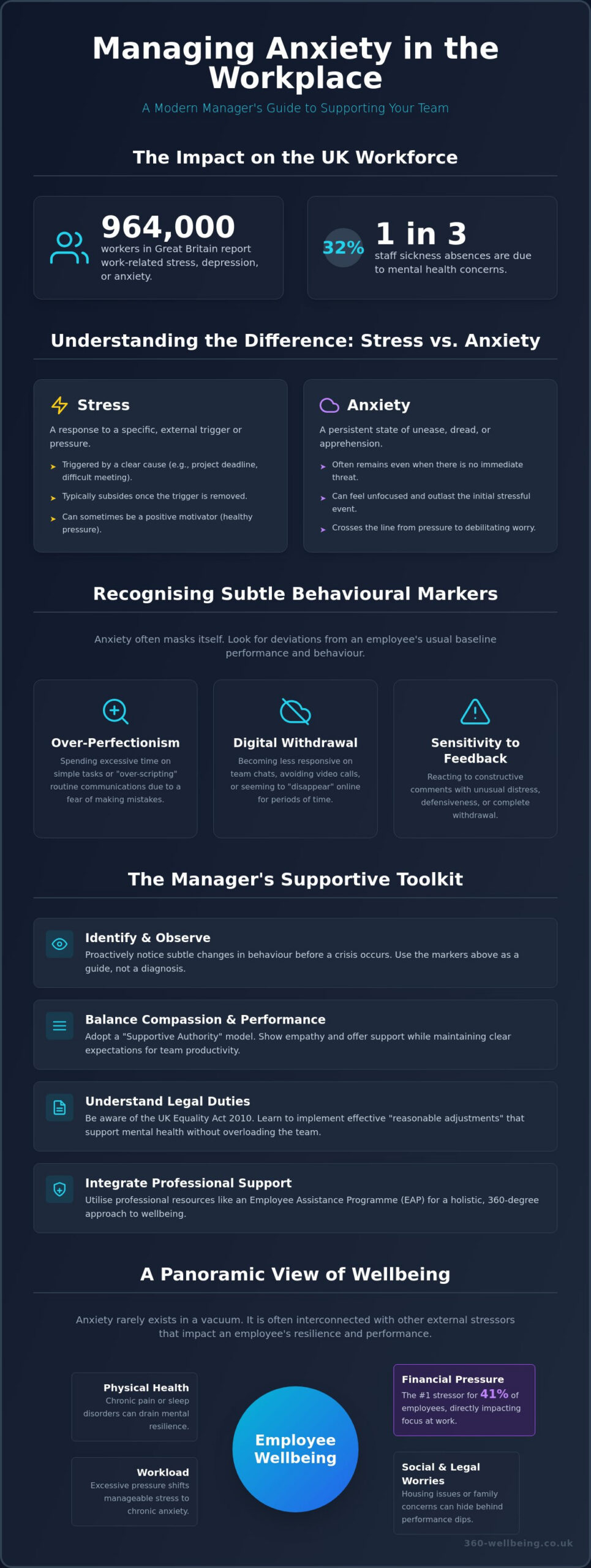
With 964,000 workers in Great Britain currently reporting work-related stress, depression, or anxiety, the impact on our professional landscape is impossible to ignore. Understanding how to manage a team member with anxiety has become an essential part of the modern manager’s toolkit, especially as mental health concerns now account for 32% of all staff sickness absences in the UK. It’s a challenge that requires a panoramic view of employee wellbeing, looking beyond the desk to the human experience underneath.
It’s natural to feel a sense of hesitation. You want to be a supportive leader, but you’re also navigating the complexities of the Equality Act 2010 and the practical challenge of maintaining team performance when someone is struggling. You might worry about saying the wrong thing or feel overwhelmed by recent regulatory shifts. We’re here to help you bridge that gap between clinical requirements and compassionate leadership.
This guide provides the clarity you need to lead with confidence. We’ll break down your legal duties, including the April 2026 changes to Statutory Sick Pay, and share empathetic strategies to help your employees thrive. You’ll learn how to distinguish between performance issues and health needs, ensuring your approach is both legally sound and deeply human.
Key Takeaways
- Identify the subtle behavioural markers of anxiety, such as over-perfectionism or digital withdrawal, to provide support before a crisis occurs.
- Master how to manage a team member with anxiety using the “Supportive Authority” model to balance compassionate care with professional productivity.
- Understand your legal duties under the UK Equality Act 2010, including the specific criteria for defining anxiety as a disability.
- Learn to implement effective “reasonable adjustments” that support an employee’s mental health without compromising the team’s overall workload.
- Discover how to integrate professional resources like an Employee Assistance Programme (EAP) to provide a holistic, 360-degree approach to workplace wellbeing.
Understanding Workplace Anxiety: A Panoramic Perspective
Modern leadership requires a shift in how we perceive employee health. In 2026, we’ve moved past viewing mental health as an isolated issue that stays at home. Instead, effective managers now adopt a panoramic view, recognizing that a person’s professional performance is inextricably linked to their mental, physical, and social wellbeing. When you are learning how to manage a team member with anxiety, you’re looking at a complex interplay of factors that can either support or hinder their ability to contribute to the team.
The scale of the challenge is significant. With nearly one million workers in Great Britain suffering from work-related stress, depression, or anxiety, the ripple effect on productivity is undeniable. Unmanaged anxiety doesn’t just affect the individual; it impacts team morale, increases the risk of burnout for colleagues covering extra work, and can lead to higher staff turnover. By addressing these issues proactively, you aren’t just being a compassionate leader; you’re protecting the durability and harmony of your entire department.
Anxiety vs. Stress: Knowing the Difference
It’s easy to use the terms “stress” and “anxiety” interchangeably, but they represent different internal experiences. Stress is typically a response to an external threat or a specific pressure, like a looming deadline or a difficult client meeting. Once the trigger is removed, the feeling usually subsides. Anxiety, however, is a persistent state. It’s often characterized by a sense of dread or apprehension that remains even when there is no immediate “threat” present. Workplace anxiety is a persistent feeling of unease that outlasts the immediate task.
Healthy pressure can sometimes drive performance, but it crosses a line when it becomes debilitating worry. As a manager, you might notice that a previously high-performing employee starts to struggle with simple decisions or becomes paralyzed by the fear of making a mistake. These are signs that the Psychosocial hazards in the workplace, such as excessive workload or lack of control, are shifting from manageable stress into chronic anxiety.
The Interconnectedness of Wellbeing
Anxiety rarely exists in a vacuum. A panoramic perspective reveals how physical health issues, such as chronic pain or sleep disorders, can act as a constant drain on an employee’s mental resilience. If a team member is physically uncomfortable, their capacity to manage professional pressure diminishes, often leading to a cycle of heightened anxiety and further physical tension.
External stressors are equally influential. Research from 2024 highlighted that financial pressure is the top stressor for 41% of employees. Providing access to financial support and guidance can often do more to alleviate workplace anxiety than a simple adjustment to a task list. Social and legal worries, such as housing issues or family concerns, also hide behind performance dips. When you understand how to manage a team member with anxiety, you recognize that supporting the whole person is the most effective way to restore their professional vitality.
Recognising the Subtle Signs of Anxiety in Your Team
Anxiety rarely announces itself with a loud crisis. In a professional setting, it’s often a quiet, creeping presence that masks itself as other workplace behaviours. When you’re learning how to manage a team member with anxiety, your first task is to develop an eye for the deviations from an employee’s usual baseline. It’s about noticing the small shifts in energy, engagement, and output before they escalate into something more disruptive for both the individual and the wider team.
Behavioural and Emotional Red Flags
One of the most deceptive signs of workplace anxiety is over-perfectionism. You might have an employee who was previously efficient but now spends hours “over-scripting” a simple five-minute update or agonising over the phrasing of a routine email. This isn’t necessarily a sudden commitment to excellence; it’s often a fear-based response to the possibility of making a mistake. You might also notice an increased sensitivity to feedback. A constructive comment that would have been handled with ease a few months ago might now be met with visible distress, defensiveness, or a complete withdrawal from the conversation.
In our increasingly remote and hybrid environments, digital cues have become essential indicators of mental health. The “camera-off” phenomenon is a prime example. If a team member who used to be active on video suddenly becomes a silent square on every call, it may signal social anxiety or a feeling of being under an intense spotlight. This digital withdrawal often pairs with erratic working hours. An anxious employee might stay online late into the night, not because of a heavy workload, but because they’re caught in a cycle of worry and struggle to “switch off” from their professional duties.
Physical Manifestations of Anxiety at Work
Anxiety is a full-body experience that leaves visible traces even in a professional environment. You might observe a team member who appears constantly restless, struggles to maintain concentration during discussions, or seems perpetually fatigued. These physical symptoms of stress are often the body’s way of signalling that internal resilience is wearing thin. Anxiety frequently masquerades as general illness, leading to frequent, short-term absences that might be described as “feeling under the weather” or “migraines.”
Identifying these patterns early allows you to intervene with empathy rather than frustration. According to Acas, managing work-related stress effectively starts with an open, non-judgmental dialogue. If you notice these signs, it might be the right time to suggest a Mental Health Support resource to help them find their balance again. Understanding these subtle markers is a foundational part of knowing how to manage a team member with anxiety while maintaining a supportive and productive workplace culture.
The Manager’s Toolbox: Communication and Boundaries
Effective leadership in the face of mental health challenges relies on the “Supportive Authority” model. This approach balances deep empathy with a clear focus on professional objectives. It’s vital to remember that while you are responsible for your team’s wellbeing, you are a manager, not a mental health professional. Setting these boundaries early protects both you and your employee, ensuring that the support you provide remains sustainable and focused on workplace outcomes. Learning how to manage a team member with anxiety involves recognizing that your role is to facilitate a supportive environment, not to provide clinical treatment.
Active listening serves as your most powerful tool in de-escalating anxious cycles. When an employee feels heard without judgment, the physical and emotional intensity of their anxiety often begins to subside. This doesn’t mean you have to agree with every perception they have, but acknowledging their internal experience creates the psychological safety needed to move toward practical solutions. By focusing on the facts of the workplace while validating the person’s feelings, you establish a partnership that looks out for their long-term success.
Initiating the Conversation: Scripts for Managers
Starting a dialogue about mental health can feel daunting for both parties. To lower the barrier, use “I” statements to frame your observations neutrally. For instance, instead of saying, “You seem very anxious lately,” try: “I’ve noticed you’ve been staying online much later than usual, and I wanted to check in to see how you’re doing.” This shift reduces the risk of the employee feeling “called out” or defensive. It moves the focus from a perceived personal flaw to a visible workplace behaviour.
Always ensure you are in a safe, confidential space before opening these discussions. If an employee denies they are struggling despite clear signs, respect their choice. Don’t push for a disclosure they aren’t ready to make. Simply reiterate that your door is always open and that the company prioritises their wellbeing as a professional necessity. This keeps the lines of communication clear without overstepping personal boundaries.
The Wellness Action Plan (WAP) Framework
A Wellness Action Plan (WAP) provides the structured alternative to “therapy-speak” that many managers need. It’s a proactive document that helps you understand how to manage a team member with anxiety through concrete, agreed-upon steps. This framework ensures consistency and removes the guesswork from daily interactions.
- Step 1: Identifying Triggers. Work together to pinpoint specific workplace factors that fuel unease. These might include tight deadlines, back-to-back meetings, or public speaking requirements.
- Step 2: Agreeing on Warning Signs. Ask the employee how they would like you to respond when you notice their early warning signs, such as withdrawal or over-perfectionism. This empowers them to take control of their own support.
- Step 3: Documenting Support Measures. List the practical adjustments you’ve agreed upon. Having this in writing ensures that both you and the employee have a clear reference point, which can be shared with HR if needed to ensure long-term durability of the support.
Reasonable Adjustments and the UK Equality Act 2010
Navigating the legalities of mental health in the workplace requires a clear understanding of the Equality Act 2010. In the UK, anxiety is legally considered a disability if it has a “substantial” and “long-term” adverse effect on an individual’s ability to carry out normal day-to-day activities. “Long-term” typically means the condition has lasted, or is expected to last, for at least 12 months. It’s vital to recognize that an employee does not need a formal clinical diagnosis to be protected under this Act. If their symptoms meet these criteria, you have a legal obligation to explore and implement reasonable adjustments.
The term “reasonable” is key. It involves balancing the effectiveness of the adjustment for the employee against the cost, practicality, and impact on the rest of the team. When you are considering how to manage a team member with anxiety, these adjustments shouldn’t be viewed as “special treatment.” Instead, they are tools to level the playing field, allowing a talented professional to continue contributing despite their health challenges. By proactively addressing these needs, you foster a culture of durability and inclusion that benefits the entire organisation.
Structural Adjustments to the Working Day
Small changes to how a day is structured can significantly lower an employee’s baseline anxiety. One effective strategy is eliminating “mystery meetings.” Always provide a clear agenda at least 24 hours in advance so the individual can prepare and avoid the spiral of “what if” thinking. You might also consider flexible start and finish times. For many, peak-time travel is a major trigger; allowing a team member to arrive and leave an hour later can ensure they start their day in a much calmer state of mind.
Implementing “quiet hours” is another powerful structural tool. Agree on specific blocks of time where notifications are turned off and there is no expectation of an immediate response. This allows the employee to focus on deep work without the constant “ping” of digital interruptions, which can often feel overwhelming for someone managing high levels of unease.
Environmental and Social Adjustments
The physical and social environment plays a huge role in mental clarity. Providing a fixed desk location in a quieter area of the office, rather than relying on hot-desking, can provide a much-needed sense of stability and control. You should also consider adjusting your communication style. While some prefer a quick chat, an anxious team member might find it more manageable to receive instructions in writing, allowing them to process the information at their own pace without the pressure of an immediate verbal response.
When an employee is returning from an absence, a phased return is essential for a sustainable recovery. This might involve starting with shorter days or a reduced workload and gradually building back up to full capacity. If you’re feeling unsure about the legal nuances of these requirements, accessing professional Legal Support can provide the reassurance you need to proceed with confidence. Understanding how to manage a team member with anxiety within this legal framework ensures you are protecting both the individual’s rights and the business’s interests.
Integrating Professional Support with 360 Wellbeing
Leading with empathy is a vital skill, but recognizing the limits of your own expertise is a mark of professional maturity. Knowing how to manage a team member with anxiety involves understanding that you cannot be their therapist, financial advisor, or legal consultant. While your support is the foundation, there comes a point where the most helpful thing you can do is guide them toward professional intervention. This shift ensures the employee receives expert care while you maintain your focus on team leadership and operational goals.
When physical symptoms like chronic fatigue or tension begin to impact an employee’s daily life, a 24/7 Virtual GP provides a vital bridge to clinical care. Accessing a doctor at any time of day offers the reassurance needed to address health-related worries before they escalate into a workplace crisis. Professional support reduces the emotional burden on the manager, allowing you to remain a supportive leader without feeling responsible for a team member’s clinical recovery.
Leveraging Your Employee Assistance Programme (EAP)
A comprehensive Employee Assistance Programme (EAP) acts as a proactive safety net for your organisation. Through 360 Wellbeing, employees gain immediate access to Mental Health Support, including structured therapy sessions that address the underlying drivers of their anxiety. This speed of access is crucial; it prevents a manageable period of unease from developing into a long-term absence. Additionally, Life Coaching can empower employees to build durable coping strategies, helping them navigate high-pressure projects with renewed confidence and mental clarity.
A Holistic Approach to Reducing Staff Worry
True wellbeing is panoramic, encompassing the social and financial factors that often fuel internal distress. It’s difficult for an employee to focus on a spreadsheet if they’re struggling with debt or navigating a complex legal issue at home. By offering Financial Support & Debt Advice, you address one of the most common external triggers for workplace anxiety. This proactive approach tackles the root cause of stress rather than just the symptoms visible during office hours.
Reducing the weight of “life admin” is another effective way to support your team’s mental health. Providing Legal Support and Complimentary Will Writing services might seem distant from daily tasks, but these benefits offer a profound sense of security and order. When you understand how to manage a team member with anxiety through this holistic lens, you aren’t just managing a condition; you’re cultivating a professional environment where employees feel valued as individuals and protected as professionals.
Cultivating a Resilient and Supportive Workplace Culture
Effective leadership is about more than just hitting targets; it’s about fostering an environment where every individual feels seen and supported. By adopting a panoramic view of health and understanding your legal obligations under the Equality Act 2010, you create a foundation of trust and durability. You now have the tools to recognize subtle signs of distress and the communication strategies needed to bridge the gap between professional productivity and empathetic care.
Mastering how to manage a team member with anxiety is a journey that becomes much more manageable when you have the right partners. Providing your staff with a comprehensive safety net is a professional necessity that benefits everyone. Discover how 360 Wellbeing can support your team’s mental health with 24/7 access to UK-registered GPs, tailored Mental Health Support, and holistic financial and legal advice. By integrating these professional services, you ensure that your team has the resources they need to thrive both inside and outside the workplace. You don’t have to navigate these complexities alone; a healthier, more harmonious team is well within your reach.
Frequently Asked Questions
Is anxiety considered a disability in the workplace under UK law?
Yes, anxiety is legally recognised as a disability under the Equality Act 2010 if it has a substantial and long-term adverse effect on an individual’s ability to carry out day-to-day activities. This protection applies even without a formal clinical diagnosis. When you are learning how to manage a team member with anxiety, it’s vital to remember that these legal protections require you to explore and implement reasonable adjustments to prevent discrimination.
Can I ask an employee if they have anxiety if their performance is dipping?
You should avoid asking for a specific medical diagnosis, as this can feel intrusive and may breach privacy boundaries. Instead, focus your conversation on their wellbeing and the observable changes in their work. Ask open questions like, “I’ve noticed you’ve been struggling with deadlines lately; is there anything we can do to support you?” This approach opens the door for them to disclose their anxiety voluntarily without feeling pressured or “called out.”
How do I manage an anxious employee without giving myself anxiety too?
Maintaining clear boundaries is essential for your own mental resilience. Use the “Supportive Authority” model to provide empathy while keeping the focus on professional outcomes. By referring the individual to professional services like an Employee Assistance Programme (EAP) or Life Coaching, you ensure they get the expert care they need. This prevents you from taking on the role of a therapist, which isn’t sustainable for any manager.
What are “reasonable adjustments” for someone with social anxiety?
Adjustments for social anxiety often involve modifying communication and meeting structures. You might allow the employee to provide written updates instead of presenting in large group meetings or give them the option to keep their camera off during certain video calls. Providing agendas well in advance also helps reduce the “anticipatory anxiety” that often comes with social interaction in a professional setting, allowing them to process information at their own pace.
What should I do if an employee has a panic attack at work?
Stay calm and provide the individual with a quiet, private space away from colleagues. Don’t crowd them or ask too many questions; instead, offer reassurance and ask if there’s a specific person they’d like you to call. Once the immediate symptoms subside, encourage them to use a 24/7 Virtual GP service for clinical guidance and reassurance. Your role is to provide a sense of safety and order during a distressing moment.
How can an EAP help a manager support an anxious team member?
An EAP provides a structured referral route that takes the pressure off the management chain. It offers the employee direct access to Mental Health Support and counseling, while also providing managers with consultations on how to manage a team member with anxiety effectively. Having this resource in place ensures that support is consistent, professional, and available outside of standard office hours, which is often when anxiety peaks.
Can an employee be dismissed for anxiety-related performance issues?
Dismissal for performance issues related to a disability like anxiety is high risk and should be a last resort. You must first demonstrate that you’ve explored all reasonable adjustments and followed a fair, transparent process. If the anxiety is linked to a disability under the Equality Act, failing to provide adequate support could lead to claims of unfair dismissal. Always seek Legal Support before taking formal action to ensure you’re meeting your statutory duties.
How does a Virtual GP differ from an EAP in supporting mental health?
A 24/7 Virtual GP provides medical and clinical intervention, such as diagnosing physical symptoms of anxiety or discussing medication options. In contrast, an EAP focuses on therapeutic and practical support, including counseling, Life Coaching, and advice for external stressors like debt. Both services work together within a 360-degree wellbeing strategy to provide a unified narrative of care that addresses both the mind and the body.