
What if the most taxing part of a workplace grievance isn’t the formal hearing, but the invisible emotional weight it places on your team? When conflict arises, the atmosphere often shifts from collaboration to caution, leaving both employees and managers feeling isolated. Accessing professional eap support for workplace grievances ensures that no one has to navigate these complex waters without a compass. You’re likely worried about the impact on mental health, the risk of potential tribunal claims, or the sudden drop in productivity while investigations stall.
It’s a heavy burden to carry, but it doesn’t have to define your company culture. In this 2026 UK guide, we’ll explore how an Employee Assistance Programme provides a panoramic approach to conflict resolution. You’ll discover how to leverage expert legal advice and professional mediation that protects your business while prioritising human wellbeing. We’ll outline the essential steps to ensure a smoother process, helping you move past the fallout toward a more durable and harmonious workplace where retention remains high despite past challenges.
Key Takeaways
- Understand how an EAP acts as an impartial third party to de-escalate tensions and ensure procedures align with ACAS-approved standards.
- Learn how to provide employees with a safe, confidential space through eap support for workplace grievances, significantly reducing the emotional fallout for all parties.
- Discover how managers can access expert legal helplines and professional sounding boards to navigate UK employment law with absolute confidence.
- Identify the critical touchpoints for signposting support, from the initial informal concern to formal acknowledgement letters, to maintain transparency and trust.
- Explore a panoramic approach to conflict that addresses the physical symptoms of stress through integrated services like 24/7 Virtual GP access.
Understanding the Role of EAP Support in Workplace Grievances
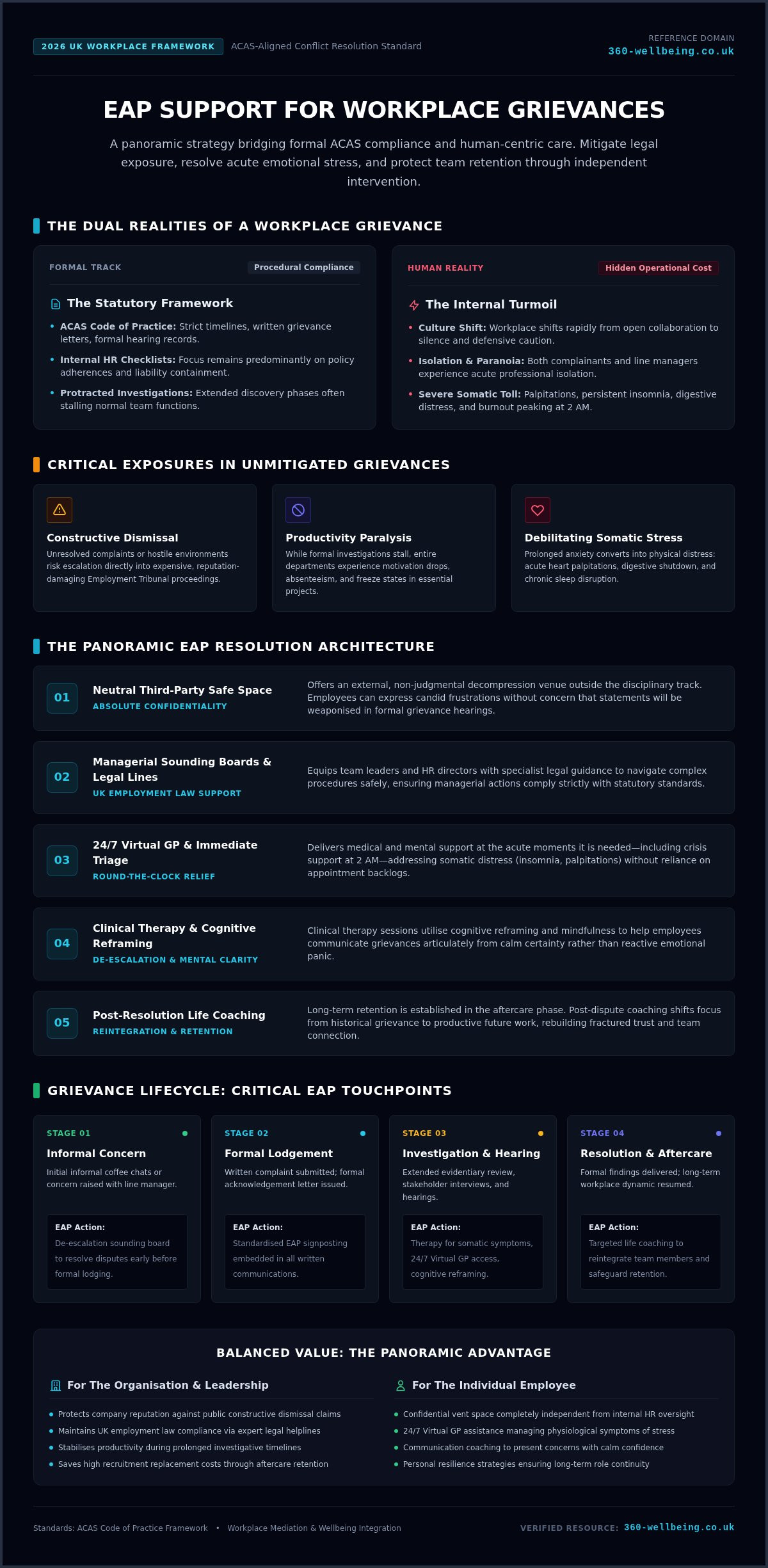
A workplace grievance is more than just a disagreement; it’s a formal or informal expression of a concern an employee has regarding their work, environment, or colleagues. In the UK, these procedures typically align with the ACAS Code of Practice, moving from initial informal chats to structured, formal hearings. However, the procedural side often masks the deep emotional stress involved. By 2026, the standard for workplace harmony has shifted significantly. Businesses now recognise that managing a complaint requires more than a compliance checklist. It requires a panoramic view of the employee’s wellbeing. This is where eap support for workplace grievances becomes a strategic necessity. While HR departments focus on policy and legal timelines, an EAP provides the human-centric support that prevents a conflict from spiralling into a long-term crisis.
What is an Employee Assistance Programme (EAP)?
At its core, an Employee Assistance Programs (EAPs) is a confidential benefit designed to help staff navigate personal or professional challenges that might impact their health and performance. These programmes offer a suite of services, including mental health therapy, financial guidance, and legal support. Confidentiality is the cornerstone of this service. It builds a bridge of trust that internal departments often can’t replicate. When an employee feels heard by an impartial professional, it acts as a vital preventative measure against burnout. It ensures that the individual remains resilient, even when the formal process feels overwhelming or lengthy.
Why Grievances Require External Support
Conflict carries a high emotional price. It drains productivity and can shatter team morale if left unchecked. Without external intervention, many grievances escalate into “constructive dismissal” claims, which are both costly and damaging to a firm’s reputation. Providing access to an EAP helps mitigate these risks by offering expert guidance that stays separate from the disciplinary track. EAPs serve as a secure neutral ground where distressed staff can process their emotions and gain clarity without fear of professional judgment. This support keeps the focus on resolution rather than escalation. It allows the business to maintain stability while the formal investigation proceeds at its own pace, ensuring the outcome is reached with minimal fallout.
Emotional and Mental Health Support for Employees Facing Grievances
The weight of a formal complaint often extends far beyond the office walls. When an individual feels wronged or unfairly treated, the resulting anxiety can be all-consuming. While the Acas Code of Practice on disciplinary and grievance procedures ensures a fair process, it doesn’t always address the internal turmoil an employee faces. This is where eap support for workplace grievances provides a vital safety net. Unlike internal HR support, which can sometimes feel intimidating or conflicted, an EAP offers a truly impartial space. It’s a place where staff can vent their frustrations without fear that their words will be used against them in a hearing. Because our support is available 24/7, help is there at 2 AM when the stress feels most acute, not just during standard business hours.
Counselling and Stress Management
Investigations take time. During these weeks or months, the physical symptoms of stress, such as heart palpitations, insomnia, or digestive issues, can become debilitating. Clinical therapy sessions help employees manage these physiological responses through proven techniques like cognitive reframing or mindfulness. Beyond immediate relief, counselling helps an individual find the words to articulate their concerns clearly. This clarity is essential. It ensures that when they finally sit in a meeting, they’re communicating from a place of calm rather than reactive panic. Building this level of resilience isn’t just about surviving the grievance; it’s about ensuring they can return to their role effectively once the situation is resolved.
Rebuilding Confidence with Life Coaching
Many discussions focus on the start of a conflict, but the “aftercare” is where long-term retention is won or lost. Even after a successful resolution, an employee might feel fragile or disconnected from their team. Life coaching within an EAP framework helps shift the focus from what happened in the past to what needs to happen next. It moves the employee from a reactive mindset to a proactive one. Coaches work with individuals to set new professional boundaries and goals, helping them reclaim their sense of agency. This forward-looking support is a hallmark of a holistic Employee Assistance Programme that values the person as much as the process. By focusing on durability and professional growth, we help employees navigate difficult conversations and emerge with their career path intact.
Managerial and Legal Guidance: How EAPs Protect the Business
While much of the focus during a conflict rests on the individual raising the concern, the impact on those managing the process is often overlooked. It’s an emotional weight that can affect even the most experienced leaders. Managers and HR professionals are frequently caught in a high-pressure middle ground, tasked with maintaining business continuity while navigating sensitive interpersonal issues. Providing robust eap support for workplace grievances acts as a strategic buffer for the entire organisation. It ensures that leaders have access to an expert “sounding board” where they can discuss their approach in a safe, confidential environment. This proactive intervention helps maintain a clear duty of care, preventing the managerial stress that often leads to secondary absences or poor decision-making during high-tension periods.
Legal Helplines for Procedural Accuracy
For many UK small and medium enterprises (SMEs), the cost of a dedicated legal team is prohibitive. Yet, the price of a procedural error can be even higher. EAPs provide immediate access to specialised legal helplines that clarify employer obligations and employee rights without the need for expensive law firm fees. By ensuring that every step aligns with the UK government guidance on formal workplace disputes, businesses can significantly reduce the likelihood of costly Employment Tribunals. These helplines provide SME owners with the immediate, expert legal clarity needed to handle complex documentation and meeting protocols with absolute precision. This early intervention ensures that the process remains legally sound, protecting the business from the financial and reputational damage of tribunal claims.
Supporting Managers and HR Professionals
Overseeing a grievance is a significant emotional undertaking that can lead to burnout for even the most experienced leaders. Accessing eap support for workplace grievances offers tailored guidance for managers, helping them process the “managerial stress” inherent in these procedures. This support often extends to training for mental health champions within the workplace, empowering them to spot escalating tensions before they reach a formal stage. When managers feel supported, they’re better equipped to view grievances not as a threat, but as an opportunity for cultural improvement. This shift in perspective is essential for building a durable organisation where feedback is valued and conflict is resolved with empathy. By integrating these services, you create a culture of foresight that protects your most valuable asset: your people.
Integrating EAP Support into Your Formal Grievance Procedure
Administrative processes often feel cold and clinical. By the time a concern reaches the formal stage, the relationship between employee and employer is already under significant strain. Integrating eap support for workplace grievances into every step of your internal policy transforms a rigid procedure into a supportive framework. This integration should begin at the earliest possible moment. Signpost these services during the initial informal chat, even before any paperwork is filed. When a formal grievance is eventually lodged, include clear EAP contact details directly within the acknowledgement letter. This isn’t just a courtesy; it’s a proactive step that ensures help is visible when emotions are highest.
Step-by-Step Integration Framework
A successful integration follows the lifecycle of the conflict, providing a safety net at each transition. Before any formal hearing, encourage participants to use “cool-down” sessions with professional counsellors. This helps individuals process their immediate emotional reactions, leading to more constructive and calm dialogue during the meeting itself. During the investigation, the focus often shifts to the investigating officer. These individuals require their own legal and managerial support to remain objective and resilient under pressure. Once a decision is reached, the EAP’s role becomes one of mediation and recovery. Offering mental health check-ins for all parties involved helps mend the social fabric of the team, ensuring that the resolution is durable rather than just a temporary fix.
Best Practices for Internal Communication
Transparency is vital for building trust during a period of uncertainty. When promoting these services, be clear that the EAP is an independent partner. They don’t influence the final decision or share personal details with management. This distinction prevents the support from feeling like a “diversion” or a way for the company to avoid its responsibilities. In some cases, workplace friction stems from external pressures that impact performance. For instance, providing Financial Support for Employees can alleviate the domestic stress that sometimes boils over into professional conduct.
Beyond individual cases, your EAP provides a panoramic view of your organisation’s health. Use anonymised data to identify recurring themes in grievances across the business. If multiple complaints point toward a specific department or a particular policy, you can intervene with targeted training or life coaching before new conflicts arise. This shift from reactive management to proactive foresight is what defines a modern, empathetic workplace. To see how our platform can streamline your support strategy, explore our Employee Assistance Programme options today.
360 Wellbeing: Providing Holistic Support for Workplace Conflict
Conflict isn’t just a file on a desk; it’s a physical and emotional experience that impacts every facet of an individual’s life. When tensions rise, the body often reacts before the mind can fully process the situation. Our 24/7 Virtual GP service provides immediate access to UK-registered doctors who can address the physiological impacts of workplace stress, such as chronic fatigue, tension headaches, or heart palpitations. This is a core component of our panoramic approach to health, where mental, physical, and legal support are woven into a single, unified narrative. For small businesses and sole traders who don’t have the luxury of a large internal HR department, our platform provides the expert infrastructure needed to manage eap support for workplace grievances with professional precision and genuine empathy.
Investing in this level of care offers a significant long-term ROI that goes beyond simple compliance. By resolving conflicts early and supporting the “whole person,” you reduce the risk of long-term sickness absence and the high costs associated with staff turnover. A conflict-resilient workforce is a durable one. Our platform is designed to make this level of professional stability accessible to every organisation, regardless of size. We move away from the coldness of traditional insurance services, opting instead for a partnership that looks out for your team’s long-term interests.
Total Wellness: Beyond the Grievance
True recovery doesn’t end when the formal grievance process concludes. Rebuilding trust and workplace harmony takes time and intentional effort. We offer 360 Rewards as a proactive tool to boost morale and re-engage teams after a difficult period. Sometimes, the root of workplace friction isn’t professional at all; it’s personal. Our financial support and debt advice helplines help employees manage external stressors that might otherwise impact their focus and conduct at work. By addressing these underlying factors, we provide a more complete version of care. This modern, holistic approach is why we’re the preferred choice for UK employers who view wellbeing as an essential human entitlement.
Getting Started with 360 Wellbeing
We’ve designed our SaaS platform to be as intuitive as possible, ensuring a smooth and methodical onboarding process for your entire organisation. From the moment you join, every employee gains 24/7 access to our suite of mental health, legal, and physical health tools. This immediate empowerment creates a sense of safety and order that is essential for maintaining workplace harmony during times of change. You’re not just buying a service; you’re gaining a knowledgeable authority that is deeply invested in your success. Empower your workforce with 360 Wellbeing today and discover the difference that a panoramic viewpoint on health can make for your business.
Cultivating a Conflict-Resilient Culture for the Future
Navigating workplace disputes doesn’t have to be a journey of isolation or legal fear. By integrating eap support for workplace grievances, you provide your team with a panoramic safety net that covers emotional resilience, legal accuracy, and physical wellbeing. We’ve explored how early intervention and professional mediation protect both the individual and the business, ensuring that resolutions are durable and restorative. This approach moves beyond mere compliance, treating workplace harmony as an essential human entitlement rather than a luxury.
Our platform is designed specifically for UK SMEs, offering 24/7 access to UK-registered Virtual GPs alongside specialised legal and mental health helplines. It’s about providing foresight and durability when your organisation needs it most. Explore our EAP and Employee Wellbeing Platform to see how we can help you turn workplace challenges into opportunities for growth. You have the tools to build a more supportive environment; let’s start that journey together.
Frequently Asked Questions
Is EAP support confidential during a grievance process?
Confidentiality is a core pillar of any Employee Assistance Programme. When accessing eap support for workplace grievances, your discussions with counsellors or legal advisors remain strictly private. Employers only receive high-level, anonymised data regarding service usage to help them understand general workplace trends. They’ll never see your personal health notes or the specific details of your complaint. This independence ensures you can speak freely without fear that your vulnerability will impact your professional standing.
Can an EAP representative attend a grievance hearing with me?
Typically, an EAP professional won’t attend a formal hearing as your representative. Their role is to act as an impartial third party rather than an advocate or union official. Instead, they provide the emotional and legal preparation you need before the meeting. Through life coaching and stress management, they help you articulate your concerns calmly. After the hearing, they offer the necessary aftercare to help you process the outcome and rebuild your professional confidence.
How does an EAP help an employer follow UK employment law?
An EAP helps employers navigate the complexities of UK employment law by providing access to specialised legal helplines. These experts ensure that every step of your grievance procedure aligns with the ACAS Code of Practice. By following this guidance, businesses reduce the risk of costly Employment Tribunal claims. This foresight is especially valuable for UK SMEs that don’t have a dedicated legal department but want to maintain a high standard of procedural accuracy.
What is the difference between an EAP and an HR department?
The primary difference lies in their core objectives and reporting lines. Your HR department is an internal function focused on business policy, compliance, and organisational goals. In contrast, an EAP is an external, independent partner dedicated to the individual’s total wellness. While HR manages the formal grievance procedure, the EAP manages the human fallout. It provides a panoramic view of health, integrating mental, physical, and financial support that stays separate from your personnel file.
Can an EAP help resolve a grievance before it becomes formal?
Early intervention is one of the most effective ways to use an EAP. By signposting eap support for workplace grievances at the informal stage, you often prevent a concern from escalating into a formal dispute. Services like mediation and life coaching help parties find common ground and resolve misunderstandings through calm dialogue. This proactive approach saves time and protects team morale, allowing everyone to focus on productivity rather than the stress of a lengthy investigation.
How much does it cost to provide EAP support for my staff?
360 Wellbeing operates on a transparent recurring SaaS model. Employers pay a fixed monthly fee per staff member, providing the entire team with continuous access to digital health and lifestyle tools. This structure makes holistic care affordable and predictable for small businesses and sole traders. Instead of facing the high costs of one-off consultations or traditional insurance, you gain a scalable solution that supports your team’s long-term health and business durability.
Does an EAP provide legal advice for workplace disputes?
Yes, the programme includes specialised legal helplines designed to assist with workplace disputes. These services provide clarity on employee rights and employer obligations under current UK law. Whether you’re a manager seeking to follow correct protocols or an employee trying to understand your position, these experts offer methodical guidance. This immediate access to legal support helps prevent procedural errors that could otherwise lead to significant financial or reputational damage for the business.
What happens if an employee refuses to use the EAP during a conflict?
Using an EAP is entirely voluntary, and an employee has every right to decline the service. As an employer, your responsibility is to ensure the support is clearly signposted as an essential human entitlement rather than a mandatory requirement. If a staff member refuses, you must continue with the formal grievance process as outlined in your company policy. However, keeping the offer open ensures they know help is available if their needs change during the investigation.