
How do you protect a colleague’s mental health during a formal dispute without compromising the strict neutrality of your investigation? For many UK employers and HR leaders, supporting employee wellbeing during grievances feels like an impossible tension between compassionate pastoral care and statutory duty.
You likely know the dread of watching a formal process grind to a halt because a team member has gone on prolonged, stress-related sick leave. At the same time, you’re constantly balancing the fear that an empathetic misstep could compromise procedural impartiality or invite constructive dismissal claims. It’s a delicate, high-stakes tightrope to walk.
This guide shows you how to protect the mental and physical health of complainants, respondents, and investigating managers while maintaining complete procedural compliance under the statutory Acas Code of Practice. From proactive mental health safeguards to smooth post-resolution reintegration, you’ll learn how to conduct fair investigations that protect both your people and your organisation.
Key Takeaways
- Discover how aligning closely with the Acas Code of Practice shields your organisation from costly tribunal uplifts while easing the anxiety of formal proceedings.
- Master the framework for supporting employee wellbeing during grievances by establishing three-way safeguarding for complainants, respondents, and investigating managers.
- Learn how independent clinical tools, such as Employee Assistance Programmes (EAPs) and 24/7 Virtual GP access, maintain strict procedural neutrality while preventing hearing delays.
- Identify early physiological and psychological stress indicators to prevent dispute-related sickness absence and mitigate constructive dismissal risks.
- Implement structured post-resolution pathways, including facilitated workplace mediation, to restore trust and rebuild positive working relationships.
The Hidden Toll of UK Workplace Grievances on Employee Wellbeing
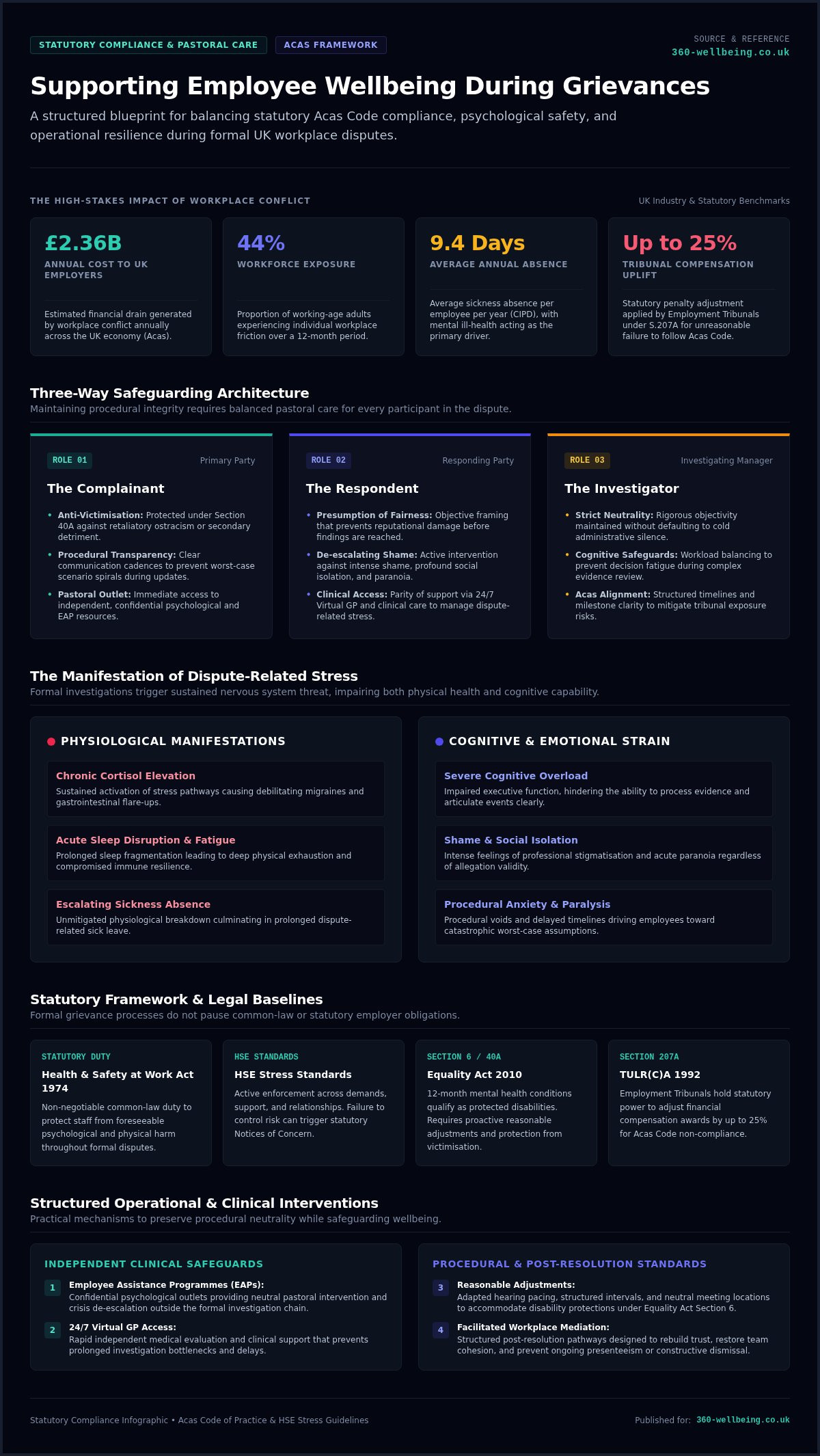
Workplace disputes rarely remain neatly compartmentalised within formal HR folders. According to Acas research, conflict costs UK employers an estimated £2.36 billion each year, with 44% of working-age adults experiencing individual workplace friction over a twelve-month period. When these disagreements escalate into statutory procedures, the personal cost rises rapidly. Supporting employee wellbeing during grievances is not merely an HR nicety; it is an urgent operational priority. Prolonged investigations trigger acute sleep disruption, cognitive paralysis, and deep emotional distress that can permanently destabilise an employee’s career and health.
Unmanaged dispute stress cascades through organisations. Sickness absence in the UK sits at an average of 9.4 days per employee each year according to CIPD data, with mental ill health acting as a primary driver. Left unaddressed, procedural friction quickly breeds presenteeism, protracted absence, and constructive dismissal claims that destroy team cohesion.
Psychological and Physical Manifestations of Workplace Conflict
Formal investigations place the nervous system under sustained threat. Chronic cortisol elevation triggers debilitating migraines, gastrointestinal flare-ups, and overwhelming physical fatigue. At the same time, severe cognitive overload impairs an individual’s ability to process complex evidence or articulate events clearly during formal hearings. Regardless of an allegation’s validity, participants frequently experience intense shame, profound social isolation, and paranoia. Providing neutral pastoral interventions, including structured Employee Assistance Programs (EAPs), gives staff immediate, confidential psychological outlets that help de-escalate crisis states before physical health collapses.
The Legal Duty of Care: Health and Safety at Work Act Requirements
Employers owe a non-negotiable statutory duty under the Health and Safety at Work etc. Act 1974 to safeguard staff from foreseeable psychological and physical harm. Instigating a formal grievance does not pause this common-law duty of care. Key legal baselines include:
- HSE Stress Standards: The Health and Safety Executive enforces organisational risk controls across demands, support, and relationships, actively issuing Notices of Concern to businesses neglecting psychological safety during disputes.
- Equality Act 2010 Protections: Under Section 6, severe mental health impairments lasting, or likely to last, 12 months qualify as protected disabilities. Employers must implement proactive reasonable adjustments, such as adapted interview pacing or neutral meeting locations.
- Preventing Procedural Victimisation: Section 40A compliance requires proactive safeguards against retaliatory ostracism, ensuring that supporting employee wellbeing during grievances actively shields staff from secondary detriment.
Aligning the Acas Code of Practice with Compassionate Mental Health Support
Many organisations treat strict procedural compliance and emotional care as contradictory goals. They assume that adopting an empathetic tone somehow compromises legal neutrality. In reality, procedural discipline and compassionate communication reinforce each other. Under Section 207A of the Trade Union and Labour Relations (Consolidation) Act 1992, Employment Tribunals can adjust compensation awards by up to 25% for unreasonable failure to follow the statutory Acas Code of Practice on disciplinary and grievance procedures. Upholding these standards requires clarity, predictable timelines, and structured empathy rather than cold administrative silence.
Lengthy procedural voids breed intense anxiety. When employees wait weeks for updates, their minds naturally gravitate toward worst-case scenarios. Supporting employee wellbeing during grievances demands consistent communication cadences that explain exactly what happens next, who is involved, and when decisions will emerge. This transparent structure eliminates the panic of the unknown, transforming an intimidating legal process into an orderly, manageable dialogue.
Maintaining Impartiality Without Sacrificing Empathy
Investigating managers must remain rigorously objective, but this requirement should never be confused with emotional detachment. The most effective safeguard is role separation. Appoint a dedicated welfare contact who sits entirely outside the dispute machinery, leaving the investigator free to examine evidence without managing personal distress. Written correspondence should adopt neutral, non-judgemental phrasing that validates an individual’s personal discomfort while maintaining strict impartiality regarding allegations.
Reasonable Adjustments for Formal Grievance Meetings
When workplace friction triggers acute psychological distress, rigid hearing formats can worsen symptoms. Flexible adjustments help preserve an individual’s ability to participate effectively:
- Hybrid and Virtual Formats: Offer secure video hearings to reduce physical tension and remove the sensory distress of travelling to an office environment.
- Pacing and Structured Breaks: Introduce regular comfort intervals during formal interviews to alleviate panic spikes and cognitive fatigue.
- Expanded Companionship: Section 10 of the Employment Relations Act 1999 guarantees a colleague or trade union representative, but allowing an independent support companion under Equality Act adjustments often de-escalates severe distress.
Preventing Victimisation and Ostracisation During Proceedings
Fear of workplace retaliation frequently prevents employees from engaging honestly with dispute procedures. Employers must bind all participants, witnesses, and interviewees to explicit confidentiality protocols. Line managers should actively monitor team dynamics for exclusionary behaviour or passive hostility. Introducing comprehensive benefits and independent pastoral infrastructure from 360-wellbeing.co.uk ensures staff have round-the-clock clinical and mental health resources, keeping support continuous while the business protects workplace harmony.
Safeguarding Everyone Involved: Complainants, Respondents, and Investigators
Workplace disputes rarely affect only one person. While HR teams instinctively concentrate their pastoral efforts on the individual lodging a complaint, true procedural fairness requires an all-encompassing view of welfare. Supporting employee wellbeing during grievances means creating a balanced safety net that shields everyone pulled into the process. The Health and Safety Executive recorded that 964,000 UK workers suffered from work-related stress, depression, or anxiety in 2024/25, accounting for 52% of all workplace ill-health cases. When formal proceedings begin, failing to protect all participants risks compounding this national crisis across your organisation.
Adhering to structured risk management principles, as detailed in the HSE guidance on work-related stress and mental health, means assessing dispute-related hazards across three distinct groups:
- The Complainant: Faces the vulnerability of speaking up, requiring safety from professional retaliation or subtle social exclusion.
- The Respondent: Suffers acute reputational terror, anticipatory anxiety, and sudden isolation from colleagues.
- The Investigating Officer: Absorbs intense interpersonal hostility and secondary trauma while trying to maintain operational output.
Mitigating Anxiety for the Alleged Wrongdoer
Being accused of professional misconduct or bullying is profoundly destabilising. Respondents often endure acute depressive episodes and shame before any evidence is evaluated. Employers must reinforce the presumption of innocence through steady operational actions, not just hollow statements. Avoid reflex precautionary suspensions; case law consistently confirms that suspension is not a neutral act and can breach mutual trust and confidence if applied arbitrarily. Ensure the accused employee receives identical access to confidential psychological counselling, independent GP advice, and wellbeing resources throughout the timeline.
Supporting Line Managers and Investigating Officers
Investigating officers sit directly in the line of emotional fire. Sifting through contentious claims, managing aggressive interviews, and carrying the burden of outcome decisions takes a severe psychological toll. To prevent burnout, organisations should temporarily adjust an investigator’s standard workload, providing protected diary time. Offering structured peer-debriefing or confidential mental health support after contentious hearings protects these decision-makers from chronic emotional exhaustion.
Managing Wider Team Dynamics and Workplace Culture
Disputes frequently fracture broader team morale, sparking toxic watercooler speculation. Line managers must address malicious gossip immediately and firmly without disclosing confidential details. Reiterate core expectations around mutual dignity, maintain normal operating rhythms, and ensure that supporting employee wellbeing during grievances remains visible as an impartial standard applied equally to all staff.
Practical Wellbeing Interventions: Clinical Care, EAPs, and Proactive Support
When an internal dispute escalates, well-intentioned advice from colleagues cannot replace qualified clinical intervention. Relying entirely on internal HR personnel for emotional reassurance creates perceived conflicts of interest, often compromising legal impartiality. Supporting employee wellbeing during grievances requires an independent, confidential infrastructure. By connecting staff directly with external clinicians, organisations provide immediate psychological relief while preserving strict procedural neutrality.
Deploying dedicated Employee Assistance Programmes (EAPs) and rapid-access clinical services bridges the gap between formal governance and compassionate care. These tools ensure an employee’s physical and psychological health is actively managed throughout the dispute lifecycle.
Confidential Mental Health and Professional Counselling Access
Providing direct, unmonitored pathways to professional mental health support is crucial during contentious proceedings. Staff should never have to seek line manager approval to access psychological care. Seamless self-referral to qualified counsellors allows individuals to process acute anxiety and emotional distress confidentially. These clinical sessions equip participants with practical cognitive coping strategies, helping them navigate evidence reviews, interview preparation, and outcome delivery without succumbing to emotional exhaustion.
The Role of 24/7 Virtual GPs in Managing Absence and Stress
Procedural paralysis often occurs when an employee cites acute medical unfitness, followed by weeks waiting for an NHS GP appointment. Fast-tracking access to round-the-clock medical care transforms this dynamic:
- Immediate Clinical Assessments: 24/7 Virtual GP access connects employees with UK-registered doctors in hours, eliminating lengthy appointment backlogs.
- Timely Fitness Appraisals: Independent medical practitioners provide prompt advice regarding an employee’s capacity to participate in hearings, preventing open-ended investigation delays.
- Early Physical Intervention: Doctors can address stress-induced insomnia, tension migraines, and cardiovascular symptoms before they develop into long-term chronic illness.
Alleviating Peripheral Stressors Through Comprehensive Benefits
Workplace disputes rarely happen in a vacuum. Personal pressures, particularly domestic financial worries, intensify procedural anxiety and make everyday workplace challenges feel insurmountable. Learning how financial support for employees reduces external mental burdens is essential for building a truly resilient workforce.
Providing confidential legal support, professional debt advice helplines, and life coaching gives staff practical tools to resolve private life challenges. If you want to protect your workforce with an independent pastoral framework, partner with 360 Wellbeing to establish round-the-clock clinical care and mental health infrastructure across your business.
Rebuilding Workplace Culture and Restoring Harmony Post-Resolution
Delivering an investigation outcome does not automatically resolve workplace friction. Too many organisations make the mistake of closing the case file and assuming normal operations instantly resume. In reality, delivering a formal outcome marks the critical transition from procedural adjudication to psychological recovery. Without deliberate aftercare, residual resentment festers, quickly triggering secondary grievances, retaliatory isolation, or sudden resignations. Supporting employee wellbeing during grievances must extend past the final decision letter into a planned, structured restoration phase.
A successful transition requires thoughtful planning to rebuild trust and re-establish sustainable working routines. Research consistently shows that informal dialogue costs up to ten times less than protracted formal disputes, making restorative efforts both financially prudent and culturally vital.
Facilitating Professional Reintegration and Workplace Mediation
Once formal appeal rights expire, professional workplace mediation creates safe ground for repairing damaged relationships. A trained, impartial mediator helps the parties move beyond defensive positions toward shared operating agreements. Effective reintegration frameworks should incorporate:
- Agreed Interaction Charters: Define practical boundaries for direct collaboration, cross-team handovers, and shared meetings to reduce daily friction.
- Phased Physical Reintegration: Stagger in-office working patterns or adjust desk layouts temporarily to alleviate post-dispute social awkwardness.
- The 90-Day Monitoring Cadence: Schedule structured welfare check-ins at 30, 60, and 90 days to ensure mutual commitments are honoured and prevent old tensions from resurfacing.
Embedding an All-Encompassing Wellbeing Infrastructure
Every formal grievance offers valuable intelligence into systemic pressures across your organisation. Repeated disputes around specific workloads, communication bottlenecks, or managerial friction should trigger reviews of underlying cultural policies rather than being dismissed as isolated events. Proactive employers use these dispute insights to upgrade management training and refine internal support systems.
Sustainable recovery requires moving permanently away from reactive crisis control toward comprehensive, daily health protection. Partnering with 360 Wellbeing gives your workforce uninterrupted access to 24/7 Virtual GP consultations, confidential Mental Health Support, dedicated Employee Assistance Programmes (EAPs), life coaching, and debt advice. By embedding this holistic pastoral ecosystem into your operational framework, you protect employee dignity, maintain legal compliance, and foster long-term workplace harmony.
Transforming Workplace Disputes into Lasting Cultural Resilience
Formal grievance procedures don’t have to destabilise your organisation or leave lasting emotional scars. By separating independent pastoral care from statutory investigatory roles, you protect procedural integrity while actively safeguarding your people. True workplace resilience emerges when employers balance legal compliance with genuine compassion, ensuring complainants, respondents, and investigating managers receive equal support from the initial complaint through to post-resolution reintegration.
When you establish independent clinical pathways, you eliminate the procedural uncertainty and medical backlogs that so often derail formal dispute timelines. Supporting employee wellbeing during grievances becomes seamless when your business relies on an impartial, dedicated safety net. Protect your workforce with 360 Wellbeing’s all-encompassing employee support platform, providing national access to 24/7 UK-registered virtual GPs, structured Employee Assistance Programmes, and direct mental health therapy. By prioritising whole-person care alongside statutory duties, you foster a culture where dignity, psychological safety, and mutual respect thrive.
Frequently Asked Questions
Can an employee pause a formal grievance procedure due to stress-related illness?
An employee cannot indefinitely halt formal proceedings simply by submitting a fit note for stress. Employers should pause briefly to evaluate the situation, but prolonging disputes often worsens psychological distress. Seek an occupational health assessment or independent GP advice regarding fitness to participate. If the employee cannot attend live hearings, offer practical alternatives such as written submissions, representative attendance, or virtual consultations.
How can managers remain neutral while still showing empathy to a distressed employee?
Managers preserve neutrality by separating operational decision-making from welfare support. Acknowledge emotional strain directly with validating, non-judgemental language without validating unproven allegations. Crucially, assign an independent pastoral contact or signpost the worker to external counselling resources. This structural boundary allows the investigating manager to examine evidence objectively while ensuring the distressed individual feels heard, respected, and emotionally supported throughout formal steps.
Is an employer legally required to provide mental health support during workplace disputes?
UK employers hold a statutory duty of care under the Health and Safety at Work etc. Act 1974 to protect staff from foreseeable psychological harm. Additionally, when an employee’s condition meets the Equality Act 2010 disability threshold, employers are legally required to make reasonable procedural adjustments. Effectively supporting employee wellbeing during grievances ensures organisations meet these statutory baselines and avoid tribunal compensation uplifts for unreasonable procedural conduct.
What adjustments should employers consider for employees experiencing severe anxiety during hearings?
Practical adjustments include providing pre-meeting agendas, permitting frequent comfort breaks, and holding discussions via secure video software rather than in intimidating boardroom settings. Employers can also offer off-site neutral venues, allow written representations instead of oral cross-examination, or permit an expanded support companion. Adjusting the speed and cadence of proceedings helps keep anxious participants grounded, capable, and fit to state their case.
How does an Employee Assistance Programme protect both the business and the employee during grievances?
An Employee Assistance Programme acts as a confidential, third-party firewall between dispute mechanics and pastoral care. For employees, an EAP offers immediate access to qualified therapists and accredited mental health interventions without managerial oversight. For employers, it prevents procedural conflicts of interest, mitigates stress-related sickness absence, and demonstrates proactive fulfillment of legal duty-of-care obligations without compromising the impartiality of internal investigations.
Can an employee bring a workplace mental health champion to an Acas grievance meeting?
Under Section 10 of the Employment Relations Act 1999, the statutory companion right is technically limited to a trade union representative or work colleague. However, if an employee has a diagnosed mental impairment under the Equality Act 2010, refusing a mental health champion, family member, or carer could breach reasonable adjustment duties. Employers should adopt a flexible, compassionate approach whenever severe anxiety warrants additional support.
What steps prevent workplace victimisation after an employee formally raises a grievance?
Employers must implement robust confidentiality protocols for all interviewees and enforce zero-tolerance retaliation policies from day one. Line managers should actively monitor team dynamics, departmental communications, and project allocations to catch subtle exclusion early. Prioritising whole-person care and supporting employee wellbeing during grievances reassures the entire workforce that raising legitimate concerns will not lead to ostracisation, damaged career prospects, or a hostile working environment.