What if the key to eap return to work support is not asking the EAP to solve everything? A return after illness can bring questions about workload, adjustments and what health information needs to be shared. An EAP can offer a confidential route to wellbeing support, but its services and confidentiality arrangements depend on the specific programme.
Managers need to plan work, while employees need to feel heard and respected. A supportive approach brings these needs together without treating EAP support as a substitute for workplace action. A clear, compassionate plan helps everyone understand what happens next.
This guide explains the distinct roles of the employee, manager, EAP and occupational health, and how to build a return-to-work plan with practical adjustments and appropriate follow-up. It also covers how to discuss sensitive information carefully, check what an EAP includes, and recognise when further clinical, workplace or specialist support may be needed. The aim is a return that feels manageable for the employee and workable for the organisation.
Key Takeaways
- EAP return-to-work support can complement recovery after physical illness, injury, stress or mental health difficulties, while workplace planning remains essential.
- Map support across preparation, planning, return and review. The employee chooses whether to contact the EAP and what personal information to share.
- Understand the different roles of the EAP, line manager, occupational health and treating clinician before deciding who to involve.
- Use a written plan to agree duties, hours, workload, adjustments and review dates, then adapt it as the employee’s needs become clearer.
- Check an EAP’s privacy terms, access routes, eligibility and support scope, and how it fits with your organisation’s existing processes.
EAP return-to-work support: what it can help with after absence
Returning after illness or injury can bring practical and emotional challenges, from rebuilding confidence to adjusting to changed routines. EAP return to work support gives employees a confidential way to seek wellbeing help alongside a workplace return plan. It may be relevant after physical illness, injury, stress or mental health difficulties, but the available support depends on the provider and the employee’s eligibility.
In brief: An EAP can provide confidential wellbeing help for an employee. The employer remains responsible for workplace planning, adjustments and employment decisions. An EAP doesn’t diagnose whether someone is fit for work, approve a return or decide which duties they can perform. Those questions may need input from the employee, their treating clinician or occupational health, alongside the employer’s own process. A neutral overview of the Employee Assistance Program (EAP) describes common forms of assistance, such as counselling and referrals.
What support might an employee seek from an EAP?
An employee might use an EAP to talk through worries about returning, explore coping strategies or find out where to seek further help. For example, someone recovering from an injury may feel anxious about managing work demands, while someone returning after stress may want support with the transition. An EAP may also signpost to other services where appropriate. These are possibilities, not guaranteed features. Check the provider’s service scope, contract, access route and the employee’s eligibility before explaining what’s available.
When can EAP support complement a return to work?
EAP support may be useful while preparing to return, as the employee adjusts to new routines, or after they’re back and can reflect on what’s working. The employee decides whether to contact the EAP and what personal information to share. They can use it alongside appropriate clinical care, but it doesn’t replace treatment or workplace action. Discuss work-related needs separately and agree practical arrangements with the employee.
Keeping these roles distinct helps make support joined up. The employee may use the EAP for personal wellbeing, while workplace conversations focus on duties, workload and changes that could make the return manageable. If the employer offers a broader wellbeing platform, check which services are included in the employee’s arrangement rather than assuming every service is part of the EAP. Consult the organisation’s EAP information and verify its privacy terms and scope.
How EAP return-to-work support can fit each stage of the journey
A return is a process, not just a first day back. EAP return-to-work support can sit alongside workplace planning at each stage. The employee remains in control of whether they contact the EAP and what personal information they share. Managers can focus on work-related needs without asking for details of counselling or other confidential support.
- Prepare: Arrange a private conversation and ask what practical support would help the employee feel ready.
- Agree a plan: Confirm duties, hours, workload, communication preferences and an initial review date.
- Return: Put the agreed arrangements into practice and make sure the employee knows who to speak to if something isn’t working.
- Review and adapt: Check progress and adjust the plan if the employee’s needs or work circumstances change.
Before the employee returns: prepare a supportive conversation
Choose a suitable time and private channel. Explain the purpose of the conversation so it doesn’t feel like an investigation. Ask open, practical questions such as, “What would make the first few weeks more manageable?” There’s no need to request unnecessary medical details. Focus on work needs, communication preferences and adjustments to discuss. Then agree when to check how the arrangements are going. Acas guidance on return-to-work meetings can help employers prepare for this discussion.
After the return: review progress and respond to barriers
Check in at the agreed time and keep the conversation proportionate and centred on the employee’s experience at work. Ask what’s working, whether duties and workload feel manageable, and whether agreed adjustments are in place. Offer the EAP as a voluntary support route, not as a condition of returning. The manager doesn’t need to know whether the employee uses it or what they discuss, subject to the provider’s confidentiality terms.
Review return plans as circumstances change, so agreed support continues to fit the employee and the work. If symptoms, workload or workplace circumstances shift, revisit the plan together and consider whether further workplace or professional input is appropriate. Keep a clear record of agreed work arrangements and review points, sharing personal information only where appropriate.
For employers considering how EAP provision may fit within wider employee wellbeing support, review 360 Wellbeing’s employee support options and check which services are included in the relevant arrangement.
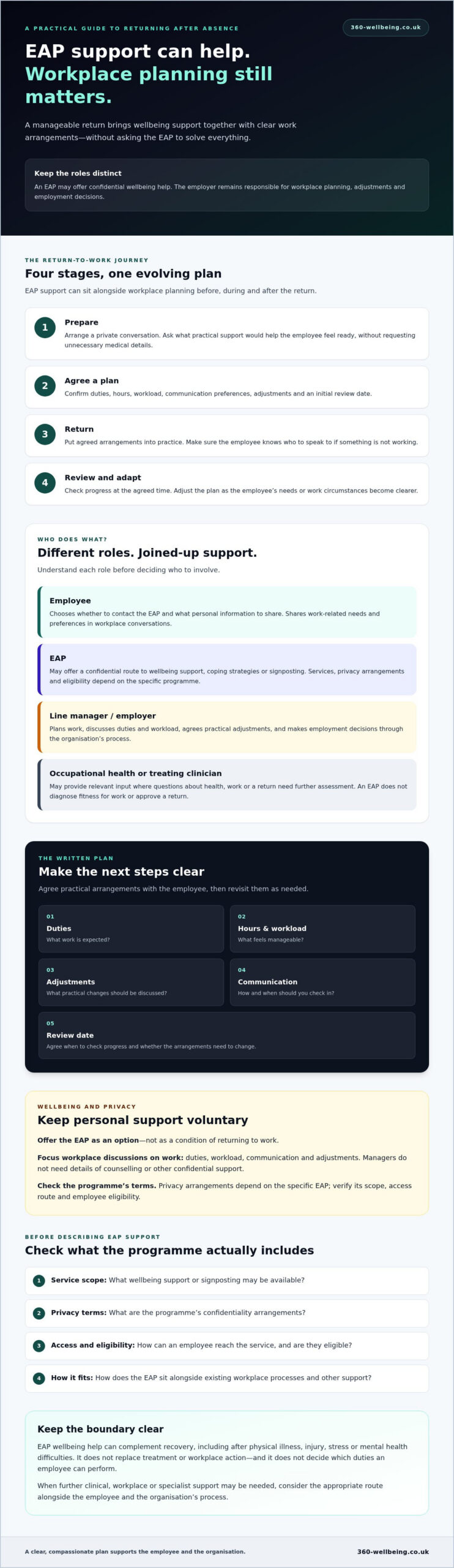
EAP, occupational health and managers: who does what?
Effective eap return to work support depends on clear boundaries. An EAP can offer a private route to wellbeing support, but it can’t decide whether an employee is fit for work or remove workplace barriers. Those responsibilities sit elsewhere. The right combination of support depends on the employee’s needs and the organisation’s processes.
| Role | What they may contribute |
|---|---|
| EAP | Wellbeing support, such as supportive conversations, coping strategies or signposting, where these are included in the service. |
| Line manager | Discuss work-related needs, agree and implement practical arrangements, and review how they’re working. |
| Occupational health | Provide work-focused advice about capability and possible adjustments, depending on the referral and service scope. |
| Treating clinician | Assess or treat health conditions and provide clinical advice relevant to the employee’s care. |
What can an EAP do, and what should it not replace?
An employee may choose to contact the EAP for emotional support, help exploring coping approaches or onward signposting, if these are part of the provider’s service and the employee is eligible. EAP support is generally confidential, but employers should check the provider’s privacy and disclosure terms rather than assume what information may be shared. EAP notes aren’t automatically a manager’s source of information. Access also doesn’t replace clinical assessment, treatment or urgent medical care.
When might occupational health or clinical advice also help?
If there are questions about how health may affect particular duties, hours or working conditions, occupational health may offer a work-focused assessment or advice through the employer’s referral process. This differs from a treating clinician’s role: the clinician focuses on healthcare, while occupational health considers the relationship between health and work. Neither removes the employer’s need to consider and act on workplace barriers.
For example, an employee might use an EAP for personal wellbeing support while a manager discusses a temporary workload change and occupational health advises on work-related adjustments. The employee’s clinician may separately guide their treatment. These routes can complement one another, but they aren’t interchangeable. Before making a referral, explain its purpose and process to the employee, including what information may be requested or shared. For individual medical or legal questions, seek appropriate professional advice rather than relying on a general EAP description.
Build a return-to-work plan that respects wellbeing and privacy
A written plan turns a supportive conversation into clear, practical arrangements. Focus on what the employee needs to do their work, rather than collecting a full account of their health. Keep the plan under review, since capacity and circumstances can change after the return.
What should a practical return-to-work plan include?
Agree the details with the employee and record only relevant information. This checklist can help:
- Duties: Confirm responsibilities, priorities and any tasks to pause or change.
- Hours and workload: Set out working hours, pace and expectations, including whether a phased return is being considered.
- Adjustments: Record agreed changes to duties, hours, equipment or work arrangements, and who will put them in place.
- Communication: Agree who the employee should contact if difficulties arise and how updates will be handled.
- Reviews: Set an initial review date and agree how the plan can be revisited sooner if needed.
A phased return can be one option, but it isn’t automatic or suitable for everyone. A fit note may provide information to support discussion about work, while a treating clinician or occupational health professional may offer relevant advice. If an employee’s condition meets the Equality Act 2010 definition of disability, the employer may have a duty to consider reasonable adjustments. The appropriate approach depends on the individual and circumstances, so seek suitable advice where needed.
How can managers protect trust and reduce pressure?
Use open questions, listen carefully and avoid pressing for a diagnosis or personal history. Ask which tasks feel manageable and what changes might help. Explain who needs to know about agreed work arrangements and limit sensitive details to what’s relevant. If the employee chooses to use the EAP, don’t treat this as proof of recovery or a promise of a particular return date.
Make the plan a living document. If workload, symptoms or workplace conditions change, discuss what needs adjusting and update the agreement together. This gives the employee a clear way to raise concerns without assuming the original plan must remain fixed.
For support that complements thoughtful workplace planning, review 360 Wellbeing’s employee support options. Check the specific EAP arrangement for its services, eligibility and confidentiality terms.
Choosing EAP return-to-work support that fits your organisation
The right eap return to work support should fit the way your organisation manages absence and workplace adjustments, while giving employees a clear route to wellbeing help. Look beyond the service label when choosing or reviewing a provider. Understand who can use the EAP, how employees access it and how its support fits alongside manager conversations, occupational health referrals and existing policies.
Questions to ask when reviewing an EAP
Ask the provider and check the membership documents so you can explain the service accurately to employees. Confirm:
- Access and eligibility: Who can use the service, including whether eligibility depends on employment status or another condition, and how do they make contact?
- Confidentiality: What are the privacy terms? What information, if any, may be disclosed to the employer, and in what circumstances?
- Scope: What support is included, and are there session or usage limits?
- Further help: How are employees signposted when they need urgent, clinical or work-focused support beyond the EAP?
Map the answers against your return-to-work process. Managers should know how to offer the EAP without asking employees to disclose whether they use it. They should also understand when a workplace concern calls for a separate conversation or occupational health referral. Clear boundaries help staff access support without confusing it with adjustments or clinical care.
How 360 Wellbeing can complement a wider support approach
360 Wellbeing offers an Employee Assistance Programme within a broader employee benefits platform for UK organisations. The wider platform also provides mental health therapy sessions, life coaching and 24/7 access to a UK-registered GP. These wider services shouldn’t be assumed to be included in every EAP arrangement. Confirm the specific membership’s services, access routes, eligibility, session limits, confidentiality terms and employer reporting arrangements before presenting them as available to employees.
Take the same care when aligning the EAP with policies and manager guidance. Set out who explains access, how employees can raise work-related needs, and where they can be directed if the EAP isn’t the right route. This makes support easier to understand while keeping the employer’s responsibilities distinct.
Reviewing these details is a practical first step towards joined-up support. Find out more about 360 Wellbeing and check what the organisation’s membership includes, so your return-to-work process reflects the support employees can actually access.
Make the next return more supportive
A sustainable return depends on more than access to wellbeing support. EAP return to work support can give employees a confidential route to help, while clear conversations, practical adjustments and regular reviews address what’s happening in the workplace. Keep responsibilities distinct: the employee chooses whether to use the EAP, managers plan work and follow up, and occupational health or clinicians may offer input when appropriate.
Before recommending an EAP, check its confidentiality terms, eligibility, access routes and included services. This helps you explain the support accurately and connect it thoughtfully with your organisation’s return-to-work process.
360 Wellbeing’s broader employee benefits platform includes an Employee Assistance Programme, alongside mental health therapy sessions, life coaching and 24/7 access to a UK-registered GP. These wider services aren’t necessarily included in every EAP arrangement, so confirm what your organisation’s membership covers. Explore 360 Wellbeing’s employee support to review the available options and consider how they may fit your approach.
With a compassionate plan and well-understood support routes, you can help make each return clearer, more considerate and more manageable for everyone.
Frequently Asked Questions
Can an EAP help an employee return to work after mental health-related absence?
Yes. An EAP may offer wellbeing support that helps an employee prepare for the transition or manage challenges after returning. For example, they might seek help with coping strategies or worries about workplace routines, depending on the service and their eligibility. EAP support can complement a return-to-work plan and appropriate clinical care, but it doesn’t assess fitness for work, set duties or replace workplace adjustments.
Is EAP support confidential when an employee returns to work?
EAP support is generally confidential, but the exact privacy terms and any limits on disclosure depend on the provider and arrangement. Employers should check these terms and explain them accurately rather than promise absolute confidentiality. An employee can choose whether to contact the EAP and what personal information to share. Managers can discuss work arrangements without asking for counselling details or assuming EAP notes are shared with the employer.
What happens if an employee is not ready to return on the planned date?
If an employee says they aren’t ready, respond calmly and ask what practical next step would help. Review the expected return date and any relevant fit note or clinical advice, following your organisation’s absence process. Don’t treat the EAP as the decision-maker: it can’t approve or rule out a return. Agree when to check in again, and seek appropriate clinical or occupational health input if needed.
How can an EAP support a phased return to work?
An EAP may provide emotional or coping support as an employee adjusts to a changed routine, if that help is included in the service. A phased return is a workplace arrangement to discuss and agree based on individual circumstances, not something an EAP prescribes or guarantees. The manager should clarify hours, duties, workload and review dates, then adapt the plan if the employee’s needs or work situation change.
Does an EAP replace occupational health support?
No. An EAP may support personal wellbeing, while occupational health can provide work-focused advice about how health may affect duties or possible adjustments, subject to the referral process. These services have different roles and can complement each other. A treating clinician focuses on healthcare and treatment. If questions arise about capability, adjustments or clinical care, use the appropriate route rather than relying on the EAP to make those assessments.
Can a manager ask why an employee was off sick?
A manager can hold a supportive conversation about the absence and ask what practical help or workplace changes may be needed. They should avoid pressing for a diagnosis or personal history that isn’t necessary for managing work. Explain why information is being requested, who may need to see it and how it will be handled. If unsure what to ask or record, follow organisational policy and seek appropriate HR advice.
When should an employee use an EAP during a return to work?
An employee may choose to contact the EAP before returning, while adapting to work or after they’ve returned, depending on what support they need and what their membership includes. They might seek help managing worries before the first day or coping with a changed routine. Use is voluntary, and an employee doesn’t need to tell their manager what they discuss. Check access routes and eligibility with the provider.