
Work-related stress accounts for around 35% of all days lost due to ill health in UK retail, so supporting the mental health of retail employees is a practical workplace priority. Retailers can start by identifying and reducing sources of stress, training managers to recognise concerns, speaking directly with colleagues and making support easy to access.
Retail work can involve changing shifts, busy periods and challenging customer interactions. Financial pressure outside work can add to the strain. Supporting the mental health of retail employees means combining a healthier day-to-day workplace with clear, confidential routes to help, rather than relying on a single wellbeing initiative.
This guide explains how retail and hospitality employers can identify workplace pressures, make practical adjustments and help managers handle sensitive conversations. It also covers cost-of-living concerns and ways to connect employees with confidential counselling and financial support, so colleagues can access help that suits their needs.
Key Takeaways
- Identify sources of pressure in retail work, then reduce risks through practical changes to shifts, breaks and day-to-day support.
- Train managers to notice potential signs of distress and approach colleagues with care rather than making assumptions.
- Explore how mental health can affect attendance, performance and retention, and use early conversations to spot where support may help.
- Make confidential counselling and financial guidance easier to access, particularly when cost-of-living pressures are affecting wellbeing.
- Build an approach that works across retail and hospitality, combining supportive workplace practices with access to appropriate wellbeing services.
1. How can retailers support colleague mental health?
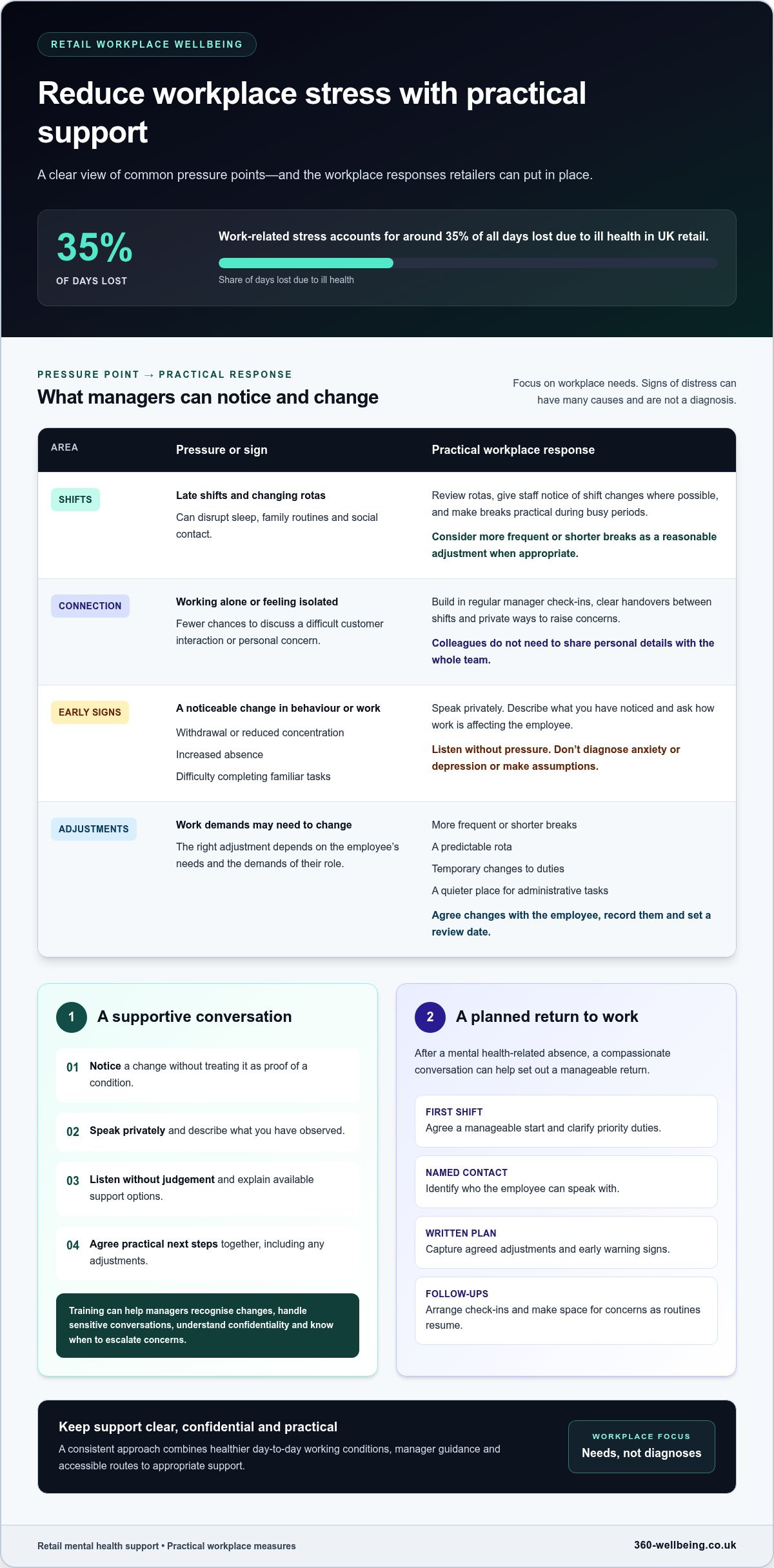
Retailers can support colleagues by identifying work-related pressures, improving working conditions and making help easier to access. In the UK retail sector, work-related stress accounts for around 35% of days lost due to ill health. The Health and Safety Executive defines stress as an adverse reaction to excessive pressure or other types of demand. Employers should assess workplace risks and take steps to prevent or reduce work-related stress.
Start with how work is organised. Late shifts can disrupt sleep, family routines and social contact, and a European Work Stress Network study found poorer mental health among people working late shifts than those not working at night. Retail managers can review rotas, give staff notice of shift changes where possible, and make breaks practical during busy periods. ACAS advises that more frequent or shorter breaks can be considered as a reasonable adjustment for an employee with a mental health condition.
Work-life balance also depends on whether staff feel connected and supported during the working day. Someone working alone on a quiet shift may have fewer chances to discuss a difficult customer interaction or personal concern. Build in regular manager check-ins, clear handovers between shifts and private ways for colleagues to raise concerns. This can reduce isolation without asking staff to share personal details with the whole team.
Managers can look out for changes such as withdrawal, reduced concentration, increased absence or difficulty completing familiar tasks. These signs can have many causes. Speak with the employee privately, describe what you have noticed and ask how work is affecting them. Don’t diagnose anxiety or depression, and listen without pressure if they aren’t ready to share.
Training can help managers and supervisors notice changes, start sensitive conversations, listen without judgement and explain support options. Mental Health First Aiders can offer initial, confidential support, while managers need clear guidance on their role and when to escalate concerns. Training should also cover workplace stressors, confidentiality and how to agree practical next steps with an employee.
Under Section 60 of the Equality Act 2010, employers are restricted from asking health or disability questions before making a job offer, subject to defined exceptions, according to UK Parliament. A mental health condition may meet the Act’s definition of disability if it has a substantial, long-term adverse effect on day-to-day activities. Employers should focus conversations on workplace needs, not seek unnecessary medical details.
Adjustments should reflect the employee’s needs and the demands of their role. Options include more frequent or shorter breaks, a predictable rota, temporary changes to duties or a quieter place for administrative tasks. Agree changes with the employee, record what you’ve decided and set a review date to discuss whether the arrangement is helping.
Returning to work after a mental health-related absence also calls for a planned, compassionate conversation. Agree a manageable first shift, clarify priority duties, identify a named contact and arrange follow-ups. A written return-to-work plan can capture agreed adjustments and early warning signs, while giving the employee space to raise concerns as routines resume.
2. Mental health outcomes and workplace productivity
Mental health can affect concentration, energy and confidence, all of which matter in customer-facing retail work. Someone who feels overwhelmed may find it harder to track stock, follow till procedures or respond calmly during a queue. These changes don’t automatically indicate a mental health condition, but they may signal that a conversation or workplace review could help.
To assess whether wellbeing programmes are useful, combine anonymous staff feedback with workplace indicators. Ask whether employees know how to access support, feel able to raise concerns and can identify recurring work pressures. Review absence and staff turnover alongside their responses, then track changes after introducing a specific adjustment or support route.
A Wellness Action Plan can help employees identify early warning signs and workplace triggers. For example, someone might note that back-to-back customer interactions leave them drained, or that unclear priorities increase stress. With the employee’s agreement, record helpful responses, such as a check-in after a difficult shift or clearer handovers. Review the plan together as needs change.
Workplace pressures can combine with personal circumstances, including caring responsibilities, isolation or financial worries. Managers should ask open questions and listen without trying to diagnose anxiety or depression. If someone mentions suicidal thoughts, take them seriously, stay calm and help them access urgent professional support. A workplace policy should explain how managers respond to immediate safety concerns and who to involve.
A mental wellbeing policy gives staff and managers a consistent reference point. Explain how employees can raise concerns, how information is handled, where support is available and how adjustments are discussed. Include realistic retail examples, such as needing a pause after a distressing customer interaction. Managers should understand the procedure and apply it consistently across stores, departments and shifts.
The business case for wellbeing goes beyond output. Appropriate support can help colleagues stay engaged, take part in team tasks and seek help before difficulties disrupt their working lives. Costs depend on the support selected and how it fits existing operations. Employers can start by identifying common workplace barriers, then focus resources on practical changes that address them.
Keep evaluation simple and respectful. Invite staff to share feedback privately, record recurring themes without identifying individuals and assign someone to review progress. If unclear priorities are causing pressure, clarify responsibilities at the next team briefing and later ask whether the change helped. This makes wellbeing action visible while protecting personal information.
3. Cost-of-living pressures and employee mental health
Financial strain can follow retail workers onto the shop floor. A Retail Trust survey found that 36% of surveyed retail workers felt financial problems were worsening their mental health. Mind research found that 48% of workers experienced poor mental health in their current job. These findings underline why employers should consider money worries alongside workload and working conditions.
Cost pressures can affect concentration, sleep and energy, particularly when someone is balancing household bills with variable shifts. Make support easier to find by explaining available financial guidance privately and consistently. Ensure staff also know where to raise concerns about pay, hours or travel costs. A calm conversation can help identify whether work arrangements are adding to financial pressure.
Peak trading can intensify these pressures. Seasonal promotions, holiday shopping and stock deliveries can mean queues, urgent replenishment and fewer quiet moments. Plan staffing around expected demand, clarify priorities before busy shifts and schedule breaks that remain workable during rushes. If demand changes, a brief team update can help staff understand which tasks matter most.
Workplace conditions shape how demanding a shift feels. Persistent noise, crowded aisles, uncomfortable temperatures or limited access to a calm break space can make customer-facing work harder. Managers can walk the shop floor with staff, note specific pressure points and make practical changes. For example, moving a replenishment task away from the busiest period may reduce competing demands.
Retail workers may also face difficult customer interactions while trying to maintain service standards. Depression and anxiety rates among UK retail workers are significantly higher than in other sectors. After a distressing incident, a manager can check in privately, allow time to recover and explain how to report what happened. Clear follow-up helps staff feel heard and helps employers identify recurring problems.
Financial worries are personal, so support should protect dignity. Don’t ask colleagues to explain their circumstances in front of a team. Instead, share information about available help in a private conversation or an accessible staff channel. Listen, explain workplace options and agree a follow-up, without assuming what an employee can afford.
Review pressure points before and during peak periods. Ask workers which shifts, tasks or store conditions feel hardest, then record themes without identifying individuals. If staff repeatedly flag late finishes or rushed breaks, adjust planning and revisit the issue after the trading peak. This turns feedback into practical action and makes wellbeing part of everyday retail operations.
4. Confidential counselling and financial support
Make support straightforward to access before a colleague reaches crisis point. An Employee Assistance Programme (EAP) can offer employees support 24 hours a day, seven days a week. Retailers can explain how to access it during induction, display details in staff areas and include them in shift handovers. Clear information matters when someone is struggling outside standard office hours or feels unsure about speaking with a manager.
Confidential counselling gives employees a route to discuss difficult feelings with a trained professional. Explain how appointments are arranged, what information remains private and any circumstances that may require further action. Avoid promising absolute secrecy. A colleague should understand the process before sharing sensitive details, and managers should not ask for a summary of counselling conversations.
Support needs to fit around retail schedules. Share information in formats staff can read privately, such as a staff portal or printed card, and make it accessible to part-time and night-shift workers. If someone is concerned about being overheard, provide a private space to arrange a call. These steps make help easier to access without requiring public disclosure.
Financial concerns can intensify anxiety and affect concentration at work. Give employees a clear route to debt advice and explain how to access it privately. Practical guidance can help someone organise bills, understand repayment options and identify the next conversation they need to have. Share the route, then let the employee decide what to disclose.
Some difficulties overlap. Someone facing debt may also feel anxious about rent, household costs or reduced shifts. With the employee’s agreement, signpost relevant financial or legal guidance alongside counselling, rather than treating each concern in isolation. This joined-up approach can help someone develop a manageable plan while keeping workplace conversations focused on the support they need during shifts.
When an employee says they’re struggling, listen, thank them for raising the concern and ask what would help now. Explain the available support options, ask whether they’d like help accessing them and agree a suitable time to follow up. Don’t press for personal details or treat counselling as a substitute for addressing workplace pressures.
Review whether staff can find and use the support offered. Ask anonymously whether employees know where to access counselling and financial guidance, then address barriers such as unclear instructions or information shared only during daytime briefings. Mind research found that half of workers experiencing poor mental health in their current job felt able to talk to their employer. A clear route to confidential help can complement, not replace, respectful conversations at work.
5. Mental health in retail and hospitality organisations
Retail and hospitality share fast-moving shifts, public-facing work and pressure to maintain service during busy periods. Each setting also has distinct challenges: a shop worker may face repeated customer abuse, while a hospitality team member may manage a crowded service with little time between tasks. A useful wellbeing plan recognises shared pressures and the realities of each workplace.
Retail wellbeing figures show why this needs sustained attention. The average UK retail worker wellbeing score was 57 out of 100 at the end of 2025, after a 12-month decline. It recovered to 62 in the first quarter of 2026. Such changes can help leaders notice wider patterns, but they don’t describe every employee’s experience or replace direct conversations.
Customer behaviour is another concern. A British Retail Consortium survey reported more than 2,000 incidents of abuse and violence against retail workers daily. Employers can make reporting clear, ensure team members know who to approach, and follow up after an incident. In a shop or hotel, a supervisor might check on an affected colleague, explain the reporting process and discuss what would help them feel safe resuming duties.
Managers need support to respond consistently across locations and shifts. Among 1,300 retail employees surveyed, 91% of line managers had observed an increase in mental health issues among their staff. Provide supervisors with practical guidance for listening, responding sensitively and signposting support. Give part-time and night-shift members equal access to information, not just staff working during daytime briefings.
Industry-wide work can complement local action. The Wellbeing in Retail initiative aims to support the 2.9 million people working in UK retail. Seven leading retailers also joined in a UK industry-first effort to improve staff mental wellbeing. For individual organisations, the takeaway is practical: assign responsibility, give teams a clear route to raise concerns, and review feedback across stores, restaurants and hotels.
Hospitality employers can adapt the same approach to service-specific pressures. After a difficult guest interaction, for example, a manager can check in away from the public area and agree whether the employee needs a short pause or a change of task. Retail teams may need a similar response after abuse at a till. Consistent follow-up helps staff feel heard and encourages them to speak up before concerns become more serious.
Build a shared foundation, then tailor support to each role. Consider whether staff can report health issues privately, whether managers know how to respond, and whether support reaches every shift. Explore workplace mental health support as one way to help teams access appropriate help.
360 Wellbeing: 24/7 Virtual GP
360 Wellbeing can complement workplace changes with support employees can access for their health and wellbeing needs. Its Mental Health Support offers a route for colleagues seeking help, while the 24/7 Virtual GP provides access to a UK-registered GP. Together, these options can help staff take a next step when they’re managing a health concern or need professional guidance.
Retailers can also consider how 360 Rewards and physiotherapy fit into a broader approach to employee wellbeing. These services sit alongside, rather than replace, practical action on workload, working conditions and manager support. The right combination depends on the needs an organisation wants to address.
For details about support for your workplace, visit 360 Wellbeing.
Make wellbeing part of every shift
Lasting progress comes from making employee wellbeing part of how a retail team works, not treating it as a separate initiative. Keep listening as roles, rotas and pressures change, and make it easy for colleagues to explain what would help. This gives support room to evolve alongside the people who rely on it.
For employers planning their next steps in supporting the mental health of retail employees, 360 Wellbeing brings together Mental Health Support, a 24/7 Virtual GP and 360 Rewards. These options can sit alongside the practical workplace changes your team chooses to make, helping you shape a considered approach to wellbeing.
Contact 360 Wellbeing for support and explore a next step for your organisation. A thoughtful conversation today can help you build a more supportive workplace, one where colleagues feel able to seek help and do their best work.
Frequently Asked Questions
How can retailers support colleague mental health?
Retailers can make support easier to use by building it into everyday routines. Include wellbeing information in staff induction, offer private ways to raise concerns and make support details available across all shifts. Supporting the mental health of retail employees also means reviewing whether arrangements work for different roles, from shop-floor teams to stockroom colleagues, and adapting them in response to staff feedback.
What mental health challenges are common among UK retail employees?
Retail employees may experience anxiety, depression, emotional exhaustion and isolation. The impact can vary by role: a cashier may face repeated difficult interactions, while a stockroom colleague may feel disconnected from the wider team. Personal circumstances can add pressure, too. Managers should avoid treating these experiences as a single pattern and instead ask what the individual is finding difficult and what support would feel useful.
How do shift work, customer abuse and workload affect retail workers’ mental health?
Irregular or late shifts can make it harder to maintain routines, rest and social connections. Customer abuse may leave a worker feeling unsettled after an incident, while workload pressure can make it difficult to recover between tasks. These factors can overlap. A manager can check in after a difficult shift, ask whether the rota or duties are contributing, and agree a practical follow-up rather than leaving the colleague to manage alone.
What UK legal duties do retail employers have to protect employees’ mental health?
UK employers must assess and control risks of work-related stress and poor mental health under health and safety legislation. Under the Equality Act 2010, employers must take reasonable steps to remove substantial workplace disadvantages experienced by disabled people, according to UK Parliament. A mental health condition may qualify as a disability when its effects meet the Act’s criteria. Employers should consider individual needs and appropriate workplace adjustments.
What practical steps can UK retailers take to support staff wellbeing?
Make support visible and accessible to employees who work different hours. Provide a private contact route, share guidance in induction materials and include wellbeing in routine team briefings. After a demanding trading period, ask staff which process caused the most strain, then assign a manager to review one improvement. This links employee feedback to workplace action without requiring colleagues to disclose personal health information.
What mental health support services are available to retail workers in the UK?
Retail workers may be able to access workplace counselling, an Employee Assistance Programme, manager or Mental Health First Aider support, and help through their GP. The available routes depend on the employer and the employee’s needs. 360 Wellbeing offers an Employee Assistance Programme, Mental Health Support, and Financial Support & Debt Advice. These options can help address emotional or money-related pressures through workplace benefits.