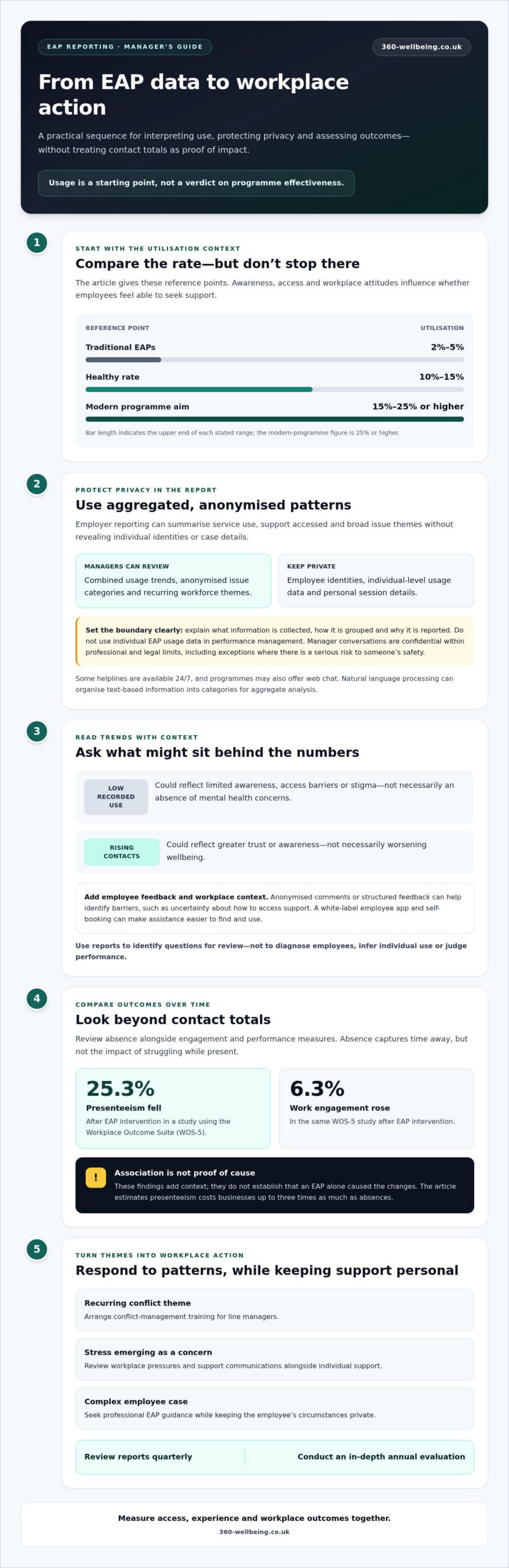
A higher EAP utilisation rate doesn’t automatically mean a programme is more effective. Traditional EAPs often report utilisation of 2% to 5%, while a healthy rate typically falls between 10% and 15%, and modern programmes aim for 15% to 25% or higher. Good EAP reporting and analytics for managers looks beyond usage to understand what support employees access and how it may relate to absence, engagement and performance.
It’s understandable to want clear evidence that an EAP is making a difference. Usage figures are a useful starting point, but they need context: awareness, accessibility and workplace attitudes all affect whether employees feel able to seek support.
This article explains how to interpret anonymised usage data, assess outcome measures and use recurring themes to inform workplace action. It also shows how to review trends over time without treating correlation as proof that an EAP caused a particular change.
Key Takeaways
- Assess an EAP in the context of awareness, access and workplace culture, not by usage figures alone.
- Use aggregated, anonymised reporting to spot workforce themes while keeping individual usage private.
- Compare absence, engagement and performance trends over time, without treating correlation as proof of cause.
- Review reports quarterly and conduct an in-depth annual evaluation to turn recurring concerns into practical workplace action.
What does it mean to evaluate an Employee Assistance Program (EAP)?
Evaluating an employee assistance programme means assessing access, use, employee experience and workplace outcomes, not simply counting contacts. Managers can turn report findings into practical wellbeing actions by matching recurring themes, such as workplace conflict, with responses such as conflict-management training.
Employer-Level Utilisation and Outcomes
Employer-level reporting summarises a specific organisation’s programme use and outcomes, helping managers understand which support employees access and what changes follow. Reports may combine utilisation trends, presenting concerns and outcome measures to show whether the programme is reaching its intended workforce. For example, a pattern of work-related stress may prompt closer attention to team pressures alongside individual support.
Employee feedback adds context that usage figures alone cannot provide. Managers can review anonymised comments or structured feedback to identify barriers, such as uncertainty about accessing support. A white-label employee app and self-booking can make assistance easier to find and use. Comparing feedback with engagement and wellbeing measures gives a fuller picture of the employee experience.
From Report Findings to Wellbeing Actions
Wellbeing actions translate report themes into relevant changes in workplace practice. If reports repeatedly identify conflict, managers can arrange conflict-management training for line managers. If stress emerges as a concern, they can review workplace pressures and support communications. These responses address patterns while keeping individual assistance focused on each employee’s needs.
Managers can contact an EAP for professional guidance on complex employee cases, including mental health concerns, team conflict and difficult conversations. That advice can help managers consider an appropriate supportive response, while keeping the employee’s circumstances private. According to UK Parliament, the Health and Safety at Work Act 1974 and Equality Act 2010 are listed as obligations relevant to managers’ duty of care in the UK. Using report themes alongside employee feedback helps managers connect individual wellbeing support with broader workplace action.
Confidentiality and anonymised usage data
Managers should see aggregated, anonymised trends, not employees’ identities or case details. Usage figures have limits too: they cannot explain why employees did or didn’t seek support, or prove workplace impact on their own.
Anonymised and Aggregated Reporting
Anonymised reporting groups EAP contacts so employers can see patterns without identifying individual employees. This helps leaders understand common concerns, such as work-related stress, while protecting private conversations. Reports can summarise service use, support accessed and broad issue themes. Natural language processing can also organise text-based information into categories for analysis, with findings presented in aggregate rather than linked to named employees.
Some EAP helplines are available 24/7, and programmes may also provide web chat as an access route. These channels give employees different ways to seek mental health support, while employer reports focus on combined patterns rather than personal session details.
Data Access and Confidentiality Limits
Managers can use service-use trends and anonymised issue categories together to guide workplace decisions. They should not receive individual-level usage data or use it in performance management. Explain to employees what information is collected, how it is grouped and why it is reported. Clear communication helps people understand the boundary between confidential assistance and organisational reporting.
EAP conversations with managers are confidential within professional and legal limits, including exceptions where there is a serious risk to someone’s safety. This distinction matters: managers can seek guidance about a difficult conversation without treating it as access to an employee’s counselling record. Keep management notes separate from assumptions about an employee’s use of the programme.
Risks of Interpreting Usage Data
Usage data shows contact patterns, not the full level of need across a workforce. Low recorded use could reflect limited awareness, access barriers or stigma, rather than an absence of mental health concerns. A rise in contacts could reflect greater trust or awareness, not necessarily worsening wellbeing. Leaders should interpret trends alongside employee feedback and workplace context.
Small or narrowly defined groups also require care: a theme can feel identifiable when few people could have raised it. Avoid drawing conclusions about an individual, team or manager from a broad category. Use reports to identify questions for review, not to diagnose employees or judge performance. Explore confidential employee assistance support as part of a wider approach to wellbeing.
EAP impact on absence, engagement and performance
Assess impact by comparing EAP outcomes with workplace indicators such as absence, engagement and productivity. A study using the Workplace Outcome Suite (WOS-5) found presenteeism fell by 25.3% after EAP intervention, while work engagement rose by 6.3%. These findings show how outcome measures can add context beyond contact totals. They don’t establish that an EAP alone caused the changes.
Absence data captures time away from work, but not employees struggling while present. Presenteeism can affect concentration, energy and task completion. The report estimates that presenteeism costs businesses up to three times as much as absences. Managers can review absence trends alongside engagement or performance measures, rather than treating fewer absence days as the whole picture.
Digital engagement adds another view of how employees interact with support. Multi-month journeys can show whether people return to wellbeing content or continue using resources over time. Review these patterns alongside the concerns employees raise and the support they access. For example, increased engagement with stress-related material can prompt a closer look at workplace pressures and the relevance of existing communications.
Interpret repeat usage carefully. A further contact could reflect continuing support for a complex concern, not dissatisfaction or a poor outcome. Consider it alongside feedback, the type of support accessed and broader workplace indicators. Compare trends over time, then discuss what changed in the organisation during that period. A fall in absence alongside stronger engagement offers useful context, but it does not prove a direct link.
For practical EAP reporting and analytics for managers, bring together absence, engagement, performance and service-use patterns. Treat productivity as one part of employee wellbeing, not its only measure. A balanced review helps leaders identify where proactive workplace changes could complement individual support, while keeping conclusions grounded in the available evidence.
Reporting analytics, management information and organisational benchmarking
Useful management information connects EAP activity with workforce needs and workplace context. Review reports quarterly, then conduct an in-depth annual evaluation to assess longer-term patterns.
Comparing Provider Reporting Features
Compare providers’ reporting for each employer, including utilisation, outcomes and anonymised themes. This helps organisations assess whether management information can guide decisions rather than merely count contacts. Look for clear explanations of measures, consistent reporting periods and appropriate safeguards for employee confidentiality. Ask how providers assess engagement with the programme, not just how they describe it. Features such as self-booking and a white-label employee app may also support access and engagement.
Accessing Dashboards and Analytics
Managers access EAP analytics through employer-level reporting on the programme platform or management reports provided for their organisation. These views should show aggregated service use and outcomes, not identifiable counselling records. Review trends by period and concern category, then raise questions with the provider during a structured review. Agree which managers need access and keep information-sharing focused on workplace planning.
Management Information and Organisational Benchmarks
Management information turns programme activity into evidence that leaders can use alongside workforce context. Compare an organisation’s current results with its own earlier reporting periods, using consistent measures and noting changes in communications, access or workplace conditions. External benchmarks need care because workforce size, culture and support arrangements can differ. A reported utilisation rate below 5% in many analyst-heavy organisations, for example, is context, not a target for every employer.
Use quarterly reviews to identify emerging concerns and agree practical follow-up; use the annual evaluation to consider outcomes and whether reporting still meets organisational needs. To explore an EAP that can support employee wellbeing, review the EAP support available.
360 Wellbeing: 24/7 Virtual GP
360 Wellbeing offers a 24/7 Virtual GP alongside Mental Health Support, giving employers options for a broader approach to employee wellbeing. These services can complement an EAP when reporting highlights health or emotional support as workforce concerns, while anonymised programme data continues to inform organisational decisions.
Employees can also access Physiotherapy and 360 Rewards as part of the wider wellbeing offer. Together, these different forms of support reflect the varied needs that may sit behind workplace absence, engagement and performance patterns. Reporting helps managers understand themes; individual support gives employees a route to address personal needs.
If you’re considering support that complements your wellbeing approach, contact 360 Wellbeing to discuss your organisation’s needs.
Turn your findings into a healthier next step
Make reporting part of an ongoing conversation, not a one-off assessment. Use findings to shape a wellbeing approach that reflects the concerns employees raise, and revisit priorities as workplace needs change. EAP reporting and analytics for managers can support thoughtful decisions while keeping the focus on people, not just measures.
360 Wellbeing brings together a 24/7 Virtual GP, Mental Health Support and 360 Rewards. These offerings can complement an organisation’s wider wellbeing approach, giving employees different forms of support while managers continue to use reporting to guide workplace priorities.
If you’re ready to discuss how an EAP could fit your organisation’s wellbeing goals, contact 360 Wellbeing about EAP reporting. A considered next step can help build a more supportive workplace, one practical decision at a time.
Frequently Asked Questions
How often should you evaluate your EAP?
Review EAP reporting quarterly, then complete an in-depth evaluation annually. Quarterly reviews help managers spot emerging concerns and respond while changes remain timely. The annual evaluation allows a broader assessment of programme access, employee feedback and outcomes across the year. For example, compare the annual picture with earlier reports and note organisational changes that may have influenced use, such as revised communications or workplace arrangements.
What does it include?
An EAP evaluation can cover programme use, the types of concerns raised, employee feedback and outcome measures. It can also examine whether employees understand how to access support and whether workplace culture encourages its use. For a practical review, consider whether staff know how to reach the service, whether reported themes align with feedback, and what organisational changes could address those themes.
What metrics and KPIs do EAP reports typically include for managers?
Reports may show utilisation, broad categories of concerns, support accessed and outcome measures. Managers can consider these alongside relevant organisational indicators, such as absence and engagement, for a more rounded view. For instance, a rise in work-related concerns could prompt a review of team feedback or management practices. Agree clear definitions for each measure so comparisons between reporting periods remain meaningful.
How is EAP utilisation calculated and reported?
Utilisation describes how much employees use the programme during a reporting period, but providers may define it differently. A report might count employees who accessed support or record service contacts, so managers should understand which measure they are viewing. Check the period covered and whether the report distinguishes first-time users from repeat contacts. This context helps prevent misleading comparisons between reports.
How do EAP providers anonymise and aggregate employee data in reports?
Providers can present combined usage and issue themes without giving managers individual employees’ identities or case details. Aggregation groups information, such as concerns raised across a workforce, into broader reporting categories. Some analysis can organise text-based case information into themes before reporting those themes collectively. Managers should explain to employees what data is collected, how it is grouped and why the organisation receives it.
How can managers use EAP analytics to identify workplace trends and wellbeing risks?
Managers can look for recurring themes across reports, then compare them with relevant workplace feedback and changes. For example, repeated mentions of stress or conflict may indicate a need to review team pressures, communication or manager support. Treat a theme as a prompt for further organisational attention, not a diagnosis of an individual or team. Use findings to shape proportionate actions and review their relevance in later reports.