
A workplace can be a place of safety and support for someone experiencing domestic abuse. Knowing how to support an employee who is a victim of domestic abuse starts with listening without judgement, taking their concerns seriously and helping them explore practical support without making decisions for them.
It’s understandable to feel unsure about what to say or do. Under the Domestic Abuse Act 2021, the definition covers abuse between people aged 16 or over who are or have been intimate partners or family members, regardless of gender or sexuality, according to the UK legislation register. A manager doesn’t need to be a counsellor to respond with care.
This article explains what domestic abuse can look like, which workplace changes may prompt concern and how to respond if an employee tells you they’re experiencing abuse. It also covers practical adjustments and specialist support, so you can help create a safer, more understanding environment while respecting the employee’s choices.
Key Takeaways
- Understand who domestic abuse can involve and why it may affect an employee’s wellbeing and work.
- Notice changes such as distressing communications, unexplained injuries or shifts in attendance, without making assumptions.
- Respond to a disclosure with empathy, respect the employee’s choices and consider practical workplace adjustments.
- Learn how specialist support organisations and workplace wellbeing services can help employees access further support.
1. What is domestic abuse?
According to the UK legislation register, the Domestic Abuse Act 2021 covers abuse between people aged 16 years or over who are or have been intimate partners or family members, regardless of gender or sexuality. Abuse can involve controlling behaviour, intimidation, threats or physical harm. It isn’t limited to a current partner or to abuse that happens at home.
Children who see, hear or experience domestic abuse are recognised as victims in their own right under the Domestic Abuse Act 2021. A safety plan should therefore consider both the employee and any children affected. An independent domestic violence adviser (IDVA) can help survivors understand risks and create a personal plan for safety.
Acas says employers have a duty of care towards employees experiencing domestic abuse, including offering advice and considering workplace adjustments. This means responding to safety concerns at work and exploring practical changes. It doesn’t mean managers should investigate abuse or assess risk alone.
Plan with the employee, not for them. Ask which communication method is safe, whether a colleague should know, and what action to take if the alleged abuser arrives at work. With the employee’s consent, consider a different entrance, work location or shift pattern. A code word can alert a trusted colleague to danger. If someone faces imminent danger or serious harm, call 999.
Employees can ask for time off for appointments or emergencies. Employers can offer special leave for appointments and consider flexible hours or working patterns. Agree arrangements privately, focusing on the employee’s immediate needs.
A domestic abuse workplace policy should explain how employees can disclose concerns, what support and adjustments are available, and how information will be recorded and kept confidential. Acas recommends considering a policy developed with employees and their representatives.
Contact can create risk if an abuser sees a text notification, hears a voicemail or monitors a phone. Agree on a safe channel and whether messages can mention work or support. Don’t leave revealing details without permission. Protect personal information, including home addresses and telephone numbers.
2. Recognising signs of domestic abuse at work
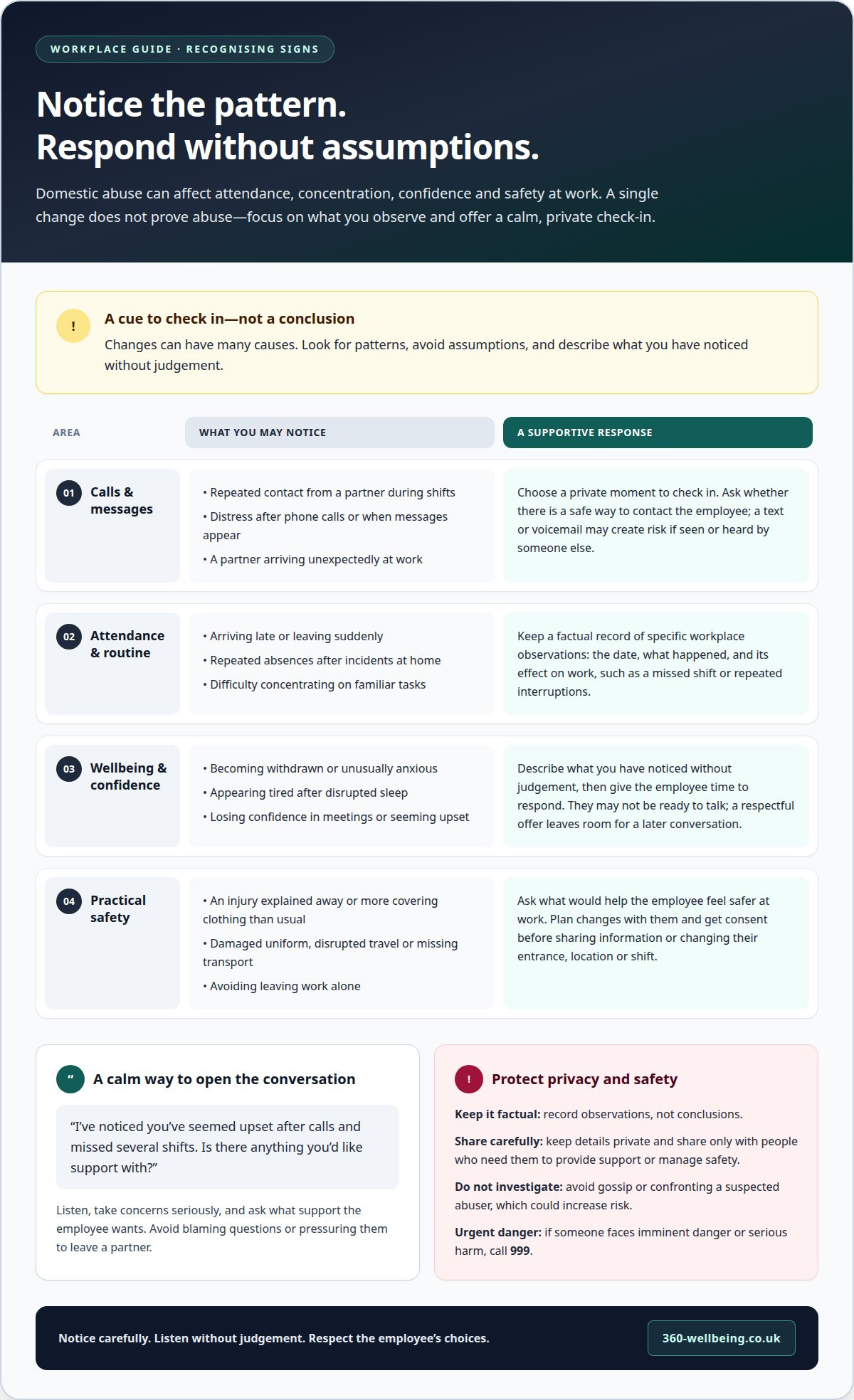
Domestic abuse may affect concentration, attendance and confidence, but a single change doesn’t prove abuse. Look for patterns, such as an employee becoming withdrawn, struggling with familiar tasks or seeming unusually anxious after phone calls. A partner may contact them repeatedly during shifts or arrive unexpectedly at work.
Changes in attendance may also be a sign. An employee experiencing abuse might arrive late, leave suddenly or have repeated absences after incidents at home. They may seem tired after disrupted sleep, lose confidence in meetings or become distressed when messages appear. These changes can have many causes, so avoid assumptions and focus on what you observe.
Notice practical signs, too. An employee might explain away an injury, wear more covering clothing than usual, or worry about damaged uniform or missing transport. An abusive partner may restrict access to a vehicle, disrupt travel plans or interfere with work equipment. A colleague may notice that the employee avoids leaving work alone.
Record specific workplace observations, not conclusions. Note the date, what happened and its effect on work, such as a missed shift or repeated interruptions. Keep details private and share them only with the appropriate person in your organisation. Don’t question colleagues for gossip or confront a suspected abuser, as this could increase risk.
If you’re a manager, choose a private moment and describe what you’ve noticed without judgement: “I’ve noticed you’ve seemed upset after calls and missed several shifts. Is there anything you’d like support with?” Give the employee time to respond. They may not be ready to talk, and a calm, respectful offer leaves room for a later conversation. If they disclose abuse, listen and follow your workplace’s support process rather than investigating.
3. Responding to an employee’s disclosure
Knowing how to support an employee who is a victim of domestic abuse starts with listening calmly and thanking them for trusting you. Ask what would help them feel safer at work, then explain possible next steps. Managers aren’t counsellors, so don’t interpret events, give personal advice or assess risk alone.
Choose a private place for the conversation and let the employee speak at their own pace. Avoid blaming questions, such as why they stayed or didn’t report the behaviour. Instead, ask what support they want and whether there’s a safe way to contact them. Respect their choices and don’t pressure them to leave a partner.
Agree the next action together. This could mean identifying a trained contact, sharing information about specialist support, or considering a workplace adjustment. Ask for consent before telling relevant colleagues about an alleged perpetrator or changing the employee’s entrance, location or shift. If you believe someone faces imminent danger or serious harm, call 999.
Explain how the disclosure will be recorded and who may see it. Keep notes factual, store them securely and share details only with people who need them to provide support or manage safety. Protect personal information, including the employee’s home address and telephone number. If a council or safeguarding lead becomes involved because of a serious risk to a child or vulnerable adult, follow your organisation’s safeguarding process.
Managers should receive training on recognising abuse, responding to disclosures and finding further help. A nominated, trained colleague can offer a consistent first point of contact, while confidential reporting channels may help employees speak up. Clear processes can build managers’ confidence without making them responsible for specialist risk assessments.
Managers learning how to support an employee who is a victim of domestic abuse should also respond appropriately if an employee may be perpetrating abuse. Address specific behaviour through workplace policies and established procedures. Don’t dismiss concerns because reported conduct happened outside work; consider any effect on colleagues’ safety. Keep support for the person experiencing abuse separate from decisions about the alleged perpetrator, and don’t promise an outcome before considering the facts.
4. Domestic abuse support organisations
Specialist organisations can help survivors with risks managers aren’t trained to assess. An independent domestic violence adviser (IDVA) works with a survivor to understand their needs and develop a personal safety plan. The plan can include children affected by domestic abuse, helping the employee consider safety beyond the workplace.
The National Domestic Abuse Helpline can be reached on 0808 200 0247. Before sharing the number, agree whether it’s safe for the employee to call or receive messages. A visible call record or voicemail could create risk if an abusive partner checks their phone. Ask what contact method feels safer, then let the employee decide whether to use the service.
Employers can also seek guidance for their organisation. The Employers’ Initiative on Domestic Abuse is a free-to-join network supporting around 1,500 large and small businesses to take effective action. It can help employers build understanding and workplace responses, while specialist organisations focus on support for people experiencing domestic abuse.
Make signposting specific and practical. In a private conversation, offer the employee a choice of support information, such as a helpline number or details for an IDVA. Explain what each option may help with and ask whether they’d prefer to contact the organisation themselves. Don’t pass on their details or make a referral without permission, unless an immediate safeguarding concern requires action under your procedures.
If a colleague raises concerns, explain how to pass them to a trained contact without circulating personal details. Keep the employee’s choices central, and don’t treat a referral as a substitute for workplace adjustments. Joined-up support is clearest: the employer manages relevant workplace concerns, while specialist organisations help survivors assess risk and plan for safety.
360 Wellbeing: Employee Assistance Programme (EAP)
360 Wellbeing’s Employee Assistance Programme (EAP) can complement workplace adjustments and specialist domestic abuse support. It offers employees another route to wellbeing support, while managers continue to follow their organisation’s safety and confidentiality procedures.
For employees affected by abuse, Mental Health Support may help address emotional wellbeing alongside practical safety planning. A 24/7 Virtual GP offers a separate route for general health concerns. These services don’t replace specialist domestic abuse organisations, which can help survivors assess risk and plan for safety.
Employers can consider these benefits as part of a broader approach to employee wellbeing, particularly when staff need support beyond the immediate workplace response. For information about wellbeing support for your organisation, contact 360 Wellbeing.
Make everyday support part of a safer workplace
A compassionate response is more than a single conversation. It grows from a workplace culture where employees can ask for help without fear of blame and managers know how to respond with care. Build that culture by making support visible, respecting privacy and treating wellbeing as an ongoing part of working life.
For organisations considering broader employee wellbeing, 360 Wellbeing offers Mental Health Support, a 24/7 Virtual GP and 360 Rewards. These benefits can sit alongside specialist domestic abuse services and the practical steps managers take at work. They don’t replace tailored safety planning, but can form part of a wider approach to employee support.
Understanding how to support an employee who is a victim of domestic abuse means creating space for them to choose the help that feels right. If you’re considering wellbeing support for your organisation, contact 360 Wellbeing to explore the next step. Thoughtful, consistent action can help make work a more supportive place.
Frequently Asked Questions
What is domestic abuse?
Domestic abuse can involve physical, emotional, sexual or controlling behaviour. The Domestic Abuse Act 2021 definition covers abuse between people aged 16 years or over who are or have been intimate partners or family members, regardless of gender or sexuality, according to the UK legislation register. For example, a family member may use threats or control to make someone feel unsafe.
What workplace adjustments can support an employee affected by domestic abuse?
Adjustments should reflect what the employee says would help them work safely. An employer could agree a temporary shift change, provide a private room for a support call or arrange a safe way to enter the workplace. Discuss each change with the employee first, including who needs to know, and review the arrangement if their circumstances or safety concerns change.
How should employers handle confidentiality and risk assessments for domestic abuse cases?
Restrict information to people who need it to support the employee or manage workplace safety. Explain how notes will be stored and used, and record relevant facts rather than assumptions. Managers shouldn’t assess risk alone or promise absolute confidentiality. If a child or vulnerable adult may face significant harm, raise the concern through your organisation’s safeguarding process.
Which UK domestic abuse helplines and specialist services can employers signpost employees to?
Employers can share the National Domestic Abuse Helpline number, 0808 200 0247, and explain that an independent domestic violence adviser (IDVA) can help survivors consider risks and plan for safety. The Employers’ Initiative on Domestic Abuse supports organisations seeking to take effective action. Before sharing contact details, ask whether the employee can safely receive or use them.