
The behaviour matters more than the label. Managing difficult personalities in the workplace starts with recognising patterns such as passive-aggressive comments, intimidation, avoidance, missed commitments or a lack of accountability. Focus on what a colleague does and how it affects the work, rather than making assumptions about their character.
A working relationship can become draining when repeated tension makes it harder to get things done. You can’t control another person’s behaviour, but you can choose how to respond, communicate your needs and decide when to involve someone else.
This guide explains common challenging behaviours and practical ways to address them calmly, set clear boundaries and keep a factual record of recurring incidents. It also covers when a manager or HR should step in, particularly if behaviour involves bullying, harassment or discrimination, and how wellbeing support can help you manage its impact on your health.
Key Takeaways
- Look for recurring behaviours and their impact on work, rather than trying to diagnose a colleague’s personality.
- Focus on what you can control: prepare for difficult conversations and keep your response calm and professional.
- Use clear, respectful language to explain what needs to change and agree practical ways of working together.
- Bring in a manager or HR when behaviour persists or involves bullying, harassment or discrimination.
1. What are difficult personalities types?
Difficult behaviour is a pattern of actions that disrupts work, not a reliable diagnosis of someone’s character. For example, repeatedly taking credit for a colleague’s contribution can damage trust and hinder a shared project. When managing difficult personalities in the workplace, describe what happened and its impact rather than labelling the person.
Common patterns include passive aggression, intimidation, avoidance and poor follow-through. A passive-aggressive colleague might make a backhanded compliment in a meeting or take verbal potshots instead of raising a concern directly. An intimidating colleague may make constant demands or claim credit for someone else’s work. Someone who avoids conflict may neither agree nor disagree clearly, while a colleague who says “yes” but rarely delivers leaves tasks unfinished.
Address missed deadlines by focusing on observable facts. A colleague may miss a deadline because they feel unable to complete the task but struggle to say so. Ask what is blocking progress, clarify the next action and agree when you’ll review it. This addresses the work without assuming the reason for the delay.
Managers should distinguish difficult behaviour from bullying, discrimination or a mental health issue by examining specific actions, context, repetition and impact. A personality label cannot establish the cause or determine whether conduct is unlawful. Managers should consider the evidence and workplace policy, and avoid diagnosing a colleague’s mental health.
In the UK, whether workplace conduct amounts to unlawful harassment or discrimination depends on the circumstances and relevant legal protections. Concerns about bullying or harassment should be taken seriously and assessed through workplace procedures, not dismissed as a personality clash.
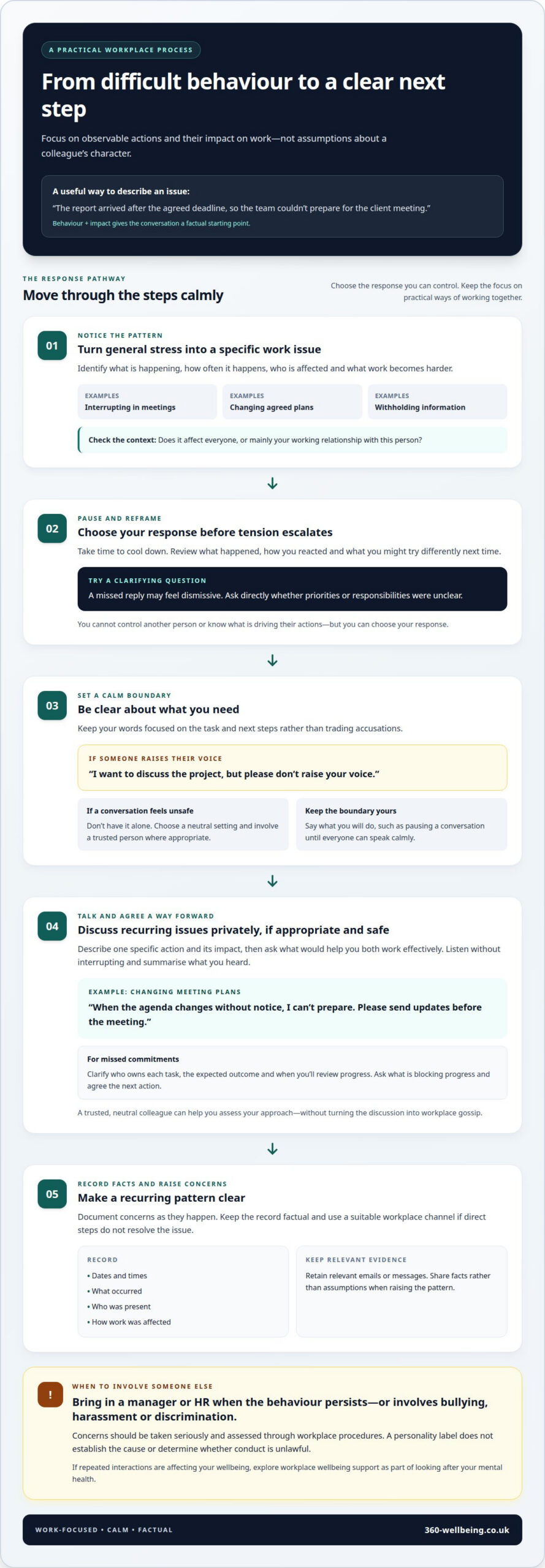
Keep feedback precise: “The report arrived after the agreed deadline, so the team couldn’t prepare for the client meeting” describes behaviour and impact. “You’re irresponsible” attacks character and is more likely to derail the conversation. This distinction gives managers a clearer basis for addressing concerns and choosing appropriate strategies.
2. What steps should you take when dealing with difficult colleagues?
Start by identifying the behaviour that makes working together difficult. Is the colleague interrupting in meetings, changing agreed plans or withholding information? Note how often it happens, who is affected and what work becomes harder. This turns general stress into a specific issue you can address. Consider whether the behaviour affects everyone or mainly your working relationship with this person.
Pause and reframe your thoughts before responding. You can’t control another person or know what is driving their actions, but you can choose your response. A missed reply might feel dismissive, yet a direct question can reveal whether priorities or responsibilities were unclear. Review what happened, how you reacted and what you might try differently next time. Taking time to cool down can help prevent an emotional response from escalating tension.
With an aggressive colleague, set a calm, clear boundary. You might say, “I want to discuss the project, but please don’t raise your voice.” If a conversation feels unsafe, don’t have it alone. Choose a neutral setting and involve a trusted person where appropriate. Keep communication focused on the task and next steps, rather than trading accusations.
Before escalating a complaint to the colleague’s boss, consider a private conversation with the colleague if it feels appropriate and safe. Describe one specific action and its impact, then ask what would help you both work effectively. A trusted, neutral colleague can help you assess your approach and consider solutions. Seek perspective without turning the discussion into workplace gossip.
Document recurring concerns as they happen. Record dates, times, what occurred, who was present and how the incident affected work; retain relevant emails or messages. Then raise the pattern through a suitable workplace channel, sharing facts rather than assumptions. This record can make a discussion with a manager clearer if direct steps don’t resolve the issue. If repeated interactions are affecting your wellbeing, explore workplace wellbeing support as part of looking after your mental health.
3. Assertive communication and boundaries
Assertiveness means stating your needs clearly without becoming aggressive or dismissive. In a tense conversation, describe the action, its impact and what you need next: “When the agenda changes without notice, I can’t prepare. Please send updates before the meeting.” This keeps the discussion focused on a workable change, not a judgement about someone’s character. These communication skills help colleagues understand what respectful collaboration looks like.
Choose a private moment to discuss a recurring issue directly. If a colleague makes a passive-aggressive comment, you could say, “That remark sounded critical. Is there a concern you’d like to discuss?” Listen without interrupting, then summarise what you heard. This leaves room for clarification while keeping the interaction professional.
Make professional boundaries specific and consistent. If a colleague repeatedly raises non-urgent problems at the end of the day, explain when you can discuss them and suggest a suitable time. You might ask for at least 24 hours’ notice before revisiting an issue, where that is practical. For missed commitments, agree who owns each task, the expected outcome and when you’ll review progress.
Remember that a boundary is about your own actions, not controlling another person. For example, say, “I’ll continue this conversation when we can speak calmly,” then pause if the shouting continues. Don’t withdraw from essential work communication. Instead, keep messages brief, factual and task-focused. This helps prevent confusion while protecting your time and emotional energy.
Gossip can turn one difficult situation into a wider problem for workplace culture. If a colleague complains, listen without adding speculation, then ask what outcome they want or what practical step might help. In a conversation with the person involved, look for a shared goal, such as completing a project smoothly. Close by agreeing how you’ll communicate or work together differently, then follow that plan consistently.
4. Support from managers and HR
Involve a manager when conflict persists, disrupts work or cannot be addressed safely between colleagues. Explain its effect on tasks, communication or team relationships, and share specific examples rather than conclusions about someone’s personality. A manager can clarify expectations, discuss the concern with those involved and agree practical steps for working together.
UK employers should respond to workplace conflict fairly by listening to the people involved, considering the available information and applying relevant workplace procedures consistently. Managers should understand what happened before taking sides. They can record agreed actions, such as clearer responsibilities or regular progress discussions, then follow up to see whether the working relationship improves.
Some conduct should be raised promptly with management or HR, rather than handled only through a colleague-to-colleague conversation. This includes concerns about bullying, harassment or discrimination. Share what happened, when it occurred, who was present and any relevant messages. If you feel unsafe or fear retaliation, tell a manager or HR directly and ask about the appropriate reporting process.
HR can help managers consider how to handle a complaint, support a fair process and identify suitable next steps. Depending on the situation, these might include separate discussions, a facilitated conversation or changes to working arrangements. The response should address the reported conduct and its impact, not treat a personality label as proof. Keep the focus on specific evidence and workplace expectations.
After a discussion, set a clear follow-up point and review whether agreed actions are happening. For example, a manager might check whether handovers are now timely and respectful. If unresolved conflict is affecting your wellbeing, explore workplace wellbeing support as another way to care for your mental health alongside formal workplace steps.
360 Wellbeing
360 Wellbeing can support your wellbeing while you manage challenging workplace relationships. Difficult interactions may affect your mood, confidence or ability to switch off after work, so support for your wider health can be a useful part of the picture. Mental Health Support offers a route to discuss the emotional impact, while the 24/7 Virtual GP can help with health concerns that need clinical guidance. These services complement, rather than replace, raising workplace conduct concerns with a manager or HR.
Consider this support if workplace tension is affecting how you feel beyond a specific conversation or incident. Addressing the work issue and caring for your own wellbeing can sit alongside each other, helping you take a more balanced approach. For support with your wellbeing, contact 360 Wellbeing.
Take a steadier step towards better workplace wellbeing
Managing difficult personalities in the workplace isn’t about changing someone else. It’s about making thoughtful choices that protect your wellbeing and support constructive working relationships. If tension continues, take a step suited to the situation, whether that means raising a concern through the right workplace channel or seeking support for its effect on you.
360 Wellbeing can support employees with a 24/7 Virtual GP, Mental Health Support and 360 Rewards. These options sit alongside practical action at work, helping you consider your wellbeing as part of the bigger picture. You don’t have to wait until stress feels overwhelming before looking for support.
Contact 360 Wellbeing today to explore support for your wellbeing. A calm, considered next step can help you move forward with greater confidence.
Frequently Asked Questions
What are difficult personalities types?
Common patterns include intimidation, passive-aggressive remarks, avoiding disagreement and agreeing to tasks without following through. These describe behaviour, not fixed personality categories or diagnoses. Look for repetition and practical impact: one missed handover may be an oversight, while recurring omissions that prevent colleagues from completing their work point to a pattern worth addressing. Consider the specific actions, context and impact before deciding how to respond.
What steps should you take when dealing with difficult colleagues?
Decide on a specific outcome before starting a conversation, such as agreeing on a clearer handover process. Raise the issue privately and ask how the colleague sees the situation. Their answer may reveal a misunderstanding or competing priority. Finish by agreeing who will do what and how you’ll communicate next time. If the behaviour continues, keep a factual record so you can explain the pattern clearly when seeking support.
What are practical strategies for managing difficult personalities at work?
Match your approach to the work problem. If changing priorities cause friction, ask the team to confirm task ownership in writing. If meetings become unproductive, suggest an agenda and time for each decision. Keep essential contact courteous and task-focused, and avoid sharing unverified claims about the colleague. These practical strategies help with managing difficult personalities in the workplace without turning routine disagreements into personal disputes.
How should managers handle conflict with a difficult colleague in the UK?
Managers should hear each person’s account, examine specific examples and apply relevant workplace procedures consistently. They can clarify expected conduct, agree on actions and set a follow-up to review whether the conflict has eased. Raise concerns involving bullying, harassment or discrimination with management or HR, rather than treating them only as a personality clash. Keep discussions focused on evidence and the impact on work.
How can you set professional boundaries with a difficult coworker?
State your limit calmly and connect it to a practical working arrangement. For example, say, “I can discuss this during our project check-in, but I can’t respond to non-urgent messages while presenting.” Offer a suitable alternative where possible, then apply the same approach consistently. Boundaries should protect your time while keeping necessary work communication open, not punish or exclude the other person.
When should an employee escalate a difficult workplace relationship to HR or a manager?
Raise the issue with a manager when repeated behaviour disrupts your work, affects colleagues or continues after you have tried a constructive conversation. Contact HR or management promptly about bullying, harassment or discrimination, or if you feel unsafe addressing the person directly. Bring relevant dates, examples and work impacts, and explain what support or change would help you move forward.