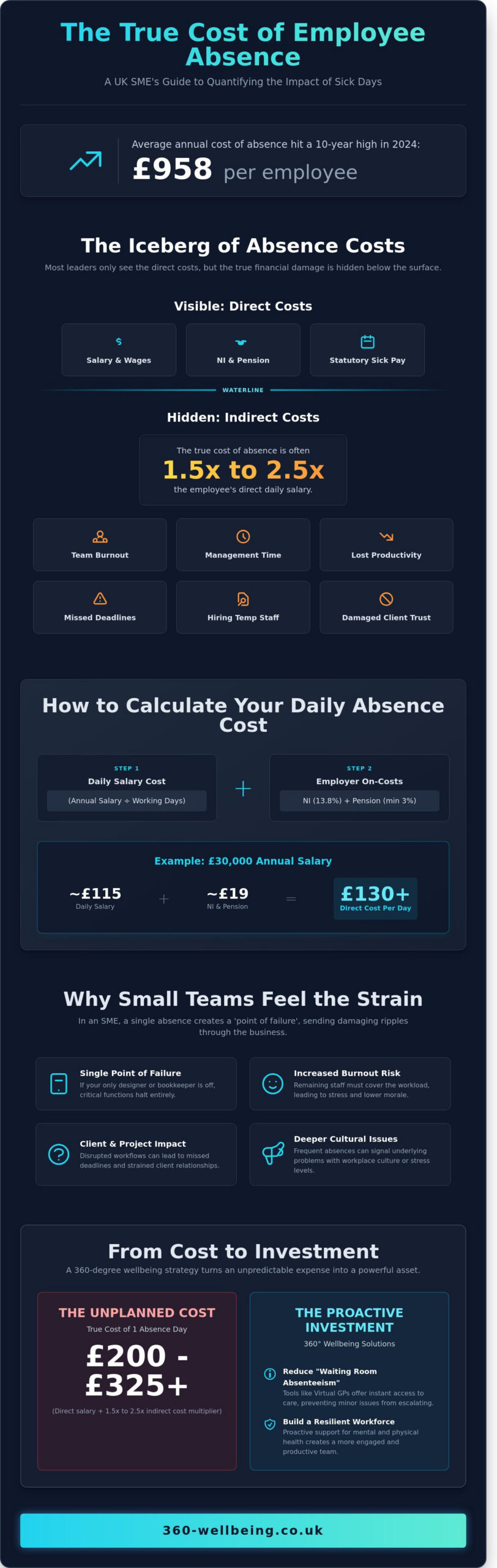
Did you know that the average annual cost of employee absence in the UK reached a ten-year high of £958 per person in 2024? As we move into 2026, calculating the cost of employee sick days has become a vital task for leaders facing rising Statutory Sick Pay and the hidden costs of lost productivity. You likely see the impact daily. It isn’t just visible in your payroll reports; it’s in the tired eyes of staff working harder to cover the gaps. We understand that managing these absences feels like a constant balancing act between commercial necessity and genuine care for your people.
This guide provides you with the exact formulas needed for board-level reporting to quantify those elusive missed opportunities. We’ll also explore how to implement proactive wellbeing strategies that protect your bottom line. By the end of this article, you’ll have a clear path to reducing absence rates and a deep understanding of the financial resilience that a 360-degree approach to health provides for your organisation.
Key Takeaways
- Learn the precise step-by-step formulas for calculating the cost of employee sick days, allowing you to quantify both direct salary losses and indirect operational friction.
- Identify the hidden “ripple effect” of staff absence, including how frequent sick days can signal deeper cultural issues and increase the risk of burnout across your remaining team.
- Discover why proactive absence tracking is a strategic necessity for UK SMEs in 2026 to maintain a resilient, productive, and harmonious workforce.
- Explore how 360-degree wellbeing strategies and tools like Virtual GPs can reduce “waiting room absenteeism” and catch health issues before they escalate.
- Understand the long-term ROI of a per-employee wellbeing subscription and how it compares to the significant financial burden of just a single day of unplanned absence.
The Financial and Operational Impact of Staff Absence
Supporting your team through illness is a core part of being a compassionate employer, but it’s also a vital business strategy. In 2026, UK SMEs are facing a complex health landscape where sickness absence rates remain a significant challenge. Recent data from the IPPR indicates that health-related economic inactivity and sickness cost the UK economy roughly £103 billion in 2024. For a small business, these aren’t just national statistics; they’re direct hits to your annual budget.
By calculating the cost of employee sick days, you can transform your approach from reactive fire-fighting to proactive care. Many leaders suffer from “absence blindness,” where they only see the visible gap in the office. They miss the slow erosion of profit margins caused by disrupted workflows and lowered morale. Taking a 360-degree view of health allows you to treat wellbeing as a strategic asset rather than an unavoidable expense. According to the ONS, the sickness absence rate has stayed consistently higher than pre-2020 levels, meaning the financial stakes for your organisation have never been higher.
Direct vs. Indirect Costs: The Tip of the Iceberg
Most managers start their calculations with the obvious figures. Direct costs include the employee’s salary, employer National Insurance contributions, and the mandatory adherence to UK Statutory Sick Pay (SSP) rules. However, these figures are just the surface of the problem. Indirect cost is the hidden secondary expenditure required to maintain business continuity.
These hidden burdens often include:
- The premium price of hiring temporary agency staff at short notice.
- Overtime payments for remaining team members who are covering the extra workload.
- Management time spent reshuffling schedules, conducting return-to-work interviews, and briefing cover staff.
Why UK SMEs Are Hit Harder by Sick Days
Small teams often face a “single point of failure” risk. If your lead designer or sole bookkeeper is unwell, a specific business function might stop entirely. This isn’t just an internal hiccup; it directly affects client relationships and can lead to missed service delivery deadlines. While a large corporation might absorb a week of minor illness through sheer scale, an SME feels the cumulative weight of every short-term absence. When you’re calculating the cost of employee sick days, you must account for this volatility. Protecting your team’s health through tailored resilience programmes isn’t a luxury for small firms; it’s a fundamental requirement for staying competitive and maintaining workplace harmony.
Step-by-Step: How to Calculate the Cost of Employee Sick Days
Understanding the financial impact of ill health requires a methodical approach that looks beyond the immediate payroll gap. To begin calculating the cost of employee sick days, you must first gather three essential data points: your total annual salary bill, accurate absence logs, and a clear count of contractual working days. This 360-degree view allows you to move from guesswork to a tailored strategy for workplace resilience.
The Basic Direct Cost Formula
The direct cost of an absence is the most visible figure on your balance sheet. To find the daily cost for a single employee, use this standard formula: (Annual Salary ÷ Working Days) + (Employer NI + Pension contributions). For an employee earning £30,000, the daily cost often exceeds £130 when you account for the 13.8% National Insurance rate and the 3% minimum employer pension contribution.
- Part-time staff: You’ll need to adjust the “Working Days” figure to reflect their specific pro-rata contract to avoid overestimating costs.
- Shift patterns: Calculate costs based on the specific hours lost rather than a standard eight-hour day, especially for varied rotas.
- Statutory Sick Pay (SSP): The 2024/25 SSP rate is £116.75 per week. By 2026, you’ll need to factor in the annual April uplifts. It’s also vital to monitor the 2026 legislative landscape, as the proposed removal of the three “waiting days” means you may pay SSP from the very first day of absence, significantly increasing the cost of short-term illness.
Calculating the Indirect Cost Multiplier
Direct salary costs are only the tip of the iceberg. Industry experts suggest that the true cost of absence is often 1.5 to 2.5 times the employee’s daily salary. This multiplier accounts for the hidden drain on your resources that doesn’t appear in a simple payroll report. When a team member is unwell, productivity often dips as remaining staff take on extra burdens, which can lead to secondary burnout and missed project milestones.
You should also quantify the time your leadership team spends re-organising rotas and managing handovers. On average, a line manager spends 90 minutes per instance of absence on administrative and logistical tasks. Developing a proactive wellbeing strategy can help reduce these figures by addressing the root causes of absence before they escalate. By applying a multiplier of at least 1.5 to your direct costs, you’ll gain a more realistic understanding of how absence impacts your bottom line and your team’s overall vitality.
Beyond the Spreadsheet: The Hidden Human and Cultural Costs
While the numbers on a balance sheet provide a clear starting point, they rarely capture the full impact of illness on your business. When you’re calculating the cost of employee sick days, you’ve got to look at the invisible weight carried by those still at their desks. Absence isn’t an isolated event. It’s a stone thrown into a pond that creates ripples across your entire organisation, affecting everything from individual stress levels to your broader company culture.
The Burden on the Remaining Team
When a team member is absent, their responsibilities don’t simply vanish. They shift onto colleagues who are likely already managing full workloads. This sudden spike in pressure often pushes stress levels beyond manageable limits. We frequently see a “domino effect” where overstretched staff eventually succumb to exhaustion or illness themselves because they’ve been covering extra shifts. This cycle is particularly damaging for workplace mental health, as persistent pressure erodes resilience and breeds resentment. If your team feels they’re constantly “firefighting” for missing colleagues, morale drops and your retention rates will likely follow.
Presenteeism: The £20bn Silent Killer
Perhaps more dangerous than absence is “presenteeism,” which is the act of showing up to work while physically or mentally unwell. Recent data from Deloitte indicates that presenteeism costs UK employers between £24 billion and £28 billion annually, a figure that significantly outweighs the direct costs of absence. Employees working at half-capacity don’t just work slower; they make more mistakes and take longer to recover from their initial ailment. This “silent killer” of productivity includes:
- Reduced Concentration: Tasks that usually take an hour might take three.
- Increased Error Rates: Fatigue and brain fog lead to costly mistakes in data, safety, or client communication.
- Contagion Risk: In physical workspaces, one person “powering through” a virus can quickly sideline an entire department.
Fostering a culture where staff feel safe to take the time they need to heal actually protects your long-term output. It’s about creating a psychological safety net where recovery is seen as a priority rather than a weakness.
Frequent short-term absences often act as a barometer for your company’s health. They might signal a lack of engagement or a toxic environment rather than just a seasonal bug. When calculating the cost of employee sick days, consider if the data is highlighting a need for cultural change. A proactive approach involves looking at the “why” behind the numbers. Punitive measures, such as strict disciplinary triggers, often backfire by encouraging presenteeism. Instead, investing in tailored wellbeing support creates a partnership between you and your staff. It shifts the focus from managing a problem to nurturing your most valuable strategic asset.
Strategies to Minimise Absence and Maximise ROI
Shifting your focus from reactive management to a proactive 360-degree wellbeing strategy transforms how your business handles health. When you stop viewing sickness as an inevitable expense and start seeing it as a manageable risk, the financial benefits become clear. By calculating the cost of employee sick days through a lens of prevention, you can identify exactly where a £1,000 investment in support saves £5,000 in lost productivity.
Data serves as your most reliable compass. Analysing absence patterns across different departments or during specific seasons, such as the winter flu peak or the “darker months” of Q4, allows for targeted interventions. If a specific team shows a 15% higher absence rate than the company average, it might signal a need for localized mental health support or a review of workplace ergonomics. This granular approach ensures your resources are deployed where they’ll generate the highest return on investment.
Virtual GPs play a pivotal role in modernising this strategy. They eliminate “waiting room absenteeism,” where staff spend half a day away from work just to secure a ten-minute appointment. Providing 24/7 access to UK-registered doctors ensures your team receives medical advice at a time that suits them, preventing minor symptoms from escalating into long-term leave.
Proactive Health Interventions
Early diagnosis is the cornerstone of a healthy workforce. When employees have immediate access to clinical professionals, they’re less likely to ignore the early warning signs of burnout or physical strain. Research indicates that early clinical intervention for musculoskeletal (MSK) issues can reduce recovery times by up to 40%, effectively stopping short-term aches from becoming chronic conditions that require months of leave.
- Reduced time away from the desk for routine medical consultations.
- Faster access to prescriptions and specialist referrals.
- Increased employee peace of mind, which boosts overall engagement.
Creating a Supportive Absence Policy
Your HR documentation should reflect a culture of care rather than a system of surveillance. Moving from “monitoring” to “supporting” changes the psychological contract between you and your staff. Return to Work (RTW) interviews shouldn’t be a box-ticking exercise; they’re a vital opportunity to uncover the root causes of absence. Whether it’s a recurring health issue or a temporary personal struggle, these conversations allow you to implement reasonable adjustments that keep people in work safely. You can find more detail on building these frameworks in our guide on absenteeism.
Effective policies don’t just track days lost; they build resilience. When staff feel supported, they’re more likely to return with confidence and less likely to experience a relapse. This empathetic approach is a core part of calculating the cost of employee sick days, as it directly impacts your long-term retention rates and employer brand.
Ready to transform your workplace health into a strategic advantage? Explore our comprehensive wellbeing solutions today.
From Calculation to Prevention: The 360 Wellbeing Solution
Once you have finished calculating the cost of employee sick days, the financial reality often serves as a powerful catalyst for change. The numbers show that reactive management is a costly cycle that drains resources and dampens morale. We offer a 360-degree approach that shifts the focus from managing absence to cultivating vitality. By providing a unified platform for both physical and mental health, we help you address the root causes of illness before they result in a “fit note” on your desk.
The return on investment is tangible. A monthly per-employee subscription typically costs significantly less than the price of a single day of lost productivity. When you consider that the average UK worker took 7.8 days of sick leave in 2023, the savings from preventing even two days of absence per person are substantial. Our mission is to support the whole person through medical, legal, and emotional hurdles, ensuring your team feels valued and protected at every turn.
24/7 Virtual GP: Your First Line of Defence
The traditional “8am scramble” for a local GP appointment is a major barrier to recovery. Employees often wait days for a consultation, allowing minor symptoms to escalate into long-term issues. Our virtual GP service eliminates this friction by providing 24/7 access to qualified doctors via phone or video. With rapid prescriptions and specialist referrals, your team can start their recovery immediately. This convenience is a highly sought-after benefit for the modern workforce. It respects their time and reduces the anxiety of waiting for essential care.
Holistic Support for a Resilient Workforce
A truly resilient workforce requires more than just basic medical insurance. We integrate mental health therapy and life coaching to help employees build the internal tools needed to navigate modern work pressures. Stress is rarely caused by one factor alone. We provide financial support and debt advice to tackle the external pressures that often manifest as physical illness. By addressing these hidden stressors, you create a culture of vitality that attracts top talent and keeps them engaged.
Your next step as a proactive UK employer is to audit your current wellbeing package. Ask yourself if your current benefits are truly preventative or merely reactive. If you are still calculating the cost of employee sick days as an inevitable expense, it’s time to transition to a strategy that treats health as a strategic asset. We are here to partner with you in building a healthier, more profitable future for your organisation.
Turning Absence Data into a Strategy for Growth
Understanding the true impact of absence requires looking beyond basic payroll figures. While the direct expense of Statutory Sick Pay is clear, the hidden drain on your team’s morale and productivity often proves far more damaging to your bottom line. According to the CIPD Health and Wellbeing at Work 2023 report, the average cost of absence has risen to £927 per employee annually. By accurately calculating the cost of employee sick days, you gain the clarity needed to shift from a reactive stance to a proactive culture of vitality.
UK SMEs face unique pressures when staff are unwell, but you don’t have to navigate these challenges alone. We’ve built a supportive framework that provides 24/7 access to UK-registered GPs alongside comprehensive mental health and financial support. It’s a solution designed specifically for UK SMEs and sole traders who want to protect their most valuable asset: their people. You’ve seen the numbers; now it’s time to transform them into a healthier, more resilient future for your business.
Calculate your potential savings with a 360 Wellbeing membership
We’re ready to partner with you to create a workplace where everyone has the support they need to thrive every single day.
Frequently Asked Questions
What is the current rate of Statutory Sick Pay (SSP) in the UK for 2026?
For the 2026 period, the latest confirmed Statutory Sick Pay (SSP) rate is £116.75 per week, though the Department for Work and Pensions typically reviews and adjusts this figure every April. You must pay this to eligible employees for up to 28 weeks. It’s a fundamental component when calculating the cost of employee sick days and ensures your staff have basic financial security during recovery.
How do I calculate the absenteeism rate for my small business?
You can find your absenteeism rate by dividing the total number of sick days taken by the total number of available working days in a specific period. Multiply this result by 100 to reach a percentage. If your team of five takes 15 days off out of 1,150 possible working days in a year, your rate is 1.3%. Tracking this helps you spot trends early.
Are there any “waiting days” before I have to pay an employee sick pay?
Yes, SSP isn’t usually paid for the first three “waiting days” of an illness. You only start paying from the fourth day of absence unless the employee has been off sick and receiving SSP within the last eight weeks. This rule helps manage the administrative and financial impact of very short, minor illnesses that don’t require long-term support.
What is the difference between direct and indirect costs of absence?
Direct costs include tangible outgoings like SSP, contractual sick pay, and the cost of hiring agency cover. Indirect costs are less visible but often more significant, involving lost productivity, management time spent reshuffling rotas, and the impact on team morale. Research by the CIPD indicates that indirect costs can be up to three times higher than the actual salary of the absent worker.
How much does the average UK sick day cost an employer?
According to 2023 data from the CIPD, the average cost of absence is £927 per employee per year. When calculating the cost of employee sick days, you should account for the fact that the average UK worker takes 6.7 days of leave annually. These figures demonstrate that investing in proactive health measures is a cost-effective strategy for any modern organisation.
Can an employee wellbeing platform really reduce my sick day costs?
A comprehensive wellbeing platform reduces costs by providing early intervention and support before a health issue becomes a long-term absence. By offering 24/7 access to mental health professionals and GPs, these tools address the causes of the 24% of UK sick days attributed to stress and anxiety. Proactive care helps your team stay resilient and reduces the need for expensive temporary cover.
What is the Bradford Factor and should I use it to track absence?
The Bradford Factor is a formula that identifies frequent, short-term absences by squaring the number of absence spells and multiplying it by the total days lost. It’s a useful tool for highlighting patterns that disrupt business operations more than a single long-term illness. You should use it as a starting point for supportive conversations rather than a purely punitive measure.
How do I factor in the cost of a temporary replacement or agency worker?
To calculate this cost, add the worker’s hourly rate to the agency’s commission, which usually sits between 20% and 30%. You must also account for the time your existing staff spend training the temporary hire. If an agency worker costs £22 per hour compared to a staff member’s £17, that £5 difference quickly adds up over a standard 37.5-hour week.