
A compassionate leave policy can offer more than the legal minimum: in the UK, there’s no general statutory right to paid bereavement leave or a set number of paid days. A company policy for compassionate leave should explain what support employees can expect, while eligible parents are entitled to two weeks of parental bereavement leave if their child dies under the age of 18.
It’s understandable that employees and employers may be unsure which type of leave applies after a death. A company policy for compassionate leave usually sets out an employer’s arrangements, while bereavement leave can include specific legal entitlements. Employees may also have a right to reasonable time off to deal with an emergency involving a dependant.
This guide explains when compassionate leave may be taken, how pay and bereavement leave differ, and what a clear, compassionate workplace policy should cover. It offers practical guidance for supporting employees through loss while setting consistent, manageable expectations for the organisation.
Key Takeaways
- Separate statutory time off for emergencies from any additional compassionate leave your organisation chooses to provide.
- Set out who the policy covers, what circumstances qualify, how leave is requested and whether it is paid.
- Use clear, consistent decisions and explain them sensitively, while allowing for individual circumstances.
- Plan how wider wellbeing support can help employees during bereavement and as they return to work.
How to create your company bereavement policy?
Compassionate leave is generally set by an employer’s policy, while bereavement leave can include specific statutory rights. Parental bereavement leave is a separate entitlement for eligible parents after a child’s death.
Parental Bereavement Leave
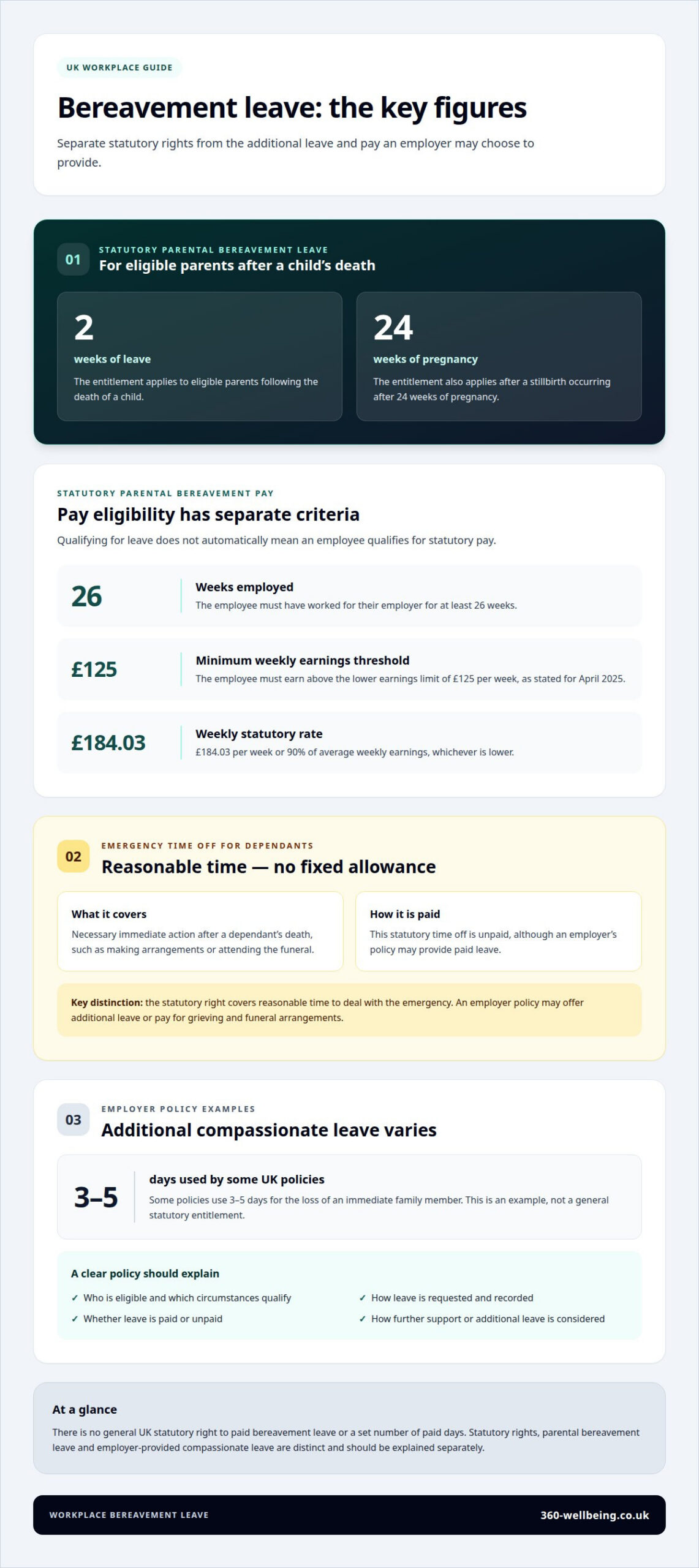
Parental bereavement leave gives eligible parents time away from work after the death of a child. The Parental Bereavement (Leave and Pay) Act 2018 grants eligible parents two weeks of leave following the loss of a child, according to UK Parliament. According to UK Government, the entitlement also applies after a stillbirth occurring after 24 weeks of pregnancy. This distinction matters when a policy sets out statutory rights separately from any additional employer-provided support.
Compassionate and Bereavement Leave Compared
Compassionate leave is time off an employer may provide for a distressing situation. Bereavement leave describes time off following a death and may include statutory entitlements. The terms can overlap in workplace policies, so the policy should explain which rules apply. For example, a family member’s death may qualify for employer-provided compassionate leave, while a child’s death may also trigger parental bereavement leave for an eligible employee.
If There Is No Bereavement Policy
If there’s no written policy, employees can review their employment contract, staff handbook or intranet for existing leave arrangements. They should tell their manager or HR as soon as possible what time off they need and discuss how the absence will be recorded and paid. If a child needs ongoing care after an emergency, an employer may ask the employee to use annual leave or parental leave for additional time.
Examples of Employer Bereavement Policies
A clear policy might offer a defined period of paid compassionate leave after the death of an immediate family member, with additional unpaid leave considered for longer absences. Another example sets different arrangements for funeral attendance, travel and an employee’s return to work. Some UK policies use 3-5 days for the loss of an immediate family member. Whatever approach is chosen, explain eligibility, notice, pay and how employees can request further support.
What is bereavement leave?
In the UK, bereavement leave may come from workplace policy or a statutory right connected with an emergency. The distinction matters because the reason for time off affects which protections apply.
Time Off After a Dependant’s Death
When a dependant dies, an employee can take a reasonable amount of time off to deal with the emergency. The Employment Rights Act 1996 provides this protection, including time to make necessary arrangements or attend the funeral. The law sets no fixed number of hours or days; what is reasonable depends on the circumstances.
A dependant may be a spouse, partner, child, grandchild or parent. Someone who relies on the employee for care may also qualify. For example, an employee may need time off to contact family, arrange a funeral or manage urgent responsibilities after a dependant’s death. This statutory time off is unpaid, although an employer’s policy may provide paid leave.
Statutory Time Off for Dependants
Statutory time off for dependants allows employees to deal with emergencies affecting someone who depends on them. It can cover a dependant’s illness, injury or death, as well as an unexpected disruption to care arrangements. There’s no set allowance: employees are entitled to a reasonable amount of time for the situation.
The right focuses on immediate action, such as arranging emergency childcare when a child’s usual carer cannot attend. It doesn’t cover an event the employee knew about beforehand, such as taking a child to a planned hospital appointment. Employees should tell their workplace as soon as possible, explain the emergency and agree the time away. There’s no limit on how many times this unpaid leave can be taken.
Bereavement leave and emergency time off can overlap after a dependant’s death, but they cover different aspects of leave. The statutory right covers necessary time off to deal with the emergency. An employer’s policy can explain any additional leave or pay available for grieving and funeral arrangements.
What Is compassionate leave and when can employees take it?
Compassionate leave is time off an employer may allow during a personal crisis, often following a death or serious illness. Eligibility and pay usually depend on the workplace policy, while some statutory rights apply separately.
Eligibility and Qualifying Circumstances
A compassionate leave policy defines which employees qualify and which situations it covers. An employer might include the death or critical illness of a close family member, a partner or someone who depends on the employee for care. The policy should clarify whether eligibility applies to all employees or depends on employment status, and explain how to request leave. This helps employees understand whether paid leave may cover a funeral or another urgent need.
Statutory Pay and Eligibility
Statutory parental bereavement pay is separate from an employer’s compassionate leave pay. An eligible employee must have worked for their employer for at least 26 weeks and earn above the lower earnings limit of £125 per week, as stated for April 2025. The statutory rate is £184.03 per week or 90% of average weekly earnings, whichever is lower. Meeting the leave criteria doesn’t automatically mean an employee qualifies for statutory pay.
Legal Entitlement to Compassionate Leave
There’s no general UK legal entitlement to compassionate leave or paid time off after someone dies. However, employees may have statutory rights to take time off to deal with an emergency involving a dependant. UK Parliament states that employees must be permitted reasonable time off during working hours for necessary action. This differs from a broader employer policy that covers the death of a friend, relative or other person.
An employer can refuse a request for discretionary compassionate leave if its policy doesn’t cover that situation. It must still respect any applicable statutory entitlement, such as emergency time off for dependants or parental bereavement leave. Employees can explain the circumstances and time needed. Employers should apply their policy consistently and clarify whether annual or unpaid leave is available.
Compassionate leave policies
A clear policy makes compassionate leave a more predictable workplace process. It should explain eligibility, pay, how to request leave and how managers should handle different circumstances.
Compassionate Leave Policy Provisions
Useful policies specify who is covered, which events qualify and how an employee requests time away. For example, an employer might include the death or critical illness of a family member and explain whether paid leave applies. Set out how the policy interacts with the employment contract and statutory parental bereavement rights, so employees can distinguish workplace benefits from legal entitlements.
Include practical steps: who receives the request, what information is needed, how the decision is communicated and how further leave is considered. Explain whether an employee can use annual leave or unpaid leave if the initial allowance isn’t enough. Consistent guidance helps managers respond fairly without treating every family situation as identical.
Typical Employer Leave Allowances
UK employers commonly provide three to five days for the death of an immediate family member. Policies may allow two to three days for less close relationships, while some provide one day for an in-law, aunt, uncle or cousin. These are common policy examples, not a universal statutory allowance. The employment contract and employer’s policy determine what an employee is entitled to receive.
Build flexibility around the stated allowance. A funeral abroad, caring responsibilities or practical arrangements may call for additional time, annual leave or a temporary change to working arrangements. For instance, an employer could consider reduced hours or temporary home working after an employee returns. State how requests are assessed and record decisions consistently.
A compassionate policy can also explain how managers discuss support sensitively, protect personal information and revisit arrangements as circumstances change. Explore employee wellbeing support as one part of a broader approach to workplace care.
360 Wellbeing
360 Wellbeing can complement a compassionate leave policy with practical wellbeing support for employees facing bereavement or returning to work. While clear leave arrangements set workplace expectations, support for physical and mental health can help address needs that continue beyond time away.
Employees can access Mental Health Support, alongside services such as a 24/7 Virtual GP and Physiotherapy. For employers, these options form part of a broader approach to employee wellbeing, rather than a substitute for statutory rights or a clear leave policy.
If you’re considering how to support employee wellbeing alongside compassionate leave, contact 360 Wellbeing to discuss your needs.
Make compassionate support part of everyday care
A thoughtful company policy for compassionate leave helps employees understand where to turn during a difficult period and gives managers a clear framework for responding with care. The next step is to connect that framework with ongoing wellbeing support, recognising that an employee’s needs may continue after they return to work.
360 Wellbeing offers support including a 24/7 Virtual GP, Mental Health Support and 360 Rewards. These services can complement workplace arrangements by giving employees access to broader health and wellbeing resources. They don’t replace clear leave policies or the need for sensitive conversations, but they can form part of a more considered approach to employee care.
If you’re exploring ways to strengthen support alongside your workplace policy, contact 360 Wellbeing for support. A practical, people-centred approach can help create a workplace where employees feel more supported through difficult moments.
Frequently Asked Questions
What is compassionate leave in the UK?
Compassionate leave is time away from work that an employer allows for a serious personal situation, such as a bereavement or a close relative’s critical illness. It may cover practical needs, such as attending a funeral or supporting a family member. The employer’s policy sets out who can request it and how it relates to other leave options.
Is compassionate leave paid or unpaid in the UK?
Whether compassionate leave is paid depends on the employer’s policy or the employee’s employment contract. There’s no general legal right to paid time off after a bereavement, although eligible parents may qualify for statutory parental bereavement pay after a child’s death. Employees should check the relevant policy wording to understand whether pay continues during their absence.
Who qualifies for compassionate leave after a bereavement?
Eligibility depends on the employer’s policy, which may cover employees after the death of a close relative or someone they care for. A policy can also define whether it includes relationships such as a sibling, grandparent or close friend. Statutory rights may apply separately when the deceased was a dependant or the employee’s child. The circumstances and relationship matter.
Can employees take compassionate leave to care for a seriously ill relative?
An employer may grant compassionate leave when a close relative is seriously or critically ill. If the situation creates an emergency involving a dependant, statutory time off may cover the immediate action needed, such as arranging care. A planned appointment or ongoing care need may require a different arrangement, such as annual leave or an employer-approved change to working hours.
How do you request compassionate leave from your employer?
Tell your manager or HR as soon as possible, using the workplace’s usual absence process if you can. Briefly explain what has happened, your relationship to the person and how much time away you need. If the situation is still unfolding, say when you expect to provide an update. Ask how the absence will be recorded and whether any further steps are needed.
What evidence can an employer ask for to approve compassionate leave?
An employer may ask for written evidence, such as information from a medical professional or a doctor’s note, before granting compassionate leave. The policy should explain when evidence may be requested and how the request is handled. If gathering documents is difficult during a crisis, tell your manager so you can discuss what information is practical in the circumstances.