
The cheapest-looking GP appointment may not be the lowest-cost option overall. The cost of a private GP appointment versus a virtual GP service depends on how you access care and what the fee includes.
It’s reasonable to want a clear figure before deciding how to get care. But the consultation fee may not cover prescriptions, tests or follow-up appointments, so the total depends on the support you need.
This guide explains the main differences between in-person and virtual appointments, what can add to the bill, and how to check what a provider’s fee includes. You’ll have a clearer basis for comparing the options and choosing an approach that fits your health needs and budget.
Key Takeaways
- Private GP fees vary with appointment type, length and location; virtual and telephone consultations typically cost less than face-to-face appointments.
- Appointment availability differs between services, with some private providers offering same-day appointments or consultations within 24 hours of booking.
- Allow for possible extra charges: prescriptions, tests, vaccines, referrals and scans may be billed separately from the consultation.
- Compare what the fee includes, such as consultation time and follow-up, to understand the likely total cost and choose care that suits your needs.
How much do private GP appointments cost?
Private GP appointment costs in the UK depend on consultation length, location and format. A face-to-face visit at a clinic may cost differently from a telephone or video consultation. The quoted fee also depends on what the appointment includes. For an accurate comparison, consider the consultation alongside any services arranged afterwards, such as blood tests. Ask for a quote that sets out the cost for the care you need.
A virtual GP consultation’s cost depends on its format, duration and included support. Online and telephone appointments typically cost less than face-to-face consultations. The exact figure is given in a quote for your case, based on the care involved. Before booking, establish whether the fee covers only the consultation or also any follow-up. This helps you understand the likely total rather than comparing headline prices alone.
Availability varies between private GP services and clinics. Some offer same-day appointments, while others show later slots. Booking usually involves choosing a consultation format and an available time. If you need same-day care, an online or telephone appointment may be a practical alternative to travelling to a clinic. Availability is not the same as suitability: your symptoms and the assessment needed matter too.
A virtual doctor can assess symptoms, discuss possible next steps and advise on treatment. The clinician may recommend an in-person appointment when symptoms need a physical examination. For example, a concern that requires the doctor to examine you cannot be fully assessed over video or telephone. Virtual care can help clarify what support to seek, but it is not a substitute for hands-on assessment when that is clinically needed. Choose the format based on your concern, not convenience alone.
Additional charges for prescriptions and tests
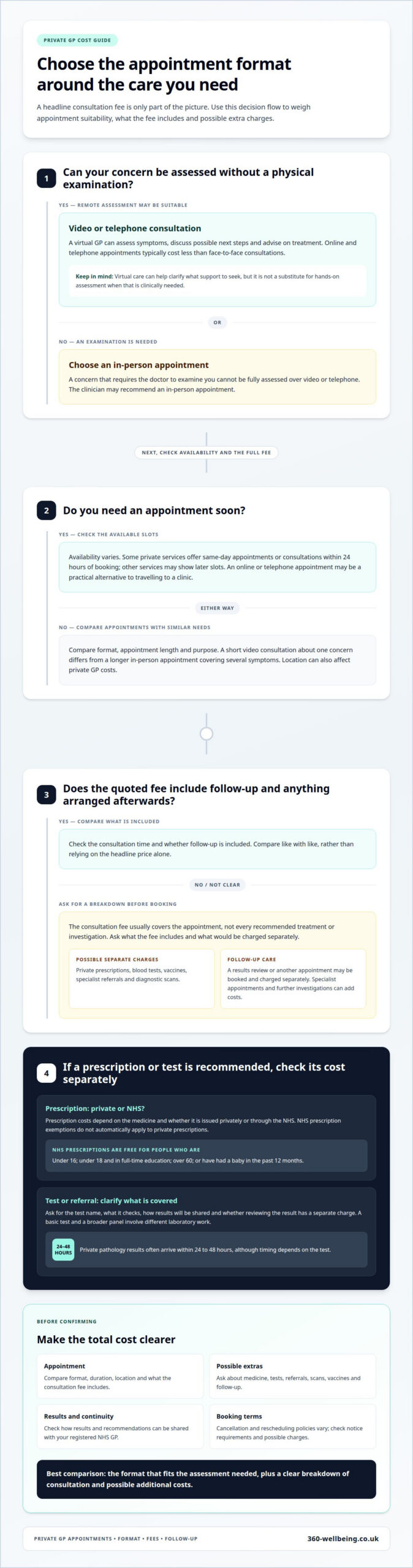
A private GP consultation fee usually covers the appointment, not every recommended treatment or investigation. Private prescriptions, blood tests, vaccines, specialist referrals and diagnostic scans are commonly charged separately. Before booking, ask for a breakdown that separates the consultation fee from the cost of any medicine or test. A doctor may recommend further care after discussing your symptoms, so the initial appointment fee alone may not reflect the full cost.
Prescription costs depend on the medicine and whether it is issued privately or through the NHS. According to the NHS Business Services Authority, NHS prescriptions are free for people under 16, people under 18 in full-time education, people over 60, and people who have had a baby in the past 12 months. These exemptions apply to NHS prescriptions, not automatically to private prescriptions.
For continuity of care, keep a record of the medicine name, dose and prescribing clinician. Share relevant details with your NHS GP if you receive care through both routes. This can help clinicians understand what has already been prescribed and keep your medical history up to date. If a prescription is arranged after a telephone or video consultation, clarify how it will be issued and remember that the medicine itself may carry a separate charge. Weekend arrangements can vary, so consider when you need the medicine and what steps are needed to obtain it.
Tests and referrals can also add to the total. A blood test, for example, may be billed separately from the consultation, and the cost can depend on which tests are needed. Vaccines and scans are separate potential expenses too. Before agreeing to an investigation, find out what it covers and whether the result review or follow-up appointment has its own charge. For ongoing access to virtual care, explore virtual GP support as part of your wider approach to wellbeing.
Additional charges for tests and follow-up appointments
A consultation can lead to investigations that are billed separately. A basic test and a broader panel involve different laboratory work, so compare what each test covers. The GP may explain why a test is relevant and whether its results could change the next step. Private pathology results often arrive within 24 to 48 hours, although timing depends on the test.
Some appointments need more than one conversation. A follow-up may be arranged to discuss results, review symptoms or adjust a treatment plan. Ask whether that discussion is part of the original appointment or booked and charged separately. A brief review and a longer consultation with a specialist are different kinds of care. If the GP recommends a referral, the specialist appointment and any further investigations can add separate costs.
Before agreeing to a blood test, clarify the test name, what it checks and how the results will be shared. If you’re registered with an NHS GP, ask how relevant results or recommendations can be passed on to support continuity of care. A private test doesn’t determine what treatment follows. The clinician considers the result alongside your symptoms and medical history, then explains the appropriate next step.
Cancellation and rescheduling terms also affect the overall cost. Policies vary, and a charge may apply if you cancel late or miss an appointment. Read the booking terms before confirming, noting the required notice and how to rearrange the slot. If your symptoms change before the appointment, contact the service promptly to discuss whether it still meets your needs. This can help avoid an unnecessary visit and make room for suitable follow-up care.
Comparing providers and what fees include
Compare services by appointment format, duration and what the fee covers, not by headline price alone. The cost of a private GP appointment versus a virtual GP service depends partly on whether you need a clinic visit or a remote discussion. A short video consultation about one concern differs from a longer in-person appointment covering several symptoms. Private GP costs can also vary by location, so compare appointments with similar lengths and purposes.
Before booking, establish whether the fee covers the doctor’s assessment only or includes follow-up. Ask how referrals are arranged and how recommendations can be shared with your registered NHS GP. A lower initial charge may not represent the full cost if you need further care. Comparing the cost of a private GP appointment versus a virtual GP service is more useful when you include separate tests, prescriptions or results discussions in your overall estimate.
Private GPs in the UK are subject to the same regulation as NHS practices and are inspected by the Care Quality Commission. Look for the clinician’s name, registration details and the provider’s inspection information. If ongoing symptoms need specialist input, understanding who will assess you and how referrals work can help you make an informed decision. Clear information about the clinician and service supports a more considered comparison.
Virtual GP appointments are typically included in private health insurance, though the cover depends on the policy. Compare its benefits and exclusions with the care you expect to use, including access format and whether follow-up is covered. If remote GP access is part of your wellbeing plans, explore virtual GP support as an option.
360 Wellbeing: 24/7 Virtual GP
360 Wellbeing offers a 24/7 Virtual GP service, giving people access to a UK-registered GP as part of a broader approach to wellbeing. It can be a useful option for discussing health concerns remotely, while an in-person assessment may still be needed when symptoms require physical examination.
Support can extend beyond physical health. Mental Health Support and Physiotherapy address different wellbeing needs, while 360 Rewards offers additional benefits through the platform. Together, these options can help individuals and organisations consider health support more holistically, rather than focusing on one-off appointments alone.
If you’d like to explore how 360 Wellbeing could support your wellbeing needs, contact 360 Wellbeing.
Choose the care approach that fits your next step
The cost of a private GP appointment versus a virtual GP service can inform a wider decision about accessing healthcare. Look beyond the first appointment and consider the support that suits your needs, how it fits alongside NHS GP care, and how to plan for possible onward costs. A clear view of these priorities can make your decision more manageable.
For individuals, that means choosing an access route suited to the concern and recognising when a remote discussion may need an in-person assessment. For employers, it means considering how health support fits into a broader wellbeing approach that includes physical and emotional needs. Neither route is automatically right for every situation; the care needed should guide the choice.
360 Wellbeing can help you explore its support in relation to your circumstances and priorities. A conversation is a practical next step if you’re considering how wellbeing support could fit into your plans. Contact 360 Wellbeing to discuss your options, and move forward with a clearer sense of what may suit you.
Frequently Asked Questions
What Is Included in a Private GP Consultation?
A private GP consultation gives you time to discuss a health concern with a doctor and consider appropriate next steps. You might describe a recurring symptom, explain how it affects daily life, and discuss whether further assessment is needed. The appointment’s scope varies by service and format. Tests, prescriptions and follow-up may be arranged separately, so the consultation itself doesn’t necessarily cover every part of your care.
Why Do Private GP Prices Vary?
Private GP prices vary because appointment length, location, format and type of care all affect the service provided. A longer discussion may allow time to explore several concerns, while a remote appointment does not involve a clinic visit. The clinician’s role and any additional support also influence the overall cost. For a useful comparison, consider what you need from the appointment, not just its advertised starting price.
Can I have a private GP instead of NHS?
Yes. You can consult a private GP while remaining registered with an NHS GP; private care doesn’t require you to leave NHS care. NHS GP appointments are free at the point of use. You may also receive NHS treatment after a private consultation if your NHS doctor considers it clinically appropriate. Share relevant private recommendations with your NHS GP when discussing ongoing care.
What is the average cost of a private GP appointment in the UK?
Treat this as a broad guide rather than a fixed tariff: a short remote discussion and a longer in-person appointment are not directly equivalent. The total may also change if your care involves separate investigations or treatment after the consultation.
What are typical prices for private GP appointments by consultation length and provider?
These ranges help compare like-for-like appointment types, but provider and location affect fees, so appointments of the same duration may not cost the same everywhere.
What extra costs can apply to private or virtual GP consultations, such as prescriptions or tests?
Extra costs may include medicine, investigations, vaccines, scans, referrals or follow-up appointments. A private prescription is separate from the pharmacy cost of the medicine, which depends on the drug. Blood test prices can also vary depending on the panel requested, so a single test and a wider set of checks may have different costs.