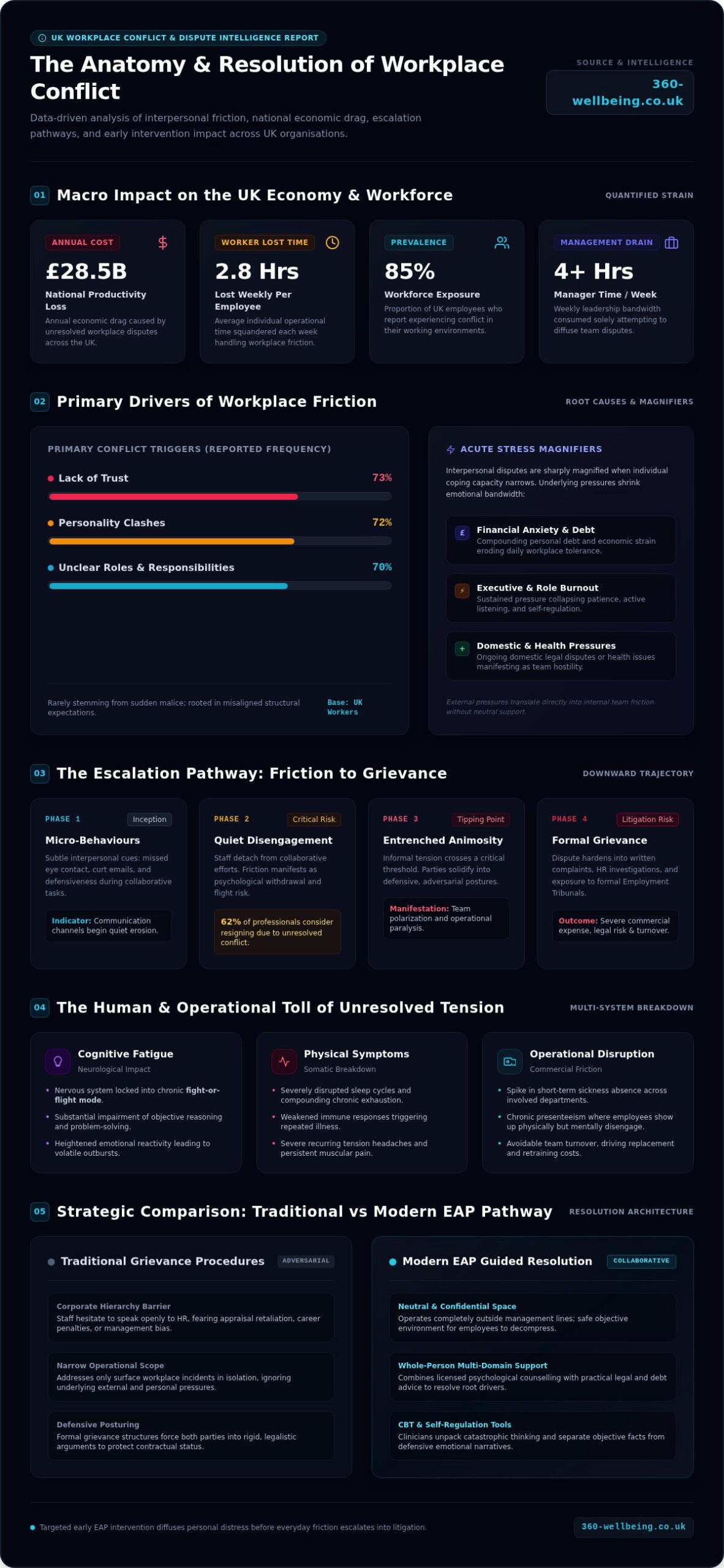
UK workers lose an average of 2.8 hours every week dealing with workplace friction, costing the national economy an estimated £28.5 billion each year in lost productivity. When communication breaks down, tension quickly drains leadership energy and disrupts entire teams. Leveraging targeted eap support for workplace dispute resolution allows organisations to resolve personal distress before everyday friction escalates into contractual litigation.
You already know how exhausting it feels when managers spend hours untangling emotional clashes, anxious that an unresolved disagreement might spiral into a formal grievance or an employment tribunal claim. It’s a heavy operational burden that pulls vital focus away from meaningful work and leaves everyone on edge.
In this guide, you’ll discover how modern Employee Assistance Programmes de-escalate workplace conflict, prevent formal grievances, and restore team productivity by tackling root causes early. We’ll walk you through a clear roadmap for early intervention, practical de-escalation strategies, and proven methods to cultivate a resilient, psychologically safe culture across your organisation.
Key Takeaways
- Early intervention transforms workplace friction from an operational disruption into an opportunity for constructive dialogue before formal complaints emerge.
- Discover how targeted eap support for workplace dispute resolution provides confidential psychological guidance to defuse intense interpersonal tension.
- Compare traditional grievance procedures with modern collaborative pathways that safeguard psychological safety and preserve working relationships.
- Learn a practical five-step framework that empowers managers to spot friction early and facilitate structured, supportive conversations.
- Integrate whole-person support across mental, physical, and legal domains to proactively eliminate the daily pressures that trigger conflict.
The Anatomy of Workplace Conflict: Why Early Dispute Intervention Matters
Workplace dispute resolution encompasses formal and informal frameworks designed to diffuse friction, rebuild psychological safety, and restore operational flow. In UK workplaces, interpersonal conflict is rarely an isolated event. Recent data shows that 85% of UK employees experience workplace conflict, with managers spending over four hours every week attempting to manage disputes. When misaligned priorities and daily pressures remain unaddressed, these disagreements quickly drain commercial resources. Left unchecked, workplace friction hardens into entrenched animosity, driving up absenteeism and exposing organisations to formal employment tribunals.
Most surface-level disagreements aren’t caused by sudden malice. Instead, primary drivers like a lack of trust (73%), personality clashes (72%), and unclear roles (70%) are frequently magnified by acute personal stressors. Financial anxiety, executive burnout, or underlying health issues severely narrow an individual’s emotional bandwidth. Providing structured Employee Assistance Program (EAP) interventions gives staff an independent outlet to decompress personal pressures before personal strain manifests as team hostility. Deploying specialised eap support for workplace dispute resolution ensures that organisations address these deeper root causes before interpersonal tension permanently fractures working dynamics.
The Escalation Pathway from Friction to Formal Grievance
Conflict rarely begins with a formal HR complaint. It starts with micro-behaviours: missed eye contact, curt emails, and subtle defensiveness during collaborative tasks. When early communication channels collapse, individuals disengage quietly, and roughly 62% of professionals have considered leaving their jobs due to unresolved conflict. Without early mediation, informal tension crosses a critical tipping point into formal grievances, locking both parties into defensive, adversarial postures.
The Psychological and Physical Toll of Workplace Friction
Chronic interpersonal hostility exacts a heavy toll on cognitive functioning and physical health across teams:
- Cognitive fatigue: Sustained anxiety keeps the nervous system in fight-or-flight mode, impairing objective reasoning and encouraging reactive outbursts.
- Physical symptoms: Ongoing stress disrupts sleep cycles, weakens immune responses, and leads to tension headaches and muscular pain.
- Operational disruption: Emotional exhaustion quickly translates into heightened short-term sickness absence, presenteeism, and avoidable team turnover.
Integrating targeted eap support for workplace dispute resolution interrupts this downward cycle, replacing defensive reactions with restorative dialogue before health, morale, and commercial outcomes deteriorate.
How Modern EAP Services Support Workplace Dispute Resolution
Traditional dispute models often fail because internal human resources teams are inherently tied to organisational hierarchy. Employees frequently hesitate to speak openly to HR, fearing negative appraisals or career penalties. An Employee Assistance Programme operates completely outside corporate management structures, offering a confidential, neutral environment where staff can express frustration safely. When organisations invest in modern integrated EAP solutions, dispute resolution stops being an adversarial battle and becomes an empathetic problem-solving exercise.
Unlike siloed mediation services, an all-encompassing platform recognises that workplace friction rarely occurs in a vacuum. Unmanaged domestic legal disputes or compounding personal debt often erode an employee’s coping capacity at work. Comprehensive eap support for workplace dispute resolution addresses these interconnected pressures simultaneously, pairing licensed psychological counselling with practical legal and debt advice to eliminate the external strain driving workplace hostility.
Confidential Emotional De-Escalation and Counselling
Individual counselling sessions give employees an objective psychological space to vent and process volatile workplace anger. Using cognitive behavioural therapy techniques, clinicians guide individuals to unpack catastrophic thinking and separate objective facts from defensive emotional narratives. Staff develop self-regulation tools and clearer communication strategies before entering joint dialogue, ensuring discussions remain calm, constructive, and focused on shared solutions.
Impartial Mediation and Facilitated Dialogue
When interpersonal communication breaks down between colleagues, professional facilitators step in to restore constructive interaction. Much like a structured informal settlement conference, this voluntary process focuses strictly on restorative solutions rather than assigning historical blame or determining guilt. Neutral specialists establish ground rules and help both participants co-author actionable behavioural compacts, rebuilding day-to-day trust without leaving formal disciplinary marks on employment records.
Specialist Line Manager Consultation and Coaching
Managers often feel unequipped to navigate raw emotional confrontations among their teams. Dedicated consultation helplines provide leaders with immediate guidance on tackling friction before grievances emerge. Through targeted coaching, managers learn:
- How to spot subtle behavioural shifts, withdrawal, or passive resistance across hybrid and remote teams.
- Empathetic questioning techniques that neutralise defensive reactions during feedback sessions.
- Clear referral language that introduces confidential support without making employees feel judged or penalised.
By blending proactive leadership guidance with clinical care, modern eap support for workplace dispute resolution delivers the panoramic perspective necessary to protect team cohesion and morale.
EAP Resolution vs Traditional Grievance Procedures: A Strategic Comparison
When interpersonal friction arises, standard corporate instinct leans toward formal grievance mechanisms. However, standard HR disciplinary procedures are structured around determining culpability rather than healing fractured collaboration. This adversarial approach naturally forces employees into defensive stances, creating deep institutional divides. In contrast, leveraging eap support for workplace dispute resolution prioritises restorative mediation and psychological safety, de-escalating interpersonal grievances before they solidify into formal employment tribunal risks.
Adopting an informal pathway aligns directly with the Acas Code of Practice on disciplinary and grievance procedures, which strongly encourages employers and workers to resolve issues informally wherever possible. While formal investigations take months of administrative effort and drain legal budgets, proactive EAP interventions guide parties toward constructive alignment within days. The difference between these two pathways is substantial:
- Focus: Formal grievances focus on assigning contractual blame, whereas EAP pathways focus on uncovering root causes and restoring working relationships.
- Atmosphere: Traditional HR procedures create an adversarial environment with claimants and respondents; EAP facilitation provides a confidential, non-punitive space.
- Resolution Speed: Grievance procedures often drag on for months, while mediated conversations typically yield actionable outcomes within two to three weeks.
- Long-Term Outcome: Formal findings frequently leave lingering resentment that disrupts teams, whereas collaborative agreements build sustainable communication compacts.
Informal Collaborative Resolution Versus Adversarial HR Processes
Formal grievances rarely repair professional trust. Once an employee lodges a written complaint, both parties retreat behind documented evidence, guarded statements, and heightened suspicion. This defensive mindset fractures team dynamics and halts critical cross-functional projects. Collaborative EAP facilitation dismantles these rigid barriers. Disputing colleagues work together to co-design future behavioural standards, preserving vital institutional knowledge and preventing unnecessary resignations.
Addressing Peripheral Debt and Legal Stressors
Workplace short tempers and sudden defensiveness are frequently symptomatic of external turmoil. When an employee is overwhelmed by consumer debt, tenancy disputes, or family legal matters, their capacity to handle routine workplace friction plummets. Ensuring access to comprehensive financial support for employees and confidential debt counselling directly removes these invisible pressures. When paired with independent legal helplines, staff gain clear guidance on complex statutory rights and domestic disputes. Resolving these personal burdens removes the emotional volatility that so often sparks disruptive professional disputes.
By shifting from legalistic defensiveness to compassionate early intervention, organisations using eap support for workplace dispute resolution protect both their workforce and operational stability.
A Step-by-Step Manager Framework for EAP-Guided Conflict Resolution
When tension surfaces, line managers frequently freeze, unsure whether to step in or let colleagues sort it out privately. Hesitation usually allows resentment to calcify. Applying a clear, five-step pathway helps leaders defuse disputes objectively, protecting psychological safety while keeping performance on track.
- Early identification: Spot behavioral changes early. Look for clipped replies, exclusion from email threads, missed deadlines, or sudden drops in collaborative output.
- Informal exploratory dialogue: Hold a private, non-judgmental one-to-one conversation. Focus strictly on observable behavior and emotional strain rather than taking sides.
- Independent intake coordination: Guide both employees toward independent eap support for workplace dispute resolution. The provider schedules individual, confidential intake discussions with each participant.
- Facilitated restorative dialogue: A trained, neutral professional conducts joint sessions where both individuals outline working preferences and establish practical ground rules.
- Structured follow-up: Review progress together against agreed operational milestones without reopening historical grievances.
Handling Early Identification and Referral Conversations
Referral conversations must feel like supportive care rather than covert disciplinary action. If staff suspect leadership is gathering evidence against them, they will immediately shut down. Emphasise that your Employee Assistance Programme is entirely independent, confidential, and run by external professionals outside the company. Under UK employment standards, participation in conflict mediation must remain completely voluntary; forced participation breeds resentment and undermines authentic resolution.
Post-Resolution Monitoring and Team Culture Rebuilding
De-escalation does not end when joint sessions finish. Managers need to protect fragile new working norms as colleagues return to shared tasks. Follow these practical steps:
- Set up brief 30-day and 60-day individual check-ins to evaluate how daily communication is holding up.
- Uphold the practical boundaries established during mediation, such as preferred communication formats or meeting structures.
- Assign neutral, shared operational goals that encourage low-stress collaboration and slowly rebuild mutual reliance.
Equipping line managers with structured guidance prevents routine friction from derailing operational delivery. To upskill your management team and build an empathetic culture, explore how to partner with 360 Wellbeing for comprehensive EAP solutions that resolve interpersonal issues before they escalate.
Embedding a Holistic Wellbeing Platform to Prevent Future Workplace Disputes
Stopping disputes before they start requires a wider lens than reactive conflict intervention. When organisations view workplace tension purely as a management breakdown, they miss the daily pressures eroding an individual’s patience. Physical pain, poor sleep, and personal worries slowly deplete emotional resilience. By establishing a unified ecosystem that integrates mental health support, life coaching, and physical healthcare, employers remove the daily frustrations that so frequently ignite team friction.
Sustainable team harmony thrives when wellbeing tools are readily accessible. An employee struggling with severe neck pain or prolonged medical anxiety is far more likely to misinterpret a peer’s comment as hostile. Providing comprehensive eap support for workplace dispute resolution alongside whole-person health resources gives workers the proactive care they need to stay balanced, calm, and collaborative under pressure.
Unifying Mental Health, Virtual GP, and Everyday Lifestyle Support
Modern wellbeing platforms connect multiple pillars of health into a seamless experience. Rapid access to a 24/7 Virtual GP helps employees address physical symptoms promptly, preventing untreated health conditions from causing irritability and exhaustion. Meanwhile, professional life coaching equips individuals with personal communication tools to address misunderstandings constructively on their own. Adding everyday retail savings through 360 Rewards and direct access to legal support creates an ongoing sense of security, boosting organisational morale across all levels.
Implementing Seamless, Modern Wellbeing Coverage Across the UK
Delivering consistent care across hybrid and distributed remote teams demands modern digital infrastructure. Outdated brochure-based services often go unused because accessing care feels cumbersome. Modern digital platforms solve this friction:
- Universal accessibility: Intuitive mobile applications provide confidential 24/7 digital access for all employees, ensuring staff can seek help anywhere in the UK.
- Equitable support: Flexible subscription models allow businesses of any size to offer enterprise-grade clinical and legal resources without administrative complexity.
- Barrier-free intake: Direct self-referrals ensure workers receive timely guidance before private stress escalates into an active office dispute.
Investing in joined-up care transforms your culture from reactive crisis response into lasting psychological safety. Protect your workforce and explore our comprehensive EAP and wellbeing platform to discover how complete physical, mental, and legal support builds a truly resilient workplace.
Restoring Workplace Harmony Through Early Conflict Resolution
Managing interpersonal friction effectively requires shifting from adversarial grievance procedures to proactive, restorative dialogue. By addressing personal strain, burnout, and external stressors early, you resolve underlying tensions before they damage professional relationships or disrupt essential business operations.
Founded in 2019, 360 Wellbeing provides complete multi-disciplinary care across the UK, supporting sole traders, SMEs, and large enterprises. By combining dedicated mental health therapy, a 24/7 Virtual GP, and independent legal support within one seamless digital ecosystem, we help organisations defuse friction at its source. Choosing proactive eap support for workplace dispute resolution safeguards leadership time, reduces tribunal risks, and nurtures a genuinely safe team culture.
Ready to build a calmer, more productive working environment? Foster workplace harmony with 360 Wellbeing EAP solutions and give your people the all-encompassing support they deserve.
Frequently Asked Questions
Can an EAP assist with formal disciplinary hearings or employment tribunals?
An EAP cannot legally represent employees or act as an advocate in formal disciplinary hearings or UK employment tribunals. Instead, it provides confidential emotional counselling, stress management, and independent legal information to help staff understand statutory procedures. This clinical and practical guidance helps employees stay composed during proceedings, while encouraging early, out-of-court resolutions that avoid escalating to formal tribunals.
Is employee participation in EAP dispute resolution strictly confidential from HR?
Yes, confidentiality is strictly maintained under UK data privacy laws and clinical professional standards. Human resources and line managers never receive details about what is discussed during private counselling or exploratory calls. The only exception involves acute safeguarding risks or threats of harm. Employers only receive anonymised, aggregate utilisation data, ensuring workers feel completely safe to access eap support for workplace dispute resolution without fear of career repercussions.
How does an EAP differ from hiring an external workplace mediator?
External commercial mediators are typically contracted on an expensive, ad-hoc basis solely to address a single escalated dispute. An EAP provides continuous, proactive support that combines dispute facilitation with mental health therapy, life coaching, and debt advice. This multi-disciplinary approach addresses the personal pressures driving friction rather than merely brokering a transactional settlement after communication has already collapsed.
Can managers mandate that fighting employees contact the EAP?
No, UK employers cannot force employees to attend an EAP. Mandating attendance compromises clinical ethics and can be interpreted as an adverse or punitive management action under employment law. Instead, managers should warmly recommend the service during supportive one-to-one conversations. Emphasising voluntary participation and strict confidentiality encourages genuine engagement, helping staff accept eap support for workplace dispute resolution on their own terms.
What happens if an employee refuses to engage with the EAP during a dispute?
If an employee declines EAP support, employers must respect that decision and rely on internal management processes. Managers should continue addressing observable workplace behaviours, setting objective performance standards, and encouraging constructive communication. While you cannot compel engagement, keeping the door open ensures the employee can voluntarily access professional wellbeing support later if tensions persist or worsen.
How quickly can EAP dispute resolution support be deployed in the UK?
Digital EAP support is accessible immediately. Modern platforms provide confidential 24/7 digital access, allowing employees to connect with qualified mental health professionals and legal advisers within minutes of downloading an app. Facilitated mediation sessions and structured managerial consultations can typically be arranged within a few working days, delivering much faster intervention than traditional internal grievance investigations.
Does EAP-led mediation comply with UK Acas Code guidelines?
Yes, EAP-facilitated resolution aligns closely with the Acas Code of Practice on disciplinary and grievance procedures. Acas strongly advises that employers and workers resolve interpersonal problems informally before initiating statutory grievance processes. Using an impartial third party to facilitate open, non-punitive dialogue complies with best-practice employment standards, demonstrating that the organisation took all reasonable steps to support staff and preserve working relationships.