
Could a single procedural oversight really cost your business an extra 25% in tribunal penalties? Under the latest 2026 standards, an unreasonable failure to follow the employee grievance procedure uk isn’t just a HR headache; it’s a significant financial and cultural risk that can lead to awards like £31,400 being uplifted by thousands. We understand that managing sensitive complaints like harassment or workplace conflict feels like walking a legal tightrope. It’s natural to worry about the impact on productivity and the emotional toll these disputes take on your team.
This guide will help you master the legal requirements of the 2026 Employment Rights Act while showing you how to foster a culture that resolves conflict through proactive wellbeing. You’ll learn exactly how to navigate the updated ACAS Code of Practice and the new harassment prevention duties that took effect this year. We’ll also explore how providing your staff with the right safety valves, such as mental health support and legal advice, can resolve issues before they ever reach a formal hearing. This ensures your organisation remains both compliant and compassionate, turning potential friction into a foundation for long-term stability.
Key Takeaways
- Learn how to navigate the official employee grievance procedure uk to remain compliant with the updated 2026 Acas Code of Practice and avoid costly tribunal uplifts.
- Understand the essential steps of a formal investigation, from receiving a written complaint to gathering fair evidence, ensuring every staff member feels heard and protected.
- Discover why informal mediation and “open door” policies are often more effective than formal hearings for preserving workplace harmony and productivity.
- Identify the root causes of conflict, such as burnout and stress, and learn how to use an Employee Assistance Programme (EAP) as an early detection tool.
- Explore how proactive support tools like 24/7 Virtual GP and Mental Health therapy act as a vital buffer, resolving personal pressures before they escalate into professional grievances.
Understanding the Employee Grievance Procedure in the UK
A Workplace grievance is a formal concern raised by a staff member regarding their work, their environment, or their relationship with colleagues. It’s a structured way for an employee to say that something is wrong and needs to be fixed. In the UK, providing a written employee grievance procedure uk isn’t just good practice; it’s a statutory requirement under the Employment Rights Act 1996. This document must be handed to every employee on or before their first day. Think of it as a roadmap for fairness that protects both the individual and the organisation.
The Acas Code of Practice on Disciplinary and Grievance Procedures carries immense legal weight. While the Code itself isn’t a law, employment tribunals use it as the definitive benchmark for reasonable behaviour. If a dispute reaches a tribunal and the employer hasn’t followed the Code’s principles, the consequences are severe. Beyond the courtroom, the hidden costs of poorly managed grievances ripple through the business. Conflict that lingers beneath the surface drains productivity, causes high staff turnover, and can irreparably damage company culture.
When Does an Issue Become a Formal Grievance?
Managers often struggle to distinguish between a casual “moan” and a formal complaint. A moan is typically a ventilation of frustration that doesn’t require a specific outcome. A formal grievance is a request for action. Serious triggers, such as allegations of discrimination, harassment, or significant health and safety risks, must be escalated immediately. A complaint reaches the point of no return when the employee puts their concerns in writing and expects a formal investigation into the matter.
The Legal Consequences of Non-Compliance
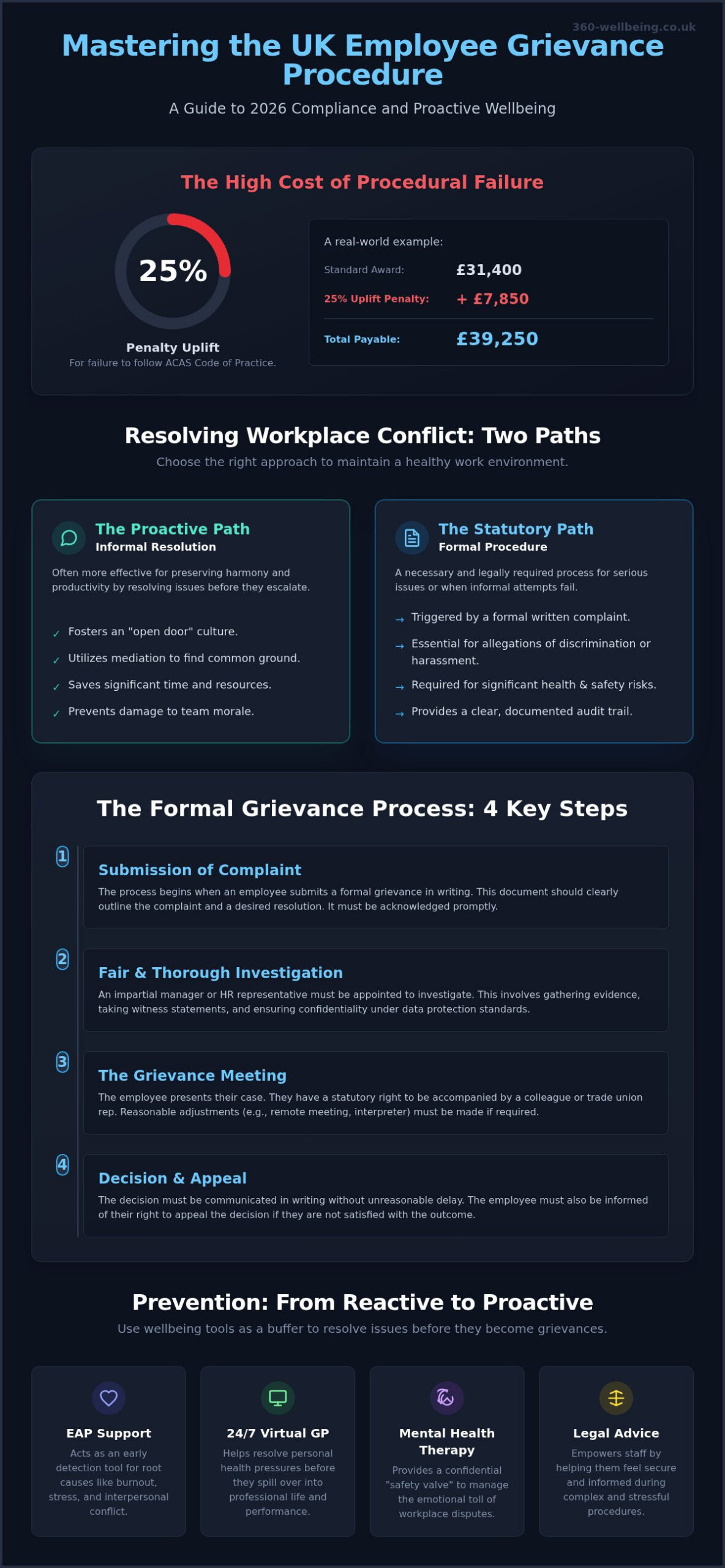
Failing to follow the employee grievance procedure uk or the Acas guidelines can lead to a 25% uplift in compensation awards at an Employment Tribunal. For example, a £31,400 award for constructive dismissal could see an additional £7,850 added simply because the employer ignored the correct process. This penalty exists because employers have a fundamental “Duty of Care” to provide a safe and supportive working environment. If you ignore a grievance, you risk a claim that the employment contract has been fundamentally breached, leaving you vulnerable to costly litigation and a damaged reputation.
The Step-by-Step Formal Grievance Process
The process begins when an employee submits a formal written grievance. This document should clearly outline the nature of the complaint and, where possible, suggest a desired resolution. It’s usually sent to a direct manager or HR representative. Once received, the clock starts ticking. While the timeline depends on the complexity of the case, employers should aim to acknowledge the receipt quickly and move toward an investigation. The foundation of a successful employee grievance procedure uk lies in the quality of the investigation that follows, ensuring every voice is heard with empathy and objectivity.
Conducting a Fair and Thorough Investigation
Gathering evidence is a delicate balance of speed and precision. You must appoint an investigator who hasn’t been involved in the issue to ensure total impartiality. Under the latest data protection standards, confidentiality protocols are paramount. You must handle witness statements and digital records with transparency while protecting the privacy of all parties involved. If witness accounts conflict, don’t rush to judgment. Instead, look for corroborating evidence, such as emails or shift logs, to build a panoramic view of the situation. Providing employees with access to professional legal support can help them feel more secure and informed during these complex stages.
The Grievance Meeting: Rights and Responsibilities
The formal meeting is the employee’s opportunity to explain their case in detail. It’s a legal requirement to inform them of their right to be accompanied by a colleague or a trade union representative. In 2026, many of these meetings happen via video link due to hybrid working models. If you’re hosting a remote meeting, ensure the platform is secure and the employee has a private space to speak freely. Employers must make reasonable adjustments for the meeting, such as providing an interpreter or choosing a neutral location to accommodate an employee’s mental health needs.
Following the meeting, you must communicate your decision in writing without delay. This outcome should explain what actions you’ll take to resolve the issue or why the grievance wasn’t upheld. If the employee isn’t satisfied, they have the statutory right to appeal. To maintain fairness, the appeal should be heard by a senior manager who was not involved in the initial decision. This “fresh pair of eyes” approach is one of the core legal requirements for grievance procedures in the UK. It ensures the process remains objective and reinforces trust across your entire workforce.
Informal Resolution vs. Formal Grievance: When to Mediate
Before triggering a formal employee grievance procedure uk, many organisations find success through an “Open Door” policy. This approach encourages employees to raise concerns early with their line managers in a low-pressure environment. It’s a methodical way to catch small ripples before they become waves. By having a 1-to-1 conversation, managers can often resolve misunderstandings or minor work-life balance issues without the need for a complex paper trail. However, even these quiet chats should be noted in a simple, supportive summary to ensure both parties agree on the path forward and to prevent future escalations.
Mediation is often the superior choice for interpersonal friction. A neutral third party, either from within the company or an external professional, helps both individuals find common ground. This process moves away from the adversarial “winner and loser” dynamic found in formal hearings, focusing instead on long-term workplace harmony. Using Acas step-by-step guidance, you can decide if mediation is appropriate for your specific case. It’s a proactive step that preserves relationships rather than severing them, which is essential for a resilient team culture.
The Benefits of Workplace Mediation
Mediation acts as a clinical yet compassionate intervention. It de-escalates conflict by providing a safe space for honest dialogue that doesn’t feel like a confrontation. Instead of focusing on blame, it prioritises foresight and durability in professional relationships. This shift reduces the stress of workplace conflict, making wellbeing a professional necessity rather than a luxury. When employees feel heard without the fear of a formal record, they’re more likely to engage in genuine resolution.
Recognising When Informal Steps Are Insufficient
There is an “informal ceiling” where the law and safety dictate a more structured approach. If an issue involves whistleblowing, gross misconduct, or physical safety, you must move to a formal route immediately. Sweeping serious allegations under the carpet doesn’t protect the business; it exposes it to legal risk and moral failure. Sometimes, the root cause of friction isn’t work-related at all. Using financial support guides can help managers identify if external debt or economic pressure is manifesting as workplace friction. By addressing the whole person, you can determine whether a formal process is truly necessary or if the employee simply needs a different kind of safety valve to regain their focus.
Prevention: Reducing Grievances Through a Wellbeing Culture
While a robust employee grievance procedure uk is a legal necessity, the most successful organisations view a formal complaint as a symptom of a support gap rather than a primary problem. Most workplace friction isn’t born from malice. It’s the result of cumulative stress, burnout, and the erosion of clear communication. When an employee feels overwhelmed, their capacity for conflict resolution diminishes, making minor misunderstandings feel insurmountable. By shifting your focus toward a proactive wellbeing culture, you can identify these pressures before they ever require a formal hearing.
An integrated Employee Assistance Programme (EAP) serves as a critical safety valve in this process. It provides staff with a confidential space to resolve personal or professional pressures early. Coupled with manager training in empathetic leadership, this approach ensures that “soft skills” are treated as a professional necessity. When leaders are equipped to spot the signs of distress, they can intervene with compassion, moving away from a culture of fear toward one of mutual respect and durability.
The Link Between Mental Health and Workplace Conflict
Undiagnosed mental health struggles often manifest as irritability, withdrawal, or perceived insubordination. These behaviours are frequent triggers for a formal grievance. Providing 24/7 Mental Health Support gives your team immediate access to clinical expertise, allowing them to address underlying anxiety or depression before it impacts their working relationships. This fosters psychological safety, where employees feel empowered to speak up about their needs without the situation escalating into a formalised complaint. It’s about building a panoramic view of health that prioritises the person over the process.
Supporting the Managers Who Manage the Grievance
We must also recognise the emotional weight placed on those who administer the grievance process. Investigators and hearing chairs often face significant stress, carrying the burden of making impartial decisions that affect people’s lives. To prevent procedural burnout, managers must have access to their own support systems. Offering 24/7 Virtual GP access allows them to manage the physical toll of high-pressure roles, ensuring they remain resilient and methodical. Supporting your leadership team is just as vital as supporting the claimant, as a balanced manager is far more likely to facilitate a fair and clinical resolution. Discover how our Mental Health Support can transform your culture.
Building a Resilient Workforce with 360 Wellbeing
Transitioning from a reactive to a proactive approach requires a robust infrastructure that supports employees before they reach a breaking point. The 360 Wellbeing platform serves as a vital buffer, softening the impact of workplace friction before it hardens into a formal dispute. By providing 24/7 Virtual GP access and Mental Health therapy, you offer your team immediate clinical support when they need it most. This isn’t just about ticking boxes; it’s about building a durable organisation where health is seen as a professional necessity and an essential human entitlement. When staff feel supported in their physical and mental health, they’re far more likely to engage in constructive dialogue rather than conflict.
Many grievances are fuelled by “outside” stresses that inevitably cross the office threshold. Financial worries, debt, or legal disputes at home can leave employees feeling defensive, irritable, or distracted. Our integrated legal and financial helplines provide the expert guidance needed to resolve these external pressures quietly and effectively. This holistic health strategy ensures that personal challenges don’t manifest as professional friction, protecting the integrity of your employee grievance procedure uk and maintaining a calm, focused environment for everyone.
Proactive Tools for Conflict De-escalation
EAP counselling acts as your first line of defence for disgruntled employees. When a staff member has a confidential, professional outlet to process their frustrations, they’re less likely to resort to formal complaints to feel heard. Financial wellness support also plays a significant role in reducing general workplace tension, as economic stability often leads to higher productivity and better interpersonal relationships. We provide a panoramic viewpoint on employee health, integrating physical, mental, and social wellbeing into a single, unified narrative. This foresight helps prevent the absenteeism and morale dips that often precede formal conflict, ensuring your team remains resilient and unified.
Next Steps for UK Employers
To build a truly resilient workforce, your internal documentation must reflect your commitment to wellbeing. Start by reviewing your staff handbook to ensure it remains in strict alignment with the 2026 Acas standards and the latest Employment Rights Act changes. You should also look for opportunities to integrate your wellbeing benefits directly into your written employee grievance procedure uk. This shows your team that you’re committed to their health at every stage of their employment journey, even during difficult times. If you’re ready to move beyond a compliance-only mindset and embrace a strategy of total wellness, book a demo of the 360 Wellbeing platform to support your team and discover how our all-in-one support system can transform your organisation.
Empowering Your Organisation Through Proactive Resolution
Mastering the employee grievance procedure uk is a fundamental step in protecting your business from legal risks and tribunal penalties. However, true organisational resilience comes from looking beyond the paperwork to the people it serves. By prioritising clear communication and early mediation, you can resolve friction before it damages your team’s morale or productivity. A healthy workplace is one where every staff member feels heard and supported, transforming potential conflict into an opportunity for growth and stronger professional bonds.
Providing your workforce with 24/7 UK-registered Virtual GP access, specialist Mental Health support, and comprehensive Legal Support ensures they have the safety valves needed to manage life’s pressures. When you integrate these proactive tools, you move from simple compliance to a clinical yet compassionate strategy for total wellness. Discover how 360 Wellbeing supports your staff and reduces workplace conflict through our integrated EAP and life coaching services. Investing in your team’s durability today ensures a more harmonious and vibrant future for your entire organisation.
Frequently Asked Questions
What is the legal time limit for an employee to raise a grievance in the UK?
There is no strict statutory time limit for an employee to raise a grievance internally, but your staff handbook should encourage doing so without unreasonable delay. If the issue leads to an Employment Tribunal, the claimant typically has three months minus one day from the incident to file. Acting quickly helps preserve evidence and demonstrates your commitment to a proactive wellbeing culture where concerns are resolved before they escalate.
Can an employee be accompanied by a lawyer to a grievance meeting?
Employees don’t have a statutory right to be accompanied by a lawyer at a grievance meeting. Their legal right is limited to a colleague or a trade union representative. While you can choose to allow a legal professional or a family member as a reasonable adjustment for a disability, it’s not a standard requirement. Maintaining a supportive, clinical environment helps keep the focus on resolution rather than adversarial legal posturing.
Do I have to follow the Acas Code if I only have two employees?
Yes, the Acas Code of Practice applies to every business in the UK, even if you only have one or two staff members. Size doesn’t exempt you from the legal requirement to act fairly and follow a structured process. Failing to adhere to these standards could still lead to a 25% uplift in compensation if a tribunal finds your handling of the employee grievance procedure uk was unreasonably flawed.
What happens if an employee raises a grievance during a disciplinary process?
If a grievance is raised during a disciplinary, you have the discretion to pause the disciplinary process to address the complaint first. This is often necessary if the grievance is related to the disciplinary matter itself. Handling both concurrently is also an option, provided you maintain total impartiality. Using your EAP or Mental Health support during this time provides a vital safety valve for everyone involved in the high-pressure situation.
Can an employee resign and then immediately claim constructive dismissal?
An employee can resign and claim constructive dismissal if they believe a fundamental breach of contract has occurred. To succeed, they must prove the employer’s conduct made their position untenable. Tribunals often expect the employee to have attempted to resolve the issue through the formal employee grievance procedure uk before leaving. Providing early access to legal and financial advice can often prevent these sudden departures by resolving underlying stressors.
How long should a grievance investigation typically take?
A grievance investigation should be completed as quickly as possible, usually within two to four weeks. While complex cases involving multiple witnesses might take longer, you must keep the employee informed of any delays. A methodical approach ensures durability in your findings while preventing the unnecessary stress that long, drawn-out processes cause. Aiming for a meeting within five working days of the initial complaint is a common professional benchmark.
What should I do if the grievance is against the business owner?
When a grievance is raised against a business owner, you must appoint an independent external investigator to maintain impartiality. Since the owner cannot fairly judge a case against themselves, using a neutral third party protects the integrity of the process. This ensures the investigation remains clinical and objective, providing a panoramic view of the facts that an internal manager might struggle to achieve in a small organisation.
Is mediation compulsory before a formal grievance hearing?
Mediation is entirely voluntary and isn’t a compulsory step before a formal hearing. Both the employer and the employee must agree to take part for it to be effective. While it’s not a legal requirement, attempting mediation shows a commitment to workplace harmony and is often viewed favourably by tribunals. It serves as a compassionate alternative that focuses on rebuilding relationships rather than simply following a rigid procedural path.