
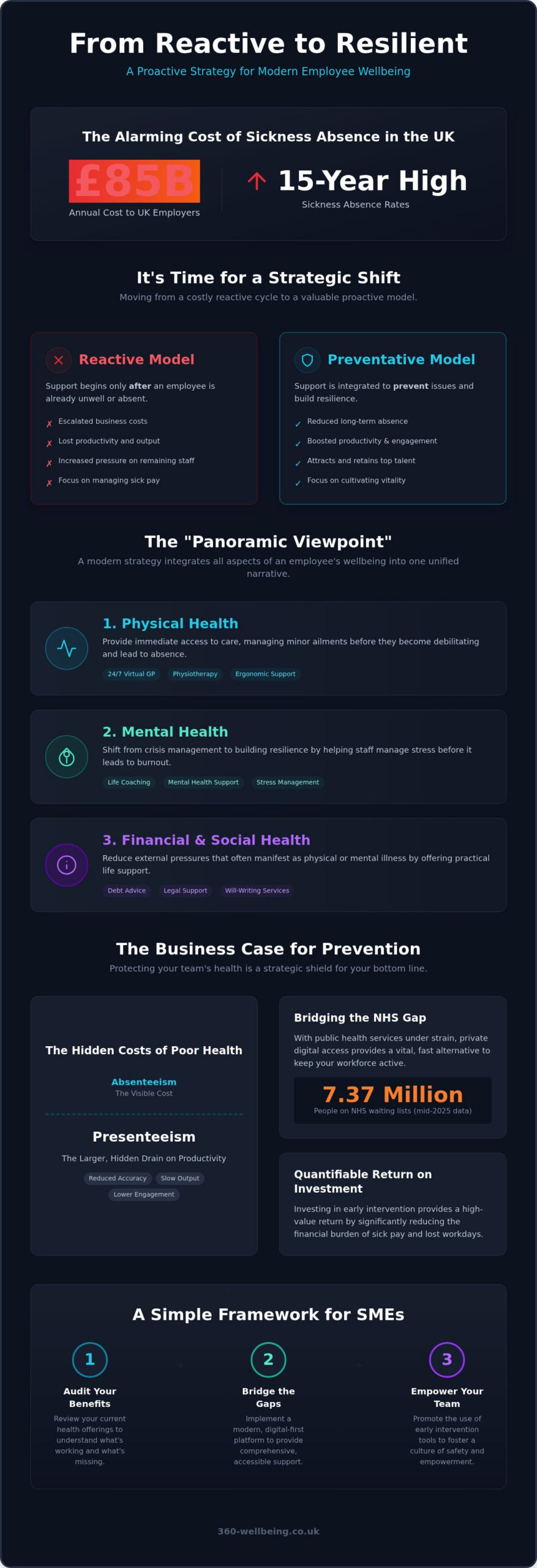
Did you know that sickness absence has reached a 15-year high, costing UK employers a staggering £85 billion annually? This data highlights why a robust strategy for preventative healthcare for employees is no longer a luxury but a professional necessity. You’re likely feeling the weight of rising mental health challenges and the complexity of managing disparate benefits while trying to keep your team productive. It’s exhausting to remain in a reactive cycle where you’re only addressing health issues once they’ve already impacted your bottom line and your team’s morale.
We understand the pressure you face and want to help you build a more resilient, vibrant workforce. This guide promises to show you how to move from reactive sick-pay management to a proactive healthcare strategy that boosts retention and vitality. We’ll explore a clear, affordable framework that integrates physical, mental, and financial support into one unified narrative of wellness. You’ll discover how accessible tools like 24/7 virtual GP access and life coaching can transform your workplace into a space of balance, safety, and durable success.
Key Takeaways
- Learn how to move away from reactive sick-pay management toward a proactive model that identifies health risks before they lead to long-term absence.
- Understand why investing in preventative healthcare for employees is a professional necessity that directly improves retention and reduces the hidden costs of presenteeism.
- Discover the “Panoramic Viewpoint,” an all-encompassing strategy that integrates mental, physical, and financial health into a single, unified narrative of wellness.
- Follow a clear, structured framework to audit your existing benefits and bridge the gaps with a modern, digital-first healthcare platform.
- See how immediate access to tools like a 24/7 Virtual GP and life coaching provides a sense of safety and empowerment for your entire workforce.
What is Preventative Healthcare for Employees?
Preventative healthcare for employees is a commitment to foresight. It’s the practice of looking ahead to safeguard the people who drive your business forward. While traditional medicine often focuses on the cure, preventative healthcare prioritizes the prevention of illness through early intervention and lifestyle management. In 2026, this has become a professional necessity. The shift toward digital-first health platforms reflects a modern workforce that expects immediate, mobile access to care. This isn’t just about meeting Health and Safety Executive (HSE) standards; it’s about fostering an environment where wellness is an entitlement, not a luxury.
Reactive vs. Preventative Models
Traditional workplace health models often rely on a reactive approach; this means support only kicks in once an employee is already unwell or absent. By that point, the business cost has already escalated through lost productivity and the pressure placed on remaining staff. A preventative model flips this script. It uses early screening and immediate access to professional advice to catch issues in their infancy. For instance, providing 24/7 Virtual GP access allows employees to discuss minor concerns before they develop into chronic conditions. This early intervention keeps people in work and reduces the long-term financial burden of late-stage healthcare.
The Scope of Modern Workplace Prevention
Modern prevention requires a panoramic viewpoint that sees the employee as a whole person. It’s no longer enough to offer an annual physical check-up. True prevention covers multiple interconnected pillars that support daily vitality and long-term durability. When you address the root causes of stress, such as financial worry or legal uncertainty, you’re practicing preventative healthcare for employees in its most effective form. This all-encompassing strategy includes:
- Physical health: Providing daily support through tools like physiotherapy and virtual consultations to manage ergonomics and minor ailments before they become debilitating.
- Mental health: Shifting from crisis management to building resilience using life coaching and mental health support, helping staff manage stress before it leads to burnout.
- Social and financial health: Offering debt advice, legal support, and will-writing services to reduce the external pressures that often manifest as physical or mental illness.
By integrating these elements into a single narrative, businesses can move away from fragmented benefits toward a unified health ecosystem. This approach doesn’t just manage illness; it cultivates harmony and workplace vitality.
The Business Case for Proactive Wellness
Investing in your team’s health is no longer just a compassionate choice; it’s a strategic shield for your company’s bottom line. The visible cost of absenteeism is only the tip of the iceberg. Presenteeism, where employees are physically present but mentally or physically unwell, often costs businesses even more through reduced accuracy and slow output. By implementing preventative healthcare for employees, you address these hidden drains on productivity before they crystallize into long-term leave. When organizations prioritize preventative healthcare for employees, they create a culture of resilience that attracts top-tier talent who value long-term stability.
The strain on the NHS is a reality every UK business must navigate. With waiting lists reaching 7.37 million in mid-2025, employees often face months of uncertainty before receiving treatment. Providing private digital health access isn’t about replacing public services; it’s about offering a faster, more reliable alternative that keeps your workforce active. This foresight ensures that a minor health concern doesn’t spiral into a major disruption, protecting both the individual’s wellbeing and the company’s operational durability.
Quantifying the ROI of Prevention
Data is the most persuasive tool in building a wellness strategy. When you track the reduction in sick days alongside the uptake of early intervention services, the financial benefits become clear. Early mental health support is particularly effective, catching signs of stress before they lead to total burnout. In 2026, the total cost of sickness absence to UK employers has reached £85 billion annually, making the prevention of even a few lost days per person a high-value return on investment. This shift allows you to move away from the £125.00 weekly burden of Statutory Sick Pay toward a model that rewards vitality.
Boosting Productivity and Engagement
There’s a profound psychological shift when an employee feels their health is valued by their employer. This sense of being “cared for” fosters deep loyalty and engagement, which are essential for talent attraction in a competitive market. Preventative benefits reduce the “health-related stress” that often distracts staff during work hours, allowing them to focus on their roles with a clear mind. Small teams, in particular, thrive when they have immediate access to support, as a single absence can have a disproportionate impact on their collective output. Exploring a unified health ecosystem can provide the structure needed to turn these wellness goals into a measurable business advantage.
The Four Pillars of a Preventative Healthcare Strategy
A panoramic viewpoint is the foundation of a modern health strategy. Instead of treating physical ailments, mental health, and financial stress as separate silos, we must view them as a unified ecosystem. This integrated approach ensures that no aspect of a person’s wellbeing is left to chance. Using a single-point platform is far more effective than offering disparate services, as it simplifies the user journey and encourages higher engagement. When preventative healthcare for employees is delivered through one cohesive narrative, staff feel more empowered to take control of their health journey.
Customising these pillars to reflect your specific workforce demographics ensures your strategy remains relevant and durable. A team of remote developers might prioritise mental resilience and digital GP access, while a manufacturing workforce may require more robust musculoskeletal support. By tailoring the support to the actual needs of your people, you move away from generic perks toward a professional necessity that supports every individual’s success.
Immediate Clinical Access
Foresight starts with accessibility. Busy professionals often delay seeking medical advice because of the logistical hurdles of traditional appointments. Providing 24/7 Virtual GP services removes these barriers, allowing staff to consult with a UK-registered doctor at a time that suits them. This immediate access is a cornerstone of preventative healthcare for employees, catching symptoms early and drastically reducing the need for time off. Additionally, integrated physiotherapy helps manage musculoskeletal health, preventing minor aches from becoming chronic limitations that affect daily performance.
Mental Resilience and Life Coaching
Crisis management is no longer enough. While traditional Employee Assistance Programmes (EAPs) are useful, a proactive strategy focuses on building resilience before a crisis occurs. Life coaching plays a vital role here, helping individuals navigate life’s transitions and manage stress effectively. By offering proactive mental health therapy and normalising these conversations in the workplace, you create a culture where staff feel safe to seek help early. This proactive stance is essential for preventing burnout and maintaining long-term workplace harmony.
The Financial and Legal Safety Net
We cannot ignore the link between financial stability and physical health outcomes. High levels of debt or legal uncertainty often manifest as physical illness or severe anxiety, yet these are frequently overlooked in corporate wellness. Including debt advice and legal support as part of your healthcare strategy creates a genuine safety net. This all-encompassing care ensures that external pressures don’t undermine internal vitality. For a deeper look at how this works, you can explore our guide on Financial Support for Employees. This ensures that your team has the resources to resolve life’s complexities before they impact their professional performance.
Implementing Preventative Care: A Framework for SMEs
Small and medium-sized enterprises often operate with lean teams where every individual’s presence is vital to the day’s success. Implementing preventative healthcare for employees doesn’t have to be a complex administrative burden. It begins with a clear audit of your existing support. Many businesses find they have disparate benefits that don’t talk to each other, leading to low uptake and wasted spend. Identifying these gaps allows you to consolidate into a single, all-encompassing platform. This reduces the time you spend managing multiple vendors and gives your team a unified health journey.
Once you’ve chosen a partner, clear communication is the bridge to high engagement. Employees need to know that these services are a professional entitlement designed for their long-term vitality. Embedding this into your daily culture means moving beyond a PDF in an induction pack. It’s about making health a visible, supported part of the working day. Finally, use engagement data to refine your approach. This ensures the support you provide evolves alongside your team’s needs, maintaining a strategy that is both relevant and durable.
Overcoming Common Implementation Barriers
Managing the perceived cost is often the biggest hurdle for smaller businesses. However, premiums for employee health cover are typically an allowable business expense that can be offset against Corporation Tax. This makes a proactive strategy much more affordable than the high cost of persistent absenteeism. Privacy is equally critical. By using a platform that maintains clinical-grade confidentiality, you reassure staff that their health data is secure and entirely separate from their employment record. This level of trust is essential for high uptake in sensitive areas like mental health or debt advice.
Driving Employee Engagement
Engagement is the heartbeat of any wellness programme. You can incentivise healthy habits through integrated marketplaces like 360 Rewards, which turn positive lifestyle choices into tangible benefits. Appointing “Mental Health Champions” from within your team also helps lead the programme from a peer level, making the support feel more approachable and less corporate. Creating a constant feedback loop ensures your wellbeing offering stays relevant to every individual. If you’re looking for a partner to help bridge these gaps, you can view our digital health platform to see how we simplify care for growing teams.
The 360 Wellbeing Approach to Prevention
At 360 Wellbeing, we believe that true care requires a unified ecosystem rather than a collection of disconnected services. Our platform brings together the various strands of preventative healthcare for employees into one accessible space. This ensures that every team member, from sole traders to those in established SMEs, has the tools they need to maintain their vitality. By integrating physical, mental, and social support, we provide a seamless journey that feels personal and manageable. This panoramic viewpoint allows us to support the whole person, ensuring no aspect of their health is left to chance.
Peace of mind often starts with clinical reassurance. Having 24/7 access to a Virtual GP means that medical advice is only a click away; this eliminates the anxiety of waiting weeks for a traditional appointment. Beyond clinical care, we recognize that life’s complexities don’t stop at the office door. That’s why our ecosystem includes financial support, debt advice, and legal support. These services act as a vital safety net, catching the external stresses that so often lead to physical or mental illness. By addressing these root causes, we help your workforce stay focused, resilient, and productive.
A Partnership for Long-Term Vitality
We position ourselves as a knowledgeable authority that remains deeply invested in your team’s success. Our recurring subscription model isn’t just about providing a service; it’s about establishing a partnership for continuous care. This approach ensures that your preventative healthcare for employees isn’t a one-off initiative but a durable part of your business strategy. Our digital user experience is designed with an empathetic caregiver persona, making complex health topics feel approachable and supportive rather than cold or clinical. We move away from fear-based warnings, opting instead for a proactive and positive vision of workplace harmony.
Getting Started with Your Preventative Strategy
Onboarding your team to the 360 Wellbeing platform is a straightforward process designed to minimize administrative friction. We handle the technical details, allowing you to focus on leading your business while we look after your people’s health. Transitioning to this model is the first move toward a healthier, more productive workforce as we head into 2026. If you’re ready to move from reactive management to proactive vitality, we invite you to enquire about our employee wellbeing platform today. Together, we can build a strategy that prioritizes the long-term interests of your most valuable asset: your people.
Building a Resilient Future for Your Workforce
Shifting your business strategy from reactive management to proactive foresight is the most significant step you can take for your team this year. We’ve explored how a panoramic viewpoint allows you to address physical, mental, and financial health as one unified narrative. This integrated approach doesn’t just lower absenteeism; it fosters a culture of loyalty and vitality that defines successful UK SMEs in 2026. By treating wellbeing as a professional necessity, you ensure your business remains durable and competitive.
Providing preventative healthcare for employees is an investment in the long-term success of your people and your company. Our digital platform is built specifically for UK SMEs, offering 24/7 UK-registered GP access alongside holistic financial and mental health support. Catching small concerns before they become chronic limitations allows your team to focus on what they do best with total peace of mind. We invite you to empower your team with a proactive health platform today. Together, we can create a workplace where harmony and productivity go hand in hand.
Frequently Asked Questions
What is the difference between preventative and reactive healthcare?
Reactive healthcare is a “wait and see” approach that only triggers support after an employee becomes unwell or goes on leave. In contrast, preventative healthcare for employees focuses on foresight, using early intervention and lifestyle support to stop issues before they escalate. By identifying physical or mental health risks in their infancy, businesses can maintain a more durable and resilient workforce.
Is preventative healthcare for employees expensive for small businesses?
Proactive health strategies are surprisingly affordable and often yield a high return on investment. Many UK businesses can offset the cost of employee health cover against Corporation Tax as an allowable expense. When you compare the fixed monthly fee of a digital platform to the high cost of persistent absenteeism, the preventative model becomes a professional necessity rather than a luxury.
How does a Virtual GP help with preventative healthcare?
A Virtual GP provides immediate, 24/7 access to UK-registered doctors, removing the logistical barriers of traditional appointments. This speed is essential for early intervention, as staff can discuss minor symptoms before they develop into chronic conditions. It gives employees peace of mind and ensures they receive clinical guidance without needing to take significant time away from their professional duties.
Can preventative healthcare programmes reduce employee absenteeism?
Yes, a robust strategy for preventative healthcare for employees directly addresses the root causes of long-term absence. By providing integrated mental health support and physiotherapy, you catch the issues that typically lead to burnout or musculoskeletal leave. Catching these problems early keeps your team active and reduces the disruption caused by sudden, avoidable sickness absence.
Do employees actually use preventative health benefits?
Engagement levels are high when benefits are accessible through a single, mobile-first platform. Employees value services that provide immediate solutions to daily stresses, such as life coaching or debt advice. When you ensure clinical-grade confidentiality and promote these tools as a professional entitlement, staff feel safe and empowered to use the support whenever they need it.
What should be included in a comprehensive preventative health plan?
A comprehensive plan should offer a panoramic viewpoint of wellbeing, integrating physical, mental, and social health. This includes clinical access like Virtual GPs and physiotherapy alongside resilience-building tools like life coaching. To be truly effective, it must also include a safety net of financial and legal support to address the external pressures that often manifest as health challenges.
How do you measure the success of a preventative healthcare strategy?
Success is measured through a combination of quantitative data and qualitative feedback. You should track trends in sickness absence rates and monitor engagement levels on your health platform to see which services are most valued. Regularly creating a feedback loop with your team allows you to refine your strategy, ensuring the support remains relevant to your specific workforce demographics.