
The 2024 CIPD Health and Wellbeing at Work report confirms that UK absence rates have climbed to a decade-high of 7.8 days per employee, leaving businesses to absorb an average cost of £927 per person each year. You likely feel the strain of these numbers through the mounting expense of temporary cover and the visible exhaustion of managers who spend their mornings reallocating tasks rather than leading. It’s difficult to maintain momentum when you’re caught between supporting genuine health needs and addressing the drain of persistent, short-term absences.
We understand that a healthy business requires a foundation of trust and vitality. This guide explains how to reduce employee absenteeism by moving away from reactive policing and toward a proactive, 360-degree culture of care. You’ll discover evidence-based methods to lower your Bradford Factor scores and create a resilient environment where staff feel empowered to thrive. We will walk you through a structured strategy to transform your workplace health, starting with the psychological and physical drivers of attendance for 2026.
Key Takeaways
- Identify the core drivers of unplanned absence by distinguishing between legitimate illness and the musculoskeletal or mental health challenges currently impacting the UK workforce.
- Discover how to reduce employee absenteeism by moving away from reactive “sick note” cycles toward a proactive culture of early clinical intervention and immediate support.
- Learn to design a compassionate absence management policy that standardises reporting processes while ensuring every interaction feels supportive rather than punitive.
- Understand why unified, 360-degree wellbeing strategies outperform fragmented perks by creating a consistent safety net for your team’s physical, mental, and financial health.
What is Employee Absenteeism and Why Does it Matter?
Employee absenteeism refers to a habitual pattern of unplanned absences that go beyond legitimate illness or occasional emergencies. While every member of your team will occasionally require time off for recovery, absenteeism describes frequent, short-term sickness or unauthorised leave that disrupts the rhythm of your business. It is vital to distinguish these patterns from authorised absences, such as pre-planned annual leave or parental leave, which allow for resource planning and team adjustments.
Recent data from the CIPD Health and Wellbeing at Work report indicates that UK sickness absence reached a 15-year high recently, with employees missing an average of 7.8 days per year. This figure represents a significant shift in workplace dynamics. When one person is frequently missing, it creates a ripple effect across the entire organisation. Remaining staff often face increased workloads and heightened stress, which can lead to a decline in overall team morale and a sense of resentment. Understanding these patterns is the first step for leaders looking at how to reduce employee absenteeism through proactive care.
The Financial and Operational Cost of Absence
The impact on your bottom line is both direct and indirect. Direct costs include Statutory Sick Pay (SSP), which stands at £116.75 per week as of April 2024, alongside the expense of hiring temporary cover or paying overtime to remaining staff. Indirectly, your business may suffer from lost billable hours, reduced customer service quality, and missed project deadlines. Presenteeism is the hidden cost of employees working while unwell, often resulting in lower productivity and a longer eventual recovery period.
Absence as a Symptom of Workplace Culture
High absence rates often serve as a barometer for your internal culture. Frequent leave can signal low employee engagement or a lack of confidence in management. When a “culture of silence” exists around health, employees feel unable to discuss their needs early, leading to avoidable long-term absences. Distinguishing between acute physical illness and chronic stress-related absence is essential for any strategy regarding how to reduce employee absenteeism effectively.
- Acute illness: Short-term, infectious, or accidental issues like the flu or a broken limb.
- Chronic stress: Long-term psychological pressure that requires a tailored, supportive intervention.
By viewing absence as a signal rather than just a statistic, you can begin to build a more resilient and transparent workplace.
Identifying the Root Causes of High Absence Rates
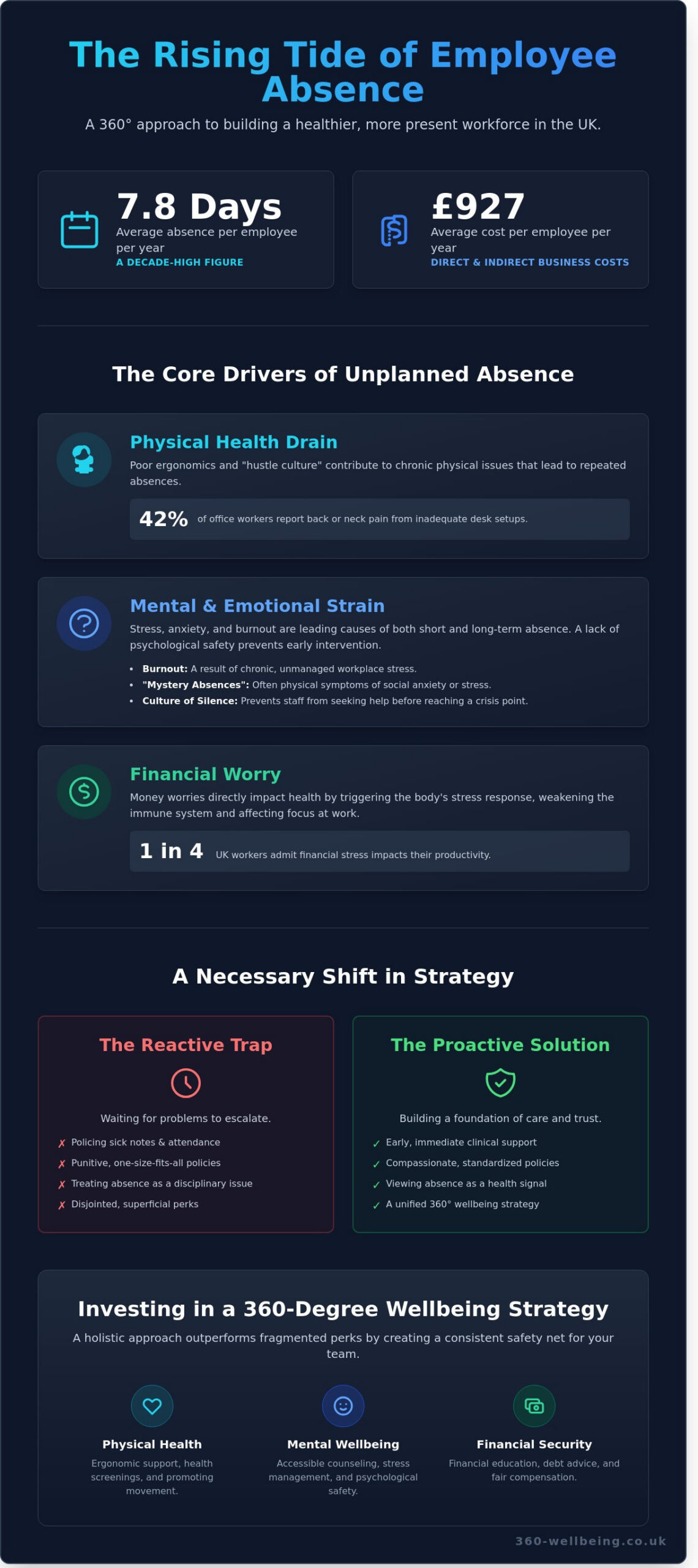
To understand how to reduce employee absenteeism, we must dissect the data driving UK sickness rates. In 2024, the CIPD reported that UK workers took an average of 7.8 days off per year, which was the highest level recorded in over a decade. By 2026, these figures remain a challenge for businesses that lack a proactive strategy. Physical ailments like musculoskeletal issues are a primary driver. These often stem from poor ergonomic environments. A 2025 study found that 42% of office-based staff reported back or neck pain due to inadequate desk setups or poor lighting. Culture plays a role too. A “hustle” culture that discourages regular movement breaks directly contributes to chronic physical fatigue. Identifying these root causes is the first step in learning how to reduce employee absenteeism effectively.
The Mental Health and Stress Connection
Long-term sickness is frequently tied to anxiety and depression. Creating psychological safety is vital. When employees feel safe to speak up early, they seek support before reaching a breaking point. Burnout is a recognised occupational phenomenon in 2026. It’s the result of chronic workplace stress that hasn’t been managed. Social anxiety is another silent factor. It often manifests as physical symptoms like tension headaches or nausea, leading to frequent, short-term “mystery” absences that managers struggle to categorise. Proactive businesses now focus on identifying these signals before they lead to a total withdrawal from the workplace.
Financial Stress and Its Physical Impact
Debt isn’t just a bank balance issue; it’s a health crisis. Financial worry triggers the body’s stress response, releasing cortisol that weakens immune systems and increases heart disease risks. In 2024, one in four UK workers admitted money worries impacted their productivity. Some take time off to deal with legal letters or care for relatives because they can’t afford professional help. External pressures like the “sandwich generation” crisis, where staff care for both children and elderly parents, add to this burden. Integrating financial education into a comprehensive health strategy helps build the resilience needed to stay present and productive. It turns a reactive HR department into a proactive support system that values the person behind the payroll number.
Proactive Strategies to Reduce Unplanned Absence
Traditional management often waits for a Fit Note to arrive before acting. This reactive cycle is costly; in 2024, the CIPD reported that the average cost of absence rose to £958 per employee. To understand how to reduce employee absenteeism, your business must pivot toward a “wellbeing first” model. This involves prioritising early intervention. When you offer immediate access to clinicians, you stop minor ailments from becoming long-term health issues.
Shifting the culture requires more than just new policies. It’s about practical support that fits into modern lives. Consider these proactive steps:
- Flexible working patterns: 15% of UK workers cited “life admin” or minor family emergencies as a reason for unplanned leave in 2025. Allowing flexible start times can prevent a full day of absence.
- Data-driven insights: Use wellbeing platforms to monitor trends. If a specific department shows a 12% spike in stress-related queries, you can intervene with targeted support before burnout peaks.
- Prevention-focused check-ins: Move away from “return to work” interviews and toward regular health 1-2-1s that identify risks before they require recovery time.
The Role of 24/7 Virtual GP Access
Current NHS data shows that 24% of patients wait over two weeks for a GP appointment. This delay forces staff to take time off just to secure a consultation or a prescription. Virtual GPs eliminate this friction. Employees can book a video call at 8pm on a Tuesday, receiving expert advice without missing a single hour of work. It removes the “wait and see” anxiety that often fuels the decision to call in sick on a Monday morning.
Implementing an Effective Employee Assistance Programme (EAP)
Mental health accounts for 17.5 million lost working days in the UK annually. An EAP serves as a vital safety net, offering immediate access to BACP-accredited counsellors. This bypasses the months-long waitlists often found in traditional pathways. Because 42% of UK employees report that financial stress impacts their productivity, a comprehensive EAP should also include legal and debt advice. For these tools to be effective, they must be confidential and accessible via a single, user-friendly app. When staff feel supported in their personal lives, they’re far more resilient in their professional ones, which is a key factor in how to reduce employee absenteeism effectively.
Developing a Compassionate Absence Management Policy
Effective policies prioritise people over paperwork. To understand how to reduce employee absenteeism, you must first ensure your documentation reflects a culture of care. A policy shouldn’t be a threat; it’s a promise of support. When rules are clear and fair, employees feel safe reporting illness early. This prevents minor issues from spiralling into long-term leave. You should standardise your reporting process so every team member knows exactly who to call by 9:00 am. This consistency removes anxiety for the employee and allows the business to plan resources effectively.
Data plays a vital role in this 360-degree approach. Tools like the Bradford Factor provide a mathematical snapshot of absence patterns, but they shouldn’t be used as automatic disciplinary triggers. The 2024 CIPD Health and Wellbeing at Work report highlighted that average absence levels have risen to 9.1 days per employee. Use your data as a prompt for a “wellbeing conversation” rather than a cold “absence review.” Managers need specific training to lead these discussions with empathy. They must learn to listen for what isn’t being said, looking for the root causes of frequent short-term absences.
The Power of the Return-to-Work Interview
The return-to-work (RTW) interview is your most effective tool for re-establishing connection. It’s not a tick-box exercise to catch people out. Instead, use it to welcome the individual back and confirm they’re truly fit for their duties. These meetings often reveal hidden triggers like workplace bullying or early signs of burnout that a standard sick note won’t mention. Use this simple 3-step framework for a supportive conversation:
- Re-establish connection: Start by genuinely welcoming them back and checking on their current vitality.
- Identify barriers: Ask if any workplace factors contributed to their absence or if they’re worried about returning to specific tasks.
- Create an action plan: Agree on any immediate support or adjustments needed for the first week back.
Reasonable Adjustments and Phased Returns
Under the UK Equality Act 2010, businesses have a legal duty to make reasonable adjustments for employees with disabilities. However, proactive companies apply this logic to all recovering staff. Phased returns, where an employee gradually increases their hours over 2 to 4 weeks, significantly reduce the risk of a relapse. For musculoskeletal issues, which accounted for 18% of UK work-related ill health in 2023, providing immediate access to physiotherapy can accelerate recovery times by up to 30%. Small changes, like providing an ergonomic chair or allowing flexible start times, demonstrate that you value their long-term health over short-term output.
Ready to transform your approach to staff health? Explore our comprehensive wellbeing solutions to build a more resilient workforce today.
Investing in a 360-Degree Wellbeing Strategy
Fragmented perks like a weekly fruit bowl or a discounted gym membership often fail to move the needle on staff health. These isolated gestures don’t address the complex, overlapping reasons why people take time off. To truly understand how to reduce employee absenteeism, UK businesses must move toward a unified, 360-degree strategy. This approach creates a robust safety net that supports physical, mental, and financial health simultaneously, ensuring no employee falls through the gaps during a crisis.
The financial argument for this level of integration is compelling. Deloitte’s 2024 Mental Health and Employers report found that for every £1 invested in workplace wellbeing, businesses see an average return of £5.30. By consolidating support through a single platform like 360 Wellbeing, companies can lower recruitment costs and potentially negotiate more favourable insurance premiums. It transforms wellbeing from a “nice-to-have” into essential business infrastructure that protects your bottom line.
Beyond Health: Financial and Legal Peace of Mind
Financial stress is a silent driver of workplace absence. Services like professional debt advice and will writing significantly reduce the mental load that keeps employees awake at night. When staff can access a lifestyle discount marketplace, their salaries stretch further, easing the pressure of the cost-of-living crisis. These practical benefits foster deep loyalty, reducing “discretionary” absenteeism as employees feel genuinely valued beyond their daily output.
Building Long-Term Resilience
Resilience isn’t something people are born with; it’s something a business can help cultivate. Life coaching helps employees navigate difficult transitions, such as bereavement or returning from parental leave, before they reach a breaking point. Proactive support builds a workforce capable of managing stress without burning out. We invite you to view your wellbeing platform as a strategic asset. It’s the foundation for a healthier, more present, and more engaged team. At 360 Wellbeing, we act as the partner that weaves these threads together into a single, compassionate narrative of care.
Building a Healthier, More Resilient Workplace Today
Reducing unplanned absence requires a shift from reactive fixes to a proactive culture of care. By 2026, UK businesses that fail to address the root causes of burnout risk losing significant productivity; the 2023 CIPD Health and Wellbeing at Work report already highlighted a record high of 7.8 absence days per employee. You’ve learned that how to reduce employee absenteeism effectively involves blending compassionate policy with immediate, accessible support. Investing in your team’s health isn’t a luxury; it’s a strategic necessity that fosters long-term loyalty and operational stability.
At 360 Wellbeing, we’ve helped hundreds of UK SMEs build stronger workforces through our comprehensive support systems. Our partners benefit from 24/7 UK-registered Virtual GP access and a robust Employee Assistance Programme (EAP) that includes professional mental health therapy. These tools ensure your staff get the right care at the right time, preventing minor health issues from becoming long-term absences. We’re here to act as your expert partner, providing the clinical expertise and human touch your organisation deserves.
Discover how 360 Wellbeing can help you reduce absenteeism and support your team today. Let’s work together to create a thriving environment where every employee has the opportunity to excel.
Frequently Asked Questions
What is a “good” or average absenteeism rate for a UK business?
A healthy average absenteeism rate in the UK typically sits between 2% and 3%. According to the ONS, the national sickness absence rate reached 2.6% in 2022, which was the highest recorded level since 2004. While these figures vary by sector, aiming for a rate below 2.5% ensures your team remains productive without risking burnout. Tracking these figures helps you understand how to reduce employee absenteeism by identifying patterns before they become systemic issues.
Can I legally ask an employee why they are off sick?
You can legally ask an employee about the general nature of their illness to understand how it affects their work and safety. While you shouldn’t demand specific clinical details or a sensitive diagnosis, the Access to Medical Reports Act 1988 requires their explicit consent for a full doctor’s report. We recommend focusing on how you can support their return rather than the medical specifics. This approach builds trust and ensures you comply with the Equality Act 2010.
How does a Virtual GP service actually help reduce sick days?
Virtual GP services reduce sick days by providing 24/7 access to medical advice, bypassing the average 15 day wait for a standard NHS appointment. Employees can book a video consultation within hours, often receiving prescriptions or referrals immediately. This proactive care prevents minor ailments from escalating into long-term absences. It empowers staff to manage their health around their work schedule, which is a key strategy for how to reduce employee absenteeism effectively.
What is the Bradford Factor and should I use it to manage absence?
The Bradford Factor is a mathematical formula, calculated as S squared multiplied by D, that weights frequent, short-term absences more heavily than single long-term illnesses. It’s a useful tool for identifying disruptive patterns, but you shouldn’t use it in isolation. Relying solely on a score can unfairly penalise staff with chronic conditions or disabilities. Instead, use it as a starting point for supportive return-to-work interviews and tailored wellbeing conversations that look at the whole person.
How can I encourage staff to use the wellbeing benefits we provide?
You can increase engagement by integrating wellbeing benefits into your regular internal communications and leadership check-ins. A 2023 study found that 40% of UK workers are unaware of their full benefits package. To counter this, share success stories and host monthly wellbeing hours where staff can explore your 360-degree health tools. When managers openly use and advocate for these services, it removes the stigma and encourages a proactive culture of health across the entire organisation.
Is stress a valid reason for sickness absence under UK employment law?
Yes, stress is a valid and legally recognised reason for sickness absence in the United Kingdom. Health and Safety Executive (HSE) data shows that stress, depression, or anxiety accounted for 49% of all work-related ill health in 2023. As an employer, you have a legal duty of care to conduct a stress risk assessment if an employee is struggling. Supporting mental health isn’t just a legal requirement; it’s a vital part of building a resilient, loyal workforce.
How do I handle an employee who is frequently off on Mondays or Fridays?
You should address these patterns through consistent, empathetic return-to-work interviews after every single absence. While a pattern of Monday or Friday absences can be frustrating, it’s important to investigate if there are underlying issues like weekend caring responsibilities or workplace burnout. Use clear data to show the pattern during a private 1-on-1 meeting. This professional approach allows you to offer support or adjustments before moving toward formal disciplinary procedures if the trend continues.
What are the best employee wellness strategies for small businesses with limited budgets?
Small businesses can implement high-impact strategies like flexible working hours and Mind’s free Wellness Action Plans without significant financial investment. Encouraging walking meetings or dedicated no-meeting afternoons costs nothing but significantly improves mental clarity. You can also partner with local gyms for corporate discounts or use free NHS resources for health signposting. These small, thoughtful changes create a supportive environment that prioritises the individual, proving that effective wellbeing doesn’t always require a large budget.