
Compassion at work means offering practical support without asking an employee to share more than they choose. Knowing how to support an employee through a divorce starts with a private, respectful conversation: ask what would help, listen without judgement and agree any temporary adjustments to work or time off. Keep the focus on their wellbeing and the requirements of their role.
It’s understandable to want to help while protecting the employee’s privacy and keeping work manageable for the wider team. A calm, consistent response can make it easier for someone to explain what they need, without turning a personal experience into a workplace discussion they haven’t chosen to have.
This article explains how divorce can affect an employee at work and how managers can respond with compassion, clear professional boundaries and fair application of workplace policies. It also covers practical wellbeing support, including ways to make counselling, financial guidance and other employee resources easier to access.
Key Takeaways
- Notice possible changes in focus, attendance or wellbeing, and open a private conversation without making assumptions.
- Listen without judgement, agree on practical next steps and keep personal details confidential.
- Use workplace policies consistently while considering temporary flexibility around hours, workload or time off.
- Make wellbeing resources easy to access, including counselling, financial guidance or other appropriate employee support.
1. How might divorce affect your employee at work?
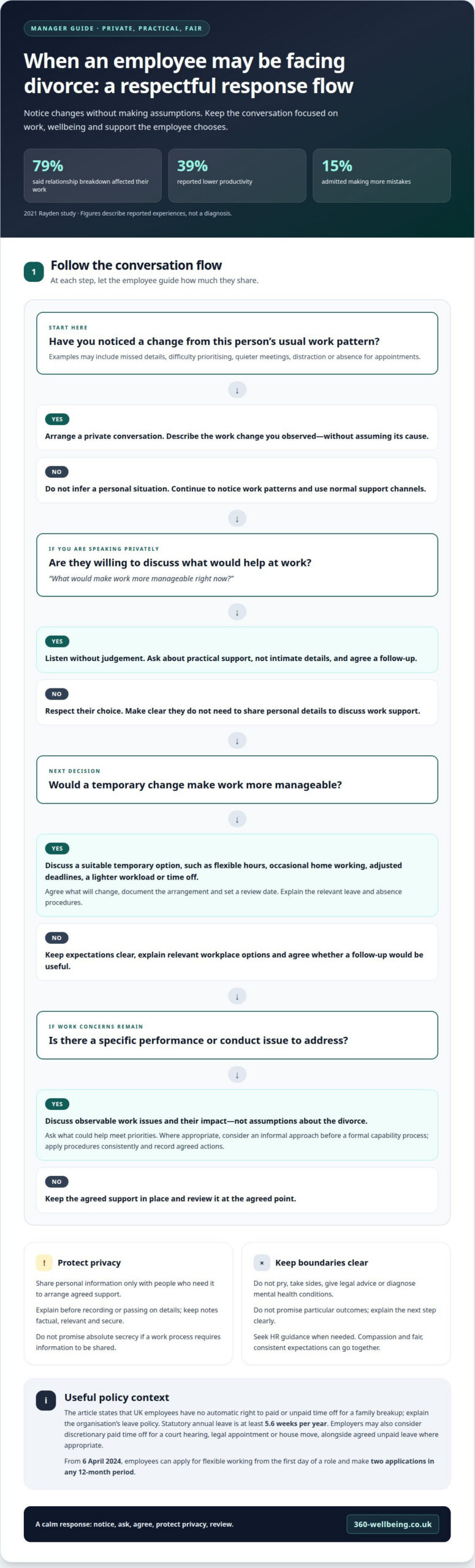
Divorce can bring legal appointments, housing changes, financial pressure and uncertainty about family routines. An employee going through these changes may find it harder to concentrate, sleep well or manage competing demands. In a 2021 Rayden study, 79% of people said relationship breakdown affected their work. The same study found 39% reported lower productivity and 15% admitted making more mistakes.
These effects can show up in different ways. Someone who usually meets deadlines might miss details, struggle to prioritise tasks or need more time to make decisions. Another employee may be quieter in meetings, distracted by messages or absent for appointments. Look for changes from that person’s usual pattern rather than assuming every performance issue is caused by their relationship.
The impact can extend to colleagues and business performance. If a team member misses a handover or needs unexpected cover, colleagues may take on extra work and deadlines can shift. A manager can record specific work concerns, speak privately with the employee and agree practical steps, such as reviewing priorities or arranging temporary cover. This addresses the work impact without asking for intimate details.
Mental health and performance may also be affected. In the 2021 Rayden study, 60% of people said divorce affected their mental health. Take concerns seriously, ask what support at work would help, and explain relevant leave and absence procedures. UK Government states that Statutory Sick Pay is £123.25 per week for up to 28 weeks. This is one part of the absence picture; workplace policies also guide how employees report and manage time away.
Where mental health difficulties affect work, consider the person’s needs and discuss suitable adjustments. According to UK legislation, the Equality Act 2010 is relevant when assessing whether mental health difficulties amount to disability. That assessment may involve considering reasonable adjustments. Keep the conversation focused on specific challenges, such as concentration, workload or attendance, and agree a review point together.
2. Compassionate manager conversations and professional boundaries
A manager can help by arranging a private conversation, listening without judgement and asking what practical assistance would help. Start with an open question, such as, “What would make work more manageable right now?” Agree a follow-up and any temporary arrangements, then keep the conversation focused on work and wellbeing.
Choose calm, direct words. Try: “I’m sorry you’re dealing with a stressful change. You don’t need to share personal details, but we can discuss support at work.” This acknowledges the emotional impact without asking the employee to explain their relationship or defend their feelings. Let them guide how much they want to say.
Protect privacy by sharing personal information only with people who need it to arrange agreed support. Explain this approach before recording or passing on details, and keep notes factual, relevant and secure. Don’t promise absolute secrecy if a work process requires information to be shared. Explain the next step clearly instead.
Managers should avoid prying, taking sides, giving legal advice or assuming they understand the employee’s experience. Don’t diagnose mental health conditions or promise particular outcomes. Training in sensitive conversations can help managers recognise distress, respond consistently and know when HR guidance is needed. A short role-play can practise listening, setting boundaries and discussing workload.
If performance or conduct becomes a concern, separate observable work issues from assumptions about the divorce. For example, discuss missed deadlines and their impact, then ask what could help the employee meet priorities. Where appropriate, consider addressing divorce-related performance problems informally before moving to a formal capability process. Keep expectations clear, apply workplace procedures consistently and record agreed actions. Compassion doesn’t mean overlooking conduct concerns; it means handling them respectfully and giving the employee a fair opportunity to respond. These steps can help managers navigate sensitive circumstances while maintaining team productivity. For broader support for employee wellbeing, consider what resources could complement a manager’s conversation.
3. Workplace culture and a divorce and separation policy
A written divorce and separation policy gives managers a consistent route for responding to a personal situation. It can explain who an employee speaks to, how information is handled, and which leave and wellbeing options may be available. A Positive Parenting Alliance survey found that 9% of respondents said their employer had policies or support to help during divorce. Clear guidance helps colleagues understand how to offer support without sharing private details.
Workplace adjustments can include temporary flexible hours, occasional home working, adjusted deadlines or a lighter workload. From 6 April 2024, employees can apply for flexible working from the first day of a role and make two applications in any 12-month period. Discuss arrangements with the employee, document agreed changes and set a review date. Parents may also need adjustments that help them maintain school runs or other family routines.
Set out leave options clearly. Employees in the UK have no automatic right to paid or unpaid time off to deal with a family breakup, so explain the organisation’s policy and how to request leave. UK Government states that statutory annual leave is at least 5.6 weeks per year. Employers can also consider discretionary paid time off for a court hearing, legal appointment or house move, alongside agreed unpaid leave where appropriate.
Build the policy around practical steps: a confidential contact in HR, a way to request temporary changes, and signposting to an employee assistance programme where available. Include separation and other family law situations in relevant HR guidance, rather than treating each request as an exception. Acas suggests considering a domestic abuse policy developed with employees. Make sure managers know how to apply the policy consistently, protect privacy and plan cover with the affected employee, not by disclosing personal details to colleagues.
4. Wellbeing support
Divorce can affect mental health as well as concentration and attendance. In a 2023 Positive Parenting Alliance survey, 95% of respondents said their mental health suffered when divorcing. Managers can respond with regular, private check-ins rather than waiting for an employee to raise concerns. Ask how they’re feeling and whether a work adjustment would help. Let them choose what to share.
Make support practical and easy to understand. Explain how to access workplace counselling or an employee assistance programme and what each resource can help with. One employee may value emotional support, while another may need guidance with financial or legal pressures. Avoid assuming which option fits. Explain the available routes, then let the employee decide whether to use them.
Small changes can ease pressure during difficult weeks. Consider extra breaks, flexible deadlines or a temporary workload adjustment. Agree who will monitor the arrangement and when you’ll review it. If the employee needs time away, explain how unpaid leave and existing absence procedures work. Clear arrangements reduce uncertainty and help them focus on the next manageable step.
Knowing how to support an employee through a divorce also means recognising the limits of a manager’s role. Wellbeing support should feel consistent, not intrusive. Agree a suitable check-in rhythm, keep personal information private and ask before involving another colleague. If someone becomes distressed, listen calmly and help them identify an appropriate source of support. Managers aren’t counsellors, so avoid trying to resolve personal or legal matters yourself.
Build a simple support plan with the employee: name their preferred contact, note agreed adjustments and set a review point. This gives both sides a shared reference if needs change. A practical approach to how to support an employee through a divorce connects workplace adjustments with suitable wellbeing resources. Consider wellbeing support options as part of that response.
360 Wellbeing: Employee Assistance Programme (EAP)
360 Wellbeing’s Employee Assistance Programme (EAP) can complement a manager’s practical support when an employee needs help beyond workplace adjustments. Employees going through divorce may benefit from Mental Health Support, Financial Support & Debt Advice, or Legal Support, depending on their circumstances. The programme gives employers a way to make wellbeing resources part of a thoughtful response, while managers continue to respect privacy and professional boundaries.
Other relevant support includes a 24/7 Virtual GP and 360 Rewards. These options can sit alongside a clear conversation about work arrangements, rather than replacing it. Consider the programme when an employee would benefit from access to wider support during a difficult period. Contact 360 Wellbeing to discuss how its employee benefits can support your organisation.
Build a workplace where support continues
A compassionate response can shape more than one difficult moment. It can help create a workplace where people feel able to raise personal challenges early, without fearing judgement or unwanted attention. A considered approach to how to support an employee through a divorce can also help managers respond consistently when other personal circumstances affect someone’s wellbeing or work.
Make the next step practical: review how employees learn about support, whether managers feel prepared to discuss sensitive issues and how agreed arrangements are followed up. Clear communication can make it easier for people to understand their options and ask for help at a suitable time. Keep listening to employee feedback and use it to build a more thoughtful, resilient culture.
If you’re considering how wellbeing support could fit into your organisation, contact 360 Wellbeing to discuss your needs. A steady, human response can make a meaningful difference to someone facing change.
Frequently Asked Questions
How might divorce affect your employee at work?
Divorce may make everyday work demands harder to manage, even when an employee’s output initially appears unchanged. Administrative tasks, changing living arrangements and family responsibilities can compete for attention during the working day. Focus on observable changes, such as difficulty switching between tasks, and agree a manageable priority list. Avoid treating one difficult day as proof of a lasting performance problem.
Divorce and the workplace: what can employers do to support employees?
Employers can make support easier to access by giving employees one clear route to discuss work-related needs. For example, an HR contact can explain how to request a change, who will review it and how decisions are recorded. This reduces uncertainty without requiring someone to share personal details with several managers. Review the process after use so employees receive a consistent response across teams.
How can you support your team?
Support the wider team by managing workload changes without disclosing why a colleague needs them. A manager might reassign a time-sensitive task, clarify ownership and check that other deadlines remain realistic. If colleagues ask personal questions, remind them to respect privacy and keep the conversation focused on work. This helps prevent gossip and resentment while ensuring the employee doesn’t have to explain their circumstances to the team.
How does divorce impact mental health?
Divorce can bring emotional strain, uncertainty and changes to close relationships, which may affect someone’s mood and ability to cope day to day. People respond differently: one employee may seem withdrawn, while another may keep working but feel overwhelmed. A manager can acknowledge what they’ve observed, ask what support would be useful and encourage the use of appropriate wellbeing resources, without trying to diagnose or provide therapy.
What are the legal obligations of employers regarding employees going through a divorce?
UK law doesn’t set out a specific obligation to provide divorce support, but related workplace protections still matter. Employers should handle personal information carefully, avoid discrimination and consider relevant flexible-working requests through the applicable process. Health and safety responsibilities also remain relevant if an employee’s wellbeing affects their work. Apply existing policies consistently, and seek appropriate HR or legal guidance when a specific employment decision raises concerns.
What challenges do managers face in supporting employees going through the end of a marriage?
Managers may feel unsure how to respond because divorce is personal, emotional and different for each employee. They may worry about saying the wrong thing, sharing information too widely or disrupting team workloads. Limited training can add to that uncertainty. A practical safeguard is to use a consistent conversation structure, consult HR on workplace procedures and keep support focused on the employee’s stated needs and work arrangements.