Using your employer’s name to access an EAP doesn’t, by itself, mean your employer is told you’ve used it. EAP support is generally confidential, although there are limits, such as a serious risk of harm or a legal requirement to disclose information. Overcoming employee privacy concerns about EAPs starts with understanding what may be shared, and with whom.
It’s understandable to hesitate if you’re unsure whether HR or your manager could find out. This guide explains what confidentiality usually covers, what employers may see in anonymised reports, and how referrals or using your employer’s name can affect access. It also explains why some referrals may involve limited participation information while counselling details remain private, helping you make a more informed decision about seeking support.
Key Takeaways
- Understand what confidentiality usually protects, and the limited circumstances in which information may be shared.
- Learn how anonymised, group-level reporting can help employers spot broad trends without focusing on individual counselling journeys.
- See how manager referrals and using an employer’s name can affect access, without automatically revealing session details.
- Explore how an Employee Assistance Programme and wider wellbeing support can make it easier to seek help at work.
Is an EAP confidential for employees?
EAP counselling is confidential, subject to specific safeguarding and legal limits. Employers may receive anonymised usage data, but not counselling content.
Counselling Sessions and Clinical Notes
EAP confidentiality means counselling conversations and clinical notes are kept separate from HR or personnel files. Employees can discuss mental health or personal pressures without those details becoming part of their workplace records.
Providers generally don’t share identifiable session information with an employer without written consent, unless disclosure is required by law. A manager may know that someone has contacted employee assistance, but shouldn’t receive session content or records identifying that person.
Benefits of Confidentiality for Trust
Confidentiality sets clearer boundaries between seeking support and being assessed at work. That separation can make it easier for employees to raise concerns early, before distress affects daily tasks or relationships with colleagues.
For example, someone experiencing anxiety may feel more comfortable speaking openly when they understand that HR won’t receive counselling notes. Trust depends on explaining the limits clearly, not promising absolute secrecy.
Exceptions to Confidentiality
Confidentiality has limits when a serious risk of harm, suspected abuse or neglect, or a legal requirement makes disclosure necessary. A court order is one example of a legal exception, and safeguarding concerns may also require information to be shared.
Employees should understand these boundaries before support begins, including what could trigger disclosure. Concerns about an employer-provided EAP may include uncertainty about data access or a referral process that reveals participation. Anyone seeking greater separation can arrange support independently; that service’s own privacy terms determine how information is handled.
Explaining EAP Confidentiality to Employees
Employers can build trust by explaining in plain language what an EAP shares, with whom, and under what legal conditions. A concise written explanation can distinguish anonymised usage reports from individual counselling records and clarify whether a referral involves sharing attendance information.
When reviewing an EAP’s confidentiality and data security, look at who can access identifiable information, what data is collected, how it is stored, and when disclosure may occur. Clear answers help employees understand the boundaries before sharing sensitive details. For digital support, explain how data is used and accessed, as well as the safeguards in place to protect it.
Can HR see team-level or department-level EAP data?
UK employers may receive anonymised EAP usage data and broad trends. They should not receive counselling content or identifiable records.
Anonymous and Aggregated Reporting
Anonymous or aggregated reporting combines activity across employees, allowing an organisation to review patterns without seeing individuals’ EAP journeys. This distinction matters when interpreting trends in stress, burnout or counselling use.
For example, a report might show how overall demand changes over time, rather than identify who sought support. Employers can use this overview to consider workplace wellbeing needs while keeping personal journeys separate from organisational analytics.
Usage Data Shared with Employers
Employers may receive anonymised usage data showing how a service is used across a wider group. This can help them understand overall engagement and make decisions about workplace support without accessing counselling notes or individual session details.
Reports should keep information at an aggregate level, including when describing trends or outcomes. If a report could reasonably point back to an employee, it is not meaningfully anonymous, even if names have been removed.
Group size affects how safely a trend can be shared. In a five-person department, a detail about a rare concern or a sudden change in usage could make an employee recognisable to colleagues. Reports should therefore be shared only when the group is large enough to reduce that risk.
Employees can also look for a clear explanation of what usage information is collected, how it is grouped, and who receives it. Clear reporting boundaries help people distinguish service-level insights from personal counselling information. For organisations reviewing an Employee Assistance Programme, aggregate reporting should support wellbeing planning without exposing individual journeys.
Manager referral requirements as a barrier to access
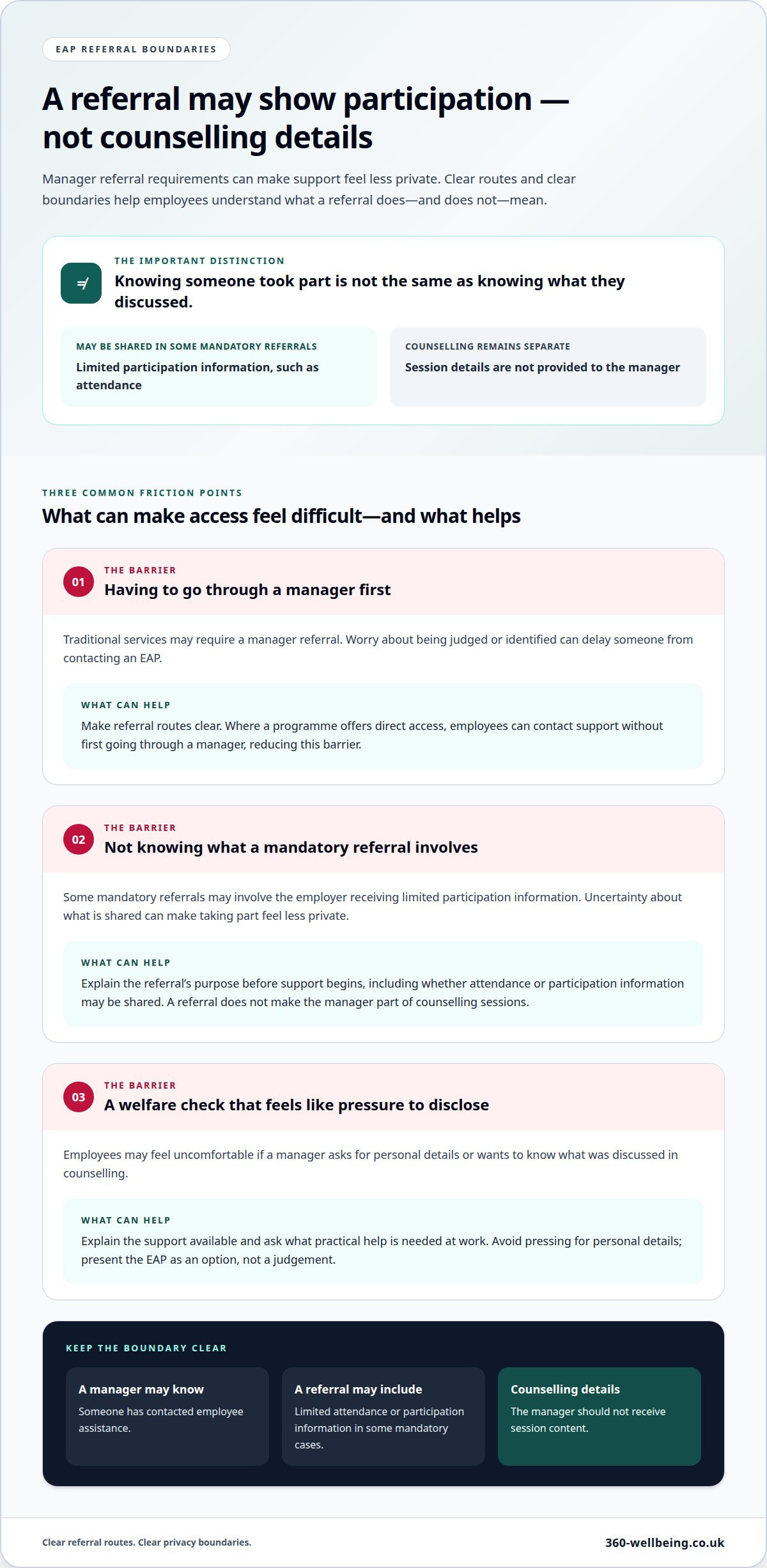
A manager referral can make support feel less private before an employee even contacts an EAP. Traditional services may require employees to go through a manager, potentially delaying help if they worry about being judged or identified. Where a programme offers direct access, it can reduce this barrier. For employers, overcoming employee privacy concerns about EAPs starts with making referral routes clear.
A manager may refer someone when they believe an issue needs addressing to help the employee meet the requirements of their role. With some mandatory referrals, the employer may receive limited information, such as attendance or participation, but not counselling details. A referral does not make the manager part of the employee’s sessions.
During a welfare check, managers can explain the support available and ask what practical help the employee needs at work. They should avoid pressing for personal details or asking what was discussed in counselling. If a referral is mandatory, explain its purpose and what participation information may be shared before the employee begins. Clear boundaries help employees make an informed decision about taking part.
Managers and leaders can encourage mental health support by presenting the EAP as an option, not a judgement about someone’s ability or character. For example, a manager could say, “Support is available if it would help,” then let the employee decide what to share. Keeping workplace conversations separate from counselling sessions helps preserve trust.
Training can help leaders explain referral processes consistently and respond with care. Integrating EAP confidentiality training into leadership and management programmes over the next six months gives managers a practical opportunity to learn what they can share, what they may receive, and how to signpost support. To further overcome employee privacy concerns about EAPs, make sure employees hear these boundaries before a referral, not only after they begin seeking help.
Using an employer’s name to access the service
An employee assistance programme may ask for an employer’s name when someone contacts the service. In the UK, that name is usually used as a reference to access the programme. It helps connect the caller with workplace support, but the request alone doesn’t explain what information the employer receives.
That distinction matters. Giving an employer’s name isn’t the same as telling a manager about a personal concern, and it doesn’t mean the employer hears what was discussed during counselling. Before sharing details about their wellbeing, employees can ask the service how the employer’s name is used, what information is recorded, and who can access it.
For example, an employee might be asked to identify their organisation before reaching support. They can ask whether this identifies their access route, whether their reason for calling is shared, and whether any participation information goes back to the employer. These are separate questions, and clear answers to each can make the process easier to understand.
Employers also shape trust through how they introduce the service. A message to employees should explain why they may be asked for the organisation’s name and distinguish access from disclosure. It should describe what is shared for reporting without implying that individual conversations become workplace information. Clear wording gives employees a more accurate picture before they decide to seek wellbeing support.
If you’re unsure, ask about the employer-name step before discussing personal matters. Notice whether the explanation separates eligibility or access from counselling information, and whether it describes any exceptions. This makes it easier to decide what you’re comfortable sharing and to use support with a clearer understanding of workplace privacy. Employers can build confidence by making those boundaries easy to find in written communications, rather than leaving employees to infer them from a call. To explore workplace wellbeing support, take a look at the support available.
360 Wellbeing: Employee Assistance Programme (EAP)
360 Wellbeing offers an Employee Assistance Programme (EAP) for workplace wellbeing, alongside Mental Health Support. It gives employees a route to support while helping organisations make wellbeing part of everyday working life.
When privacy concerns make it harder to seek help, clear information about confidentiality and access can help employees decide what feels right. Support can also extend beyond emotional wellbeing: 360 Wellbeing includes a 24/7 Virtual GP and 360 Rewards as part of its broader employee benefits platform.
If you’re considering support for your people, contact 360 Wellbeing to discuss your needs.
Make privacy part of a supportive workplace culture
Trust grows when privacy is treated as part of everyday workplace wellbeing, not just a policy employees read once. Make respectful conversations about support feel normal, while letting each person choose what to share and when. This approach can turn overcoming employee privacy concerns about EAPs into a lasting commitment to employee confidence.
For employers, this means keeping communication open as teams, roles and support needs change. For employees, it means being able to explore help without explaining personal circumstances to colleagues. Small, consistent signals from the organisation can make wellbeing support feel like a natural part of working life.
If you’re considering how to support your people, discuss your wellbeing needs with 360 Wellbeing. A thoughtful next step can help create a workplace where seeking support feels more comfortable.
Frequently Asked Questions
What Is an Employee Assistance Programme (EAP)?
An Employee Assistance Programme is a workplace support service for personal or work-related concerns. Depending on the programme, it may provide short-term counselling, helplines, digital tools, practical advice or referrals to specialist support. Someone dealing with financial pressure, for example, might seek advice, while another employee may use counselling for emotional support. The services vary by programme.
What Does EAP Confidentiality Mean?
EAP confidentiality means personal information shared during support is treated as private, rather than routinely passed to an employer. It doesn’t mean every detail is always secret: safeguarding concerns or legal requirements can create exceptions. Before using a service, employees can read its privacy information and ask how their details are handled, who can access them, and whether information is shared for service administration.
When can confidentiality be broken?
Confidentiality may be limited where there is a serious risk of harm to the employee or someone else, suspected abuse or neglect, or a legal requirement to disclose information. A court order is one example. These exceptions are different from routine employer reporting. If an employee is unsure about a particular situation, they can ask the provider to explain the relevant limits before sharing sensitive details.
Why do employees have privacy concerns about employee assistance programmes (EAPs)?
Employees may worry that using an EAP could affect how managers view them, especially if they’re dealing with stress, mental health concerns or personal difficulties. A workplace referral or the need to identify an employer can also raise questions about who knows they sought help. Clear explanations of access, reporting and confidentiality boundaries can address these concerns without asking employees to disclose why they need support.
Are EAP counselling sessions confidential under UK GDPR and the Data Protection Act 2018?
EAP counselling information is handled within data protection rules, but UK GDPR and the Data Protection Act 2018 don’t make confidentiality absolute. Providers must handle personal information appropriately, and health information needs particular care. The practical details depend on the provider’s privacy information and the circumstances. Employees can look for an explanation of what is collected, its purpose, who can access it, and the situations where disclosure may be required.
When can an EAP provider disclose information without an employee’s consent in the UK?
An EAP provider may disclose information without consent where there is a serious risk of harm, suspected abuse or neglect, or a legal requirement, such as a court order. These are exceptions, not permission for routine access to counselling details. Employees can ask what kind of disclosure may apply and how the provider explains its decision. This helps distinguish a necessary exception from ordinary employer reporting or service administration.