Support at work shouldn’t depend on whether a mental health problem meets the legal definition of disability. Under the Equality Act 2010, employers must make reasonable adjustments for disabled employees. Examples of reasonable adjustments for mental health at work include clearer written instructions, adjusted workloads, quieter workspaces and flexible hours, tailored to the person and their role.
It can be difficult to know what to ask for, especially when someone’s needs change over time. Practical adjustments aren’t about lowering standards; they remove barriers so a person can do their job as effectively as possible.
This article explains what adjustments can involve, how flexible absence policies and phased returns may support recovery, and what employers can do when a mental health problem isn’t a disability. It also covers how early, compassionate support can make work more manageable.
Key Takeaways
- Adjustments can include clearer communication, structured check-ins and changes to responsibilities, shaped around the person’s needs and role.
- Flexible hours, absence arrangements and a gradual return can help someone manage changing mental health needs while rebuilding their working routine.
- Employers can take a mental health problem seriously and explore practical support even when it doesn’t meet the legal definition of disability.
- According to the UK legislation register, the Equality Act 2010 disability definition includes an impairment with a substantial, long-term effect on day-to-day activities lasting more than 12 months.
What are reasonable adjustments?
Reasonable adjustments are tailored changes that remove work-related barriers for a disabled person. Under the Equality Act 2010, employers must make reasonable adjustments when the duty applies.
Workload and Workplace Procedures
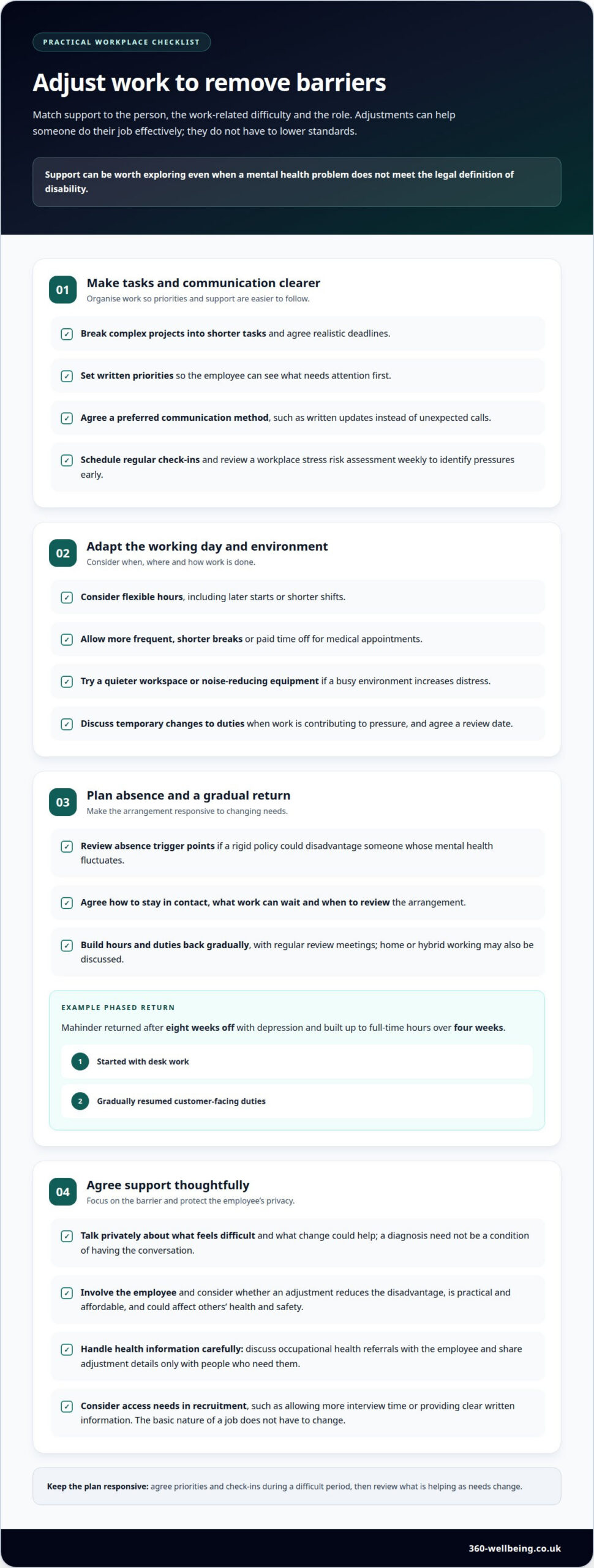
Workload and procedure adjustments change how tasks, communication and support are organised. They can reduce avoidable stress while helping an employee meet the essential requirements of their role. For example, a manager could break a complex project into shorter tasks, agree realistic deadlines and provide written priorities. Regular check-ins can help identify pressures early, while reviewing a workplace stress risk assessment weekly can keep support responsive. A preferred communication method, such as written updates instead of unexpected calls, may also help.
Requesting and Assessing Adjustments
Requesting and assessing adjustments means discussing the barrier and considering practical ways to address it. An employee can explain which part of work is difficult and suggest a change, such as another way to contribute in meetings. Employers should involve the employee and consider whether the adjustment reduces the disadvantage, is practical and affordable, and could affect others’ health and safety. Recruitment processes may also need changes, such as allowing more time for an interview or providing clear written information. The basic nature of a job does not have to change.
Medical Evidence and Confidentiality
Medical evidence and confidentiality require careful handling of relevant health information when agreeing support. Managers can discuss what the employee finds difficult and what would help without making a diagnosis a condition of having the conversation. An occupational health referral should be discussed with the employee as part of agreeing support. Share adjustment details only with people who need them to put support in place, and agree with the employee what information can be shared. This protects privacy while giving colleagues clear, practical instructions.
Reasonable adjustments also apply beyond an employee’s immediate tasks. Organisations providing services or public functions have an anticipatory duty to plan for disabled people who may face substantial disadvantage accessing them. For example, a public service could provide clear written information or arrange an advocate. The appropriate change depends on the barrier and the service.
Flexible absence policies and phased returns
Working patterns can be adjusted to reflect fluctuating mental health needs. Flexibility may help an employee stay connected with work while managing recovery.
Flexible Hours, Breaks and Time Off
Flexible hours, breaks and time off change when an employee works or takes a pause. These options can help someone manage energy, appointments and demanding parts of the working day. An organisation might agree later starts, shorter shifts, or more frequent, shorter breaks. It could also allow paid time off for medical appointments. The Equality Act 2010 adjustment duty may apply when disability-related absence or difficulty affects work, so arrangements should respond to the individual’s needs.
Phased Returns After Absence
A phased return gradually rebuilds working hours and duties after an absence. It can provide structure while giving an employee time to regain confidence and manage work demands. For example, Mahinder returned after eight weeks off with depression, building up to full-time hours over four weeks. His tasks were introduced gradually, starting with desk work before customer-facing duties resumed. A manager can also discuss home or hybrid working, adjusted hours and regular review meetings as part of the plan.
Flexible Absence Policies
A flexible absence policy adapts how absence is managed when a mental health problem fluctuates. A rigid trigger point could disadvantage someone who needs time away while unwell. An organisation can consider whether absence triggers need adjusting and whether shorter periods away or time for appointments would help. The employee and manager can agree how to stay in contact, what work can wait and when to review the arrangement. Clear expectations make it easier to plan a return without treating every absence in the same way.
Alongside workplace adjustments, an Employee Assistance Programme can provide confidential counselling and advice, helping employees access support early.
Support when a mental health problem is not a disability
A mental health condition can affect work even when it doesn’t meet the Equality Act disability definition. Employers should take mental health problems as seriously as physical illness and explore practical support. Focus on the employee’s work-related difficulties, not only on a diagnosis or legal label.
Start with a private conversation about what feels difficult and what could make work more manageable. For example, an employee experiencing anxiety might find unexpected calls or large meetings challenging. A manager could agree written updates, offer the option to contribute in writing or set clearer priorities. These measures can help before problems escalate, without assuming the condition is permanent.
Support should match the barrier and the person’s role. If concentration is difficult, breaking tasks into smaller steps or reducing competing demands may help. If a busy workspace increases distress, a quieter area or noise-reducing equipment could make work more manageable. If duties are contributing to pressure, the employee and manager can discuss temporary changes and agree a review date.
- During a difficult period: agree short-term priorities and regular check-ins.
- For a return to work: discuss a gradual return to tasks or adjusted hours.
- For ongoing uncertainty: make communication predictable, with written follow-up after meetings.
These steps are supportive workplace measures, not a conclusion about disability status. Under the Equality Act 2010, the legal duty to make reasonable adjustments applies when a person is disabled. But support and adjustment discussions needn’t wait for that question to be settled. If an initial change isn’t helping, revisit the arrangement with the employee and consider another practical option. A calm, specific conversation can identify what’s affecting work and create a manageable next step.
When does a mental health condition count as a disability under the Equality Act 2010?
Under the Equality Act 2010, disability includes a mental or physical impairment with a substantial long-term effect on normal day-to-day activities lasting more than 12 months, according to the UK legislation register. The definition focuses on the impairment’s effects, not simply its diagnostic label. For example, an anxiety disorder may substantially affect everyday functioning when persistent, excessive anxiety continues over time.
Work is one part of day-to-day life, but an assessment considers broader activities too. A mental health condition might affect concentration, sleep, communication or managing ordinary routines. What matters is how substantially it affects the person and whether the effect is long-term. A diagnosis alone doesn’t automatically establish that the legal definition is met.
The effects of a condition can be less visible at work than elsewhere. Someone may complete tasks but struggle with meetings, travel, decision-making or changes to routine. Another employee may manage well for a period, then find symptoms return during a difficult phase. Considering the pattern, duration and practical impact helps explain the support needed without relying on assumptions based only on job performance.
If an employer knows, or could reasonably be expected to know, that an employee is disabled, the reasonable-adjustment duty may apply. The duty may also be relevant when an employee requests an adjustment, has difficulty with part of their job, or disability is linked to absence or a delayed return. Employees don’t need to wait for a crisis before raising a workplace barrier.
For instance, an employee whose anxiety affects spontaneous calls could discuss written communication or planned check-ins. This addresses a work barrier without changing the job’s basic nature. Employers should consider the person’s circumstances and practical options. If a requested adjustment isn’t reasonable, they should still explore other ways to support the employee.
Understanding the legal threshold can help frame a constructive conversation, but support discussions can begin without a final label. Explore mental health support for additional help alongside workplace adjustments.
360 Wellbeing: Mental Health Support
360 Wellbeing offers Mental Health Support for employees who need help alongside workplace adjustments. It can be a useful next step when stress, anxiety or another mental health concern is affecting wellbeing, or when someone would benefit from support beyond a manager’s workplace plan. Mental health therapy sessions offer a route to discuss personal challenges, while a Virtual GP can help with health concerns. These services complement, rather than replace, an employer’s responsibilities to consider adjustments and support at work. Choosing support can be part of a broader approach to wellbeing, alongside clear communication and practical changes to working arrangements. If you’d like to explore support, contact 360 Wellbeing.
Make support part of the next conversation
The next step is a calm, practical conversation about what could make work more manageable. Rather than waiting for difficulties to become overwhelming, treat support as an ongoing discussion that can adapt as someone’s needs change. The right adjustment is personal, and regular communication helps keep it relevant.
Examples of reasonable adjustments for mental health at work can help you identify possibilities, but the employee’s experience should guide the discussion. Alongside workplace support, 360 Wellbeing offers Mental Health Support, a 24/7 Virtual GP and 360 Rewards. These services can complement a thoughtful approach to wellbeing, while adjustments remain a conversation between the employee and employer.
If you’re considering additional support for yourself or your organisation, contact 360 Wellbeing to explore the next step. A supportive conversation can create space for practical change and a healthier way forward.
Frequently Asked Questions
What are examples of reasonable adjustments for mental health at work in the UK?
Examples include a dedicated desk instead of hot-desking, written contributions instead of speaking in meetings, or advance notice of workplace changes. Someone affected by sensory demands might benefit from seating away from a busy area. The right adjustment depends on the barrier: a predictable meeting format, for instance, may help an employee who finds spontaneous group discussions difficult.
What legal duties do UK employers have to make reasonable adjustments for mental health?
Under the Equality Act 2010, employers must make reasonable adjustments for disabled employees and workers when the duty applies. It also covers job applicants, contractors and self-employed people hired to personally do the work. Employers should consider adjustments when they know, or could reasonably be expected to know, someone is disabled, when requested, or when disability affects job tasks or absence.
What adjustments can employers make to working hours, workload, duties, or breaks?
Employers can consider later start times, shorter or more frequent breaks, part-time hours or paid time off for medical appointments. They might redistribute tasks across a team, adjust deadlines or temporarily change responsibilities. For example, an employee struggling with customer calls could discuss other duties while retaining the role’s essential purpose. The arrangement should address the specific work difficulty.
Can working from home or a phased return be a reasonable adjustment for mental health?
Yes. Working from home or a phased return can be considered when it helps address a work-related disadvantage. Home working may reduce distractions or make it easier to follow activities that support mental health. A phased return can build hours or duties gradually, such as starting with focused individual tasks before resuming more socially demanding work. Review the plan as needs change.
Who pays for workplace mental health adjustments in the UK, including Access to Work funding?
Employers must make and pay for reasonable adjustments; employees cannot be asked to cover the cost. Access to Work may provide a grant to eligible people, but it does not replace the employer’s duty to make or pay for adjustments.