
In 2024/25, an estimated 964,000 workers in Great Britain experienced work-related stress, depression or anxiety, according to the Health and Safety Executive. For logistics teams, delivery deadlines, changing schedules and time away from home can make pressure especially hard to switch off. Effective stress management for logistics and driver roles isn’t just about asking people to cope better. Work planning and access to support matter too.
If you work in logistics or manage a driver team, unpredictable demands and limited time for connection can take a toll. Stress can go unspoken, particularly when people aren’t sure how to raise it or where to turn. Clear ways to speak up and find support can make a difference.
This guide covers common workplace pressures, practical changes employers and drivers can make, and ways to make wellbeing conversations more approachable. It also looks at how digital support can complement improvements to work design, communication and day-to-day management.
Key Takeaways
- Spot how workload, unpredictable schedules and social isolation can contribute to stress, and notice changes in mood, sleep or concentration.
- Effective stress management for logistics and driver roles combines improvements to work systems with individual support, rather than relying on resilience alone.
- When pressure builds, use a simple response: notice it, pause when safe, communicate, access support and review what helps.
- Make wellbeing conversations approachable so drivers and colleagues can raise concerns without feeling they have to manage them alone.
- Offer flexible digital wellbeing resources as one layer of support for teams working varied schedules and locations, alongside better work design and manager practices.
Why stress management matters in logistics and driver roles
Keeping goods and services moving depends on people coordinating schedules, changing priorities and practical decisions throughout the working day. That responsibility can be demanding, but stress isn’t an inevitable part of the job. Identifying where pressure comes from helps employers and workers make work more manageable.
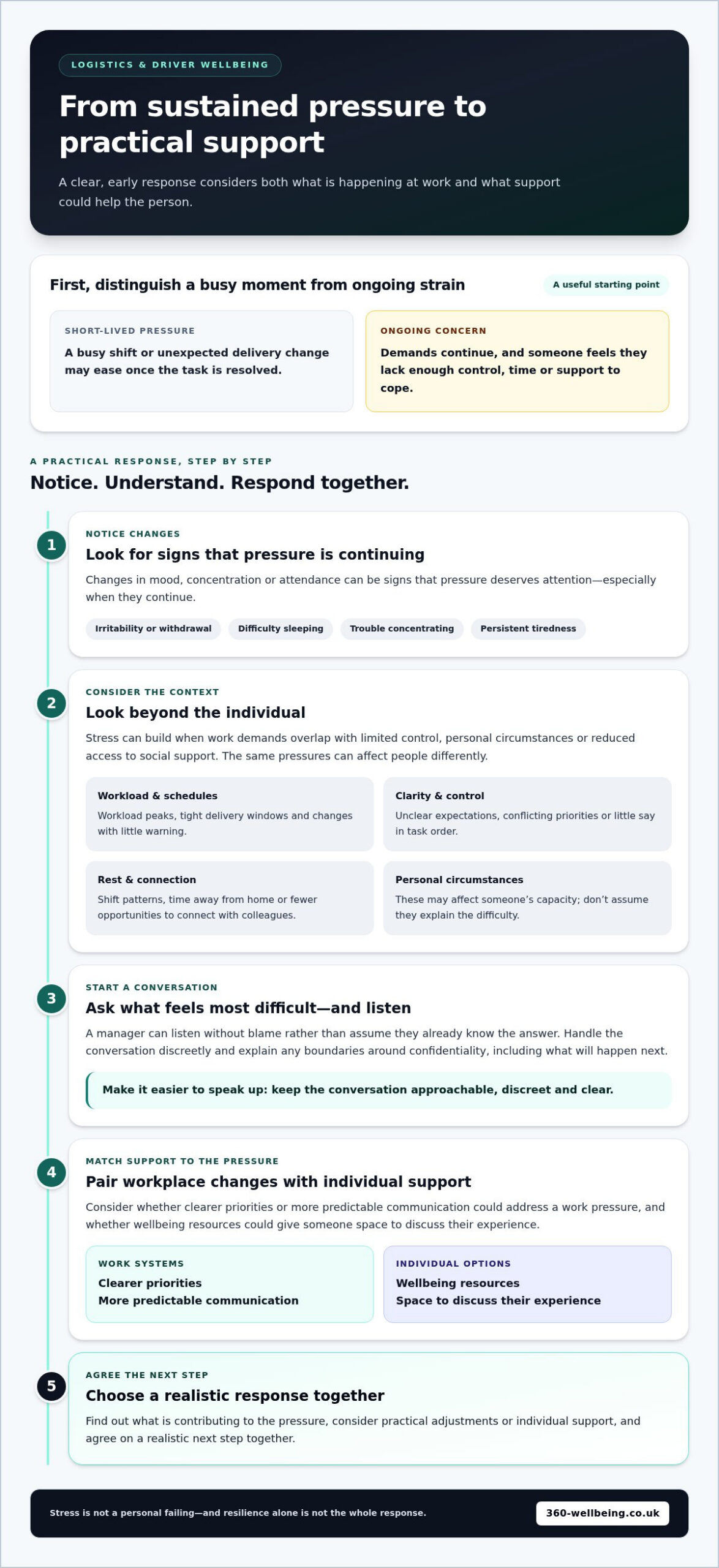
Work-related stress is the strain someone may experience when work demands feel persistently difficult to manage. It differs from short-lived pressure, such as a busy shift or an unexpected delivery change, which may ease once the task is resolved. Stress becomes a concern when demands continue and someone feels they don’t have enough control, time or support to cope.
Stress management for logistics and driver roles starts with recognising that the work varies from person to person. A dispatcher may balance vehicle availability with delivery changes. A warehouse colleague may face fluctuating workloads and time-sensitive orders. Drivers might contend with traffic, delays or customer schedules, while long-distance routes can involve extended periods away from home. These pressures won’t apply to every role or every worker.
Which pressures can affect logistics and driver roles?
Some pressures are built into how work is organised. Delivery targets can be tight, schedules may change at short notice, and workers might have limited influence over the volume or timing of tasks. When plans shift, staff may need to make quick decisions while keeping colleagues or customers informed.
Working patterns can add another layer. Early starts, late finishes or rotating shifts may make rest and time with family harder to plan. Time on the road can mean fewer everyday opportunities for social contact. For warehouse or dispatch teams, variable shifts may make it difficult to connect with colleagues outside a handover. Personal circumstances also matter, so the same workload can affect people differently.
Why early, practical support matters
Ongoing stress can make it harder to concentrate, sleep well or feel patient in working relationships. These effects don’t mean someone is incapable of doing their job, and they shouldn’t be treated as a personal failing. They can be signs that pressure deserves attention, particularly if changes in mood, focus or attendance continue.
An early conversation can help identify whether a practical adjustment, clearer communication or individual support could help. A manager can start by asking what feels most difficult and listening without blame, rather than assuming they already know the answer. Handle the conversation discreetly and explain any boundaries around confidentiality so the employee understands what will happen next.
Support works best when helpful systems and individual options go together. Clearer priorities or more predictable communication may address a work pressure, while wellbeing resources can give someone space to discuss their experience. General Stress Management Techniques may offer useful context, but they don’t replace action on avoidable workplace pressures. Respond early, find out what’s contributing and agree on a realistic next step together.
What drives stress across logistics work, and how to recognise it
Stress rarely has one simple cause. It may build when work demands, limited control, personal circumstances and access to social support overlap. Looking at these factors separately can help managers respond to what’s actually happening, rather than assuming every employee is affected by the same part of the job.
For stress management for logistics and driver roles, consider both how work is organised and what changes a person may be experiencing. A busy period or demanding shift isn’t automatically harmful. Concern is more likely when pressure is sustained and there’s little chance to recover or get support.
Work patterns, workload and control
Pressure can rise around workload peaks, tight delivery windows and schedules that change with little warning. A driver may have limited influence over delays on the road, while a warehouse colleague may face a sharp increase in orders or a dispatcher may need to revise plans as vehicles and priorities change.
Clarity and control matter too. If expectations are unclear, priorities conflict or workers have little say in how tasks are sequenced, it can become harder to judge what needs attention first. Shift patterns and demanding targets don’t create a problem for everyone. Their impact depends partly on how predictable they are, whether people can get appropriate recovery time and whether expectations are realistic.
Isolation, fatigue and changes colleagues may notice
Some drivers spend long periods alone or away from home, which can reduce opportunities for informal conversation and everyday support. Colleagues on different shifts may also have less time together. Personal pressures, such as caring responsibilities or financial worries, can affect someone’s capacity to manage work demands. Don’t assume these are the cause of a difficulty or use them to explain it away.
Fatigue is related to stress, but it isn’t the same thing. A demanding schedule or disrupted rest may contribute to feeling tired, while stress can involve emotional strain and feeling unable to cope with demands. Both deserve attention, particularly in safety-sensitive work. A change in someone’s wellbeing may show up as:
- Unusual irritability, withdrawal or a change in mood.
- Difficulty sleeping or appearing persistently tired.
- More trouble concentrating, remembering details or making routine decisions.
- Changes in attendance, communication or usual work patterns.
These changes can be possible signs of strain, but they don’t diagnose stress or explain its cause; a clinical assessment is needed to understand health concerns. They may have other explanations, too. Notice patterns rather than making assumptions, and check in privately with a simple, open question such as, “I’ve noticed you seem quieter than usual. How are things going?”
If someone would value individual support, digital mental health resources can provide another option alongside a review of workplace pressures. Explore digital wellbeing support as one way to make help more accessible for employees with varied schedules or work locations.
Stress is not just an individual resilience problem
Stress management for logistics and driver roles shouldn’t rest solely on an individual’s ability to stay calm or “bounce back”. Personal coping strategies can help, but they can’t resolve persistent pressures such as unrealistic workloads, unpredictable rotas or unclear priorities. If the working environment is contributing to strain, prevention needs to include changes to how work is planned and managed.
Individual support still matters. A supportive conversation, mental health resource or coaching can help someone explore what they’re experiencing and what might help. But these options should complement, not replace, attention to workplace risks. A worker shouldn’t be left to manage an avoidable problem alone.
What employers can change in the working environment
Look for patterns, not just isolated difficult shifts. Review how workload peaks are handled, whether delivery expectations allow for changing conditions, how predictable rotas are and whether people have opportunities for appropriate breaks. Check that drivers, dispatch teams and managers understand who makes decisions when plans change and how to raise a concern promptly.
Regular check-ins and staff feedback can reveal issues that aren’t visible in schedules or performance reports. For example, a recurring late change to a route or shift may be creating pressure across several teams. Discuss what could be adjusted, make an agreed change where practical, then review whether it helped. The aim isn’t to remove every demanding moment, but to stop preventable strain becoming routine.
Prevention and individual support work together
Employer-level prevention
- Review workload, delivery expectations and rota predictability.
- Make responsibilities and escalation routes clear between drivers, dispatch and managers.
- Use check-ins and feedback to identify recurring pressure points.
Individual support
- Offer a supportive conversation when someone raises a concern.
- Make wellbeing resources accessible to employees across different working patterns.
- Help people consider practical next steps without placing responsibility for workplace change on them.
Both sides matter. Support services can help someone address their personal wellbeing, while employer action can reduce pressures rooted in work design. Neither should be treated as a substitute for the other.
How managers can make conversations safer
A manager doesn’t need to diagnose stress to respond with care. Listen without judgement, ask what would make work feel more manageable and agree what will happen next. Respond consistently whether a concern comes from a driver on the road, a warehouse colleague or someone coordinating dispatch.
Be clear about privacy. Explain who may need to know, how information will be handled and what steps might follow. Don’t promise absolute confidentiality, since safety or safeguarding concerns may require appropriate action. Being open about these boundaries helps build trust and gives the employee a clearer sense of what to expect.
Practical stress-management steps for drivers, colleagues and managers
A simple routine can make pressure easier to address before it builds. Notice what’s happening, pause when it’s safe, communicate the concern, use suitable support and review whether the next steps helped. This isn’t a substitute for fixing avoidable work pressures, but it gives drivers and teams a clear starting point.
Safety comes first. Drivers should never use a phone or app while driving. If you need to check in, make a call or access support, wait until you’re safely parked in a suitable place. If there’s an immediate risk to someone’s safety, follow the relevant workplace emergency procedure or contact emergency services. Raise routine stress concerns through normal management or wellbeing channels.
Small, realistic steps drivers can take
Plan breaks and recovery time within your applicable working arrangements, and don’t treat a break as optional simply because the schedule is demanding. If plans change repeatedly or the workload feels unmanageable, note the pattern and raise it early with a trusted manager or contact. A specific example, such as a recurring late rota change, can make it easier to discuss what might improve.
If stress persists or feels difficult to manage alone, consider appropriate professional support. That could include speaking with a GP or using workplace mental health resources. Seeking help is a practical step, not a sign of failure.
A practical check-in for managers and colleagues
Choose a calm moment away from immediate operational pressure where practical. Open with a simple question, such as, “How have things been going for you lately?” Listen without rushing to solve the issue, then ask which parts of work feel most difficult and what change might help. Agree on one realistic next step and a time to follow up. One conversation can open the door, but continued communication shows that the concern hasn’t been forgotten.
For stress management for logistics and driver roles, this short checklist can be adapted to a driver’s cab, a warehouse team or a dispatch office. Keep it somewhere accessible and use it when you’re safely off task:
- Notice: What pressure or change am I responding to?
- Pause: Can I take a safe moment before deciding what to do?
- Communicate: Who needs to know, and what do they need to understand?
- Use support: What colleague, manager or wellbeing resource could help?
- Review: What happened next, and what should we adjust?
Managers can use the same sequence after a check-in: record agreed actions appropriately, address work issues within their influence and return to the conversation. For individual wellbeing support, explore digital mental health support, available through a mobile app or progressive web app.
Make wellbeing support accessible to logistics and driver teams
Accessible wellbeing support gives employees another route to help, especially if their schedule or work location makes routine appointments harder to arrange. It’s one part of a broader approach, not a replacement for reviewing workloads, shift patterns, communication or manager practice. If the source of pressure is built into the way work is organised, individual support should sit alongside practical efforts to address it.
This balance is central to stress management for logistics and driver roles. Employers can work on the conditions that contribute to pressure while making it easier for people to seek support that fits their circumstances. Digital support can suit someone working away from a main site or on shifts that don’t align with standard office hours. Employees should only access it when they’re not driving or carrying out safety-critical tasks.
How 360 Wellbeing can complement employer action
360 Wellbeing provides unlimited on-demand access to UK-registered GPs by phone, video or text, alongside mental health support. This gives employees a way to access health support digitally, which can suit teams working across different locations and schedules.
Mental health support includes up to 8 therapy sessions per condition per calendar year for the main account holder only. The platform also offers 1-2-1 life coaching, personalised virtual physiotherapy and menopause support from specialist doctors. These options give employees ways to seek support for different wellbeing needs, but they don’t replace changes to prevent or reduce workplace pressures.
Employers can make the offer more useful by connecting it to everyday practice. Managers should know how to explain available support, respond to concerns and direct employees to the right information, while also taking feedback about work design seriously. A support platform works best as part of a wider wellbeing approach that considers mental, physical and social needs.
Help employees find and use support
Employees can access 360 Wellbeing through its mobile app or progressive web app. Explain how to access it during onboarding and revisit it in regular team updates. Keep the information clear and easy to find, including for people who may miss an office-based briefing because of a shift, route or remote working location.
Managers can normalise support by mentioning it alongside other wellbeing information, rather than waiting until someone is already struggling. Make clear that using a resource is a personal choice, and ensure employees know where to find details when they need them. Regular communication can help turn a benefit from something people have heard about into an option they understand how to access.
If you’re exploring ways to make wellbeing support more accessible alongside improvements to work design and management practice, explore 360 Wellbeing.
Build a more supportive approach, one step at a time
Lasting progress doesn’t depend on a single conversation or initiative. Choose one practical improvement, such as making team check-ins easier to access or reviewing how schedule changes are communicated. Then return to it: ask employees what’s working, listen to what still feels difficult and adjust your approach. Small, consistent actions can make wellbeing part of how the operation works, rather than an extra responsibility placed on individuals.
Effective stress management for logistics and driver roles brings together thoughtful work design, supportive management and accessible help. The right balance will look different across teams, so keep the conversation open and make it clear that seeking support is a constructive step.
360 Wellbeing brings health and wellbeing resources together in one platform, including 24/7 access to UK-registered GPs, mental health support and 1-2-1 life coaching. Explore 360 Wellbeing as one option to support your wider approach to employee wellbeing.
With practical changes and approachable support, logistics teams can take meaningful steps towards a healthier, more sustainable working environment.
Frequently Asked Questions
Can stress affect safety in logistics and driver roles?
Yes, stress and fatigue can affect concentration and decision-making, although they’re different experiences and don’t affect everyone in the same way. If a driver feels too distracted or tired to continue safely, they should follow workplace safety procedures and raise the concern. Never use a phone while driving. Pull over safely before contacting a manager or accessing non-emergency support. For an immediate emergency, use the appropriate emergency response.
How can employers reduce stress for logistics and delivery drivers?
Start by looking for avoidable pressure in everyday operations, such as repeated last-minute route changes or unclear handovers between dispatch and drivers. Ask staff what makes a shift harder to manage, then test a practical adjustment, such as clearer priority-setting or earlier communication of changes. Check back with the team to see whether it helped. Wellbeing support can complement these steps, but shouldn’t replace action on workplace causes.
What should a manager do if a driver says they feel overwhelmed?
Listen calmly and ask what feels hardest to manage right now. For example, is the main concern a changing schedule, workload or something outside work? Don’t try to diagnose the person or dismiss what they say. Agree on a manageable next step, such as reviewing a work issue or explaining support options, and arrange a follow-up. Respect their privacy while being upfront about any safety or safeguarding process that may apply.
Can drivers access 360 Wellbeing support outside normal working hours?
Yes. 360 Wellbeing provides 24/7 on-demand access to UK-registered GPs by phone, video or text, alongside mental health support and life coaching. Employees can use the platform through its mobile app or progressive web app. Drivers should only access these services when safely off the road and not doing safety-critical work. The service isn’t an emergency response and doesn’t remove an employer’s role in addressing work-related pressures.
Can family members use 360 Wellbeing?
Family members residing at the same address can use the services available to family members, except structured counselling. The allowance of up to 8 therapy sessions per condition per calendar year applies to the main account holder only. Explain this distinction clearly when introducing the platform, so employees understand who can access each type of support and don’t assume the counselling allowance is shared with household members.
Can a 360 Wellbeing GP issue a Fit-to-Work certificate?
Yes. Fit-to-Work certificates are available only through the video section of the 360 Wellbeing app, not through chat. Employees should use that section for the certificate process and follow their employer’s usual absence-reporting procedures as well. The certificate doesn’t replace any separate workplace assessment or decision an employer may need to make under its own policies.
Are prescriptions from a 360 Wellbeing GP NHS prescriptions?
No. Prescriptions issued by a 360 Wellbeing GP are private prescriptions, and the patient pays the pharmacy for the medication. A prescription isn’t automatic: the GP decides whether one is clinically appropriate after the consultation. If someone’s symptoms need urgent or emergency attention, they should seek the appropriate care rather than waiting for a routine appointment or relying on a workplace support service.