An employee tells you they’ve been diagnosed with cancer. You want to help, but may worry about saying the wrong thing, asking too much or making promises before you understand what they need. Effective workplace support for employees with cancer starts with a respectful conversation and a plan that can adapt as circumstances change.
Those concerns are understandable. Treatment, symptoms and priorities vary, and the employee should remain in control of what they share. This guide explains how to approach the first conversation, agree practical adjustments and manage absence without making assumptions. It also covers confidential communication, reviewing support as needs change, planning a possible return to work and offering appropriate health and wellbeing resources. Regular, agreed check-ins and room to adjust can provide consistency without expecting you to have every answer at once. The aim is to help the employee feel heard while giving you a clear, flexible way to respond from diagnosis through each next step.
Key Takeaways
- Make the first conversation employee-led: listen, ask what would help and let them choose what to share.
- Explore practical adjustments such as flexible hours, altered duties, breaks or time for appointments, based on the employee’s needs.
- Understand how workplace support for employees with cancer differs from clinical care and general wellbeing resources, while allowing these supports to complement one another.
- Build a written support plan, then review and adapt it as the employee continues working, takes leave or prepares to return.
- Consider how resources such as a Virtual GP, mental health support and an Employee Assistance Programme can provide additional wellbeing support alongside workplace adjustments and appropriate cancer care.
Workplace support for employees with cancer starts with listening
There’s no single way to experience cancer. A diagnosis alone won’t tell you how someone feels, what treatment involves or whether they want to keep working. Their capacity and preferences may change over time. Good workplace support for employees with cancer starts by giving the individual space to explain what matters to them, rather than deciding what they need on their behalf.
Your first role as a manager isn’t to solve everything. Listen without rushing to reassure or offer solutions, then ask what would make work more manageable right now. The employee may not know yet, and that’s a valid answer. Agree when to revisit the conversation so they have time to consider what they want.
Supportive management is employee-led, confidential and responsive to changing needs.
Use this checklist to guide an initial conversation:
- Privacy: Where can you speak without interruptions?
- Immediate needs: Is there anything at work that needs attention now?
- Preferred contact: How and when would they like you to check in?
- Review date: When would it feel helpful to revisit the plan?
How to begin a compassionate conversation
Choose a private setting and give the employee time to share only what they’re comfortable sharing. Try open questions such as, “What would help you at work at the moment?” or “Would you like to talk about any changes that could make the next few weeks easier?” Avoid pressing for details about diagnosis, treatment or prognosis. Explain what information you need to make a workplace decision, then agree what may be shared, with whom and for what purpose.
It’s fine to acknowledge uncertainty. You could say, “You don’t need to have all the answers today. Let’s agree what would help now, and we can review it together.” This keeps the conversation practical without implying the employee must disclose more or make long-term decisions straight away. If they’d rather pause, agree how they can restart the conversation when they’re ready.
What an employee may need at different points
Needs may shift around appointments, treatment, recovery and personal circumstances. Someone might initially want to continue as usual, then need time away or a change to their schedule. Another person may prefer to discuss adjustments later. Don’t assume a diagnosis predicts treatment, side effects, prognosis or preferred working arrangements. Ask what would be useful now and make clear that decisions can be revisited.
Keep check-ins supportive and proportionate. Ask whether the agreed contact still suits them, rather than expecting regular medical updates. If their needs change, listen and discuss what could be adjusted at work. This lets support evolve without pressuring the employee to explain private details or commit to a fixed plan before they’re ready.
Understand workplace adjustments, privacy and employer responsibilities
Once you understand what the employee wants you to know, focus on the work-related barriers they identify. A reasonable adjustment is a change intended to remove or reduce a barrier at work. The right option depends on the person, their role and the situation. It isn’t a standard package or a judgement about what they should be able to manage. Discuss possibilities together instead of assuming what will help.
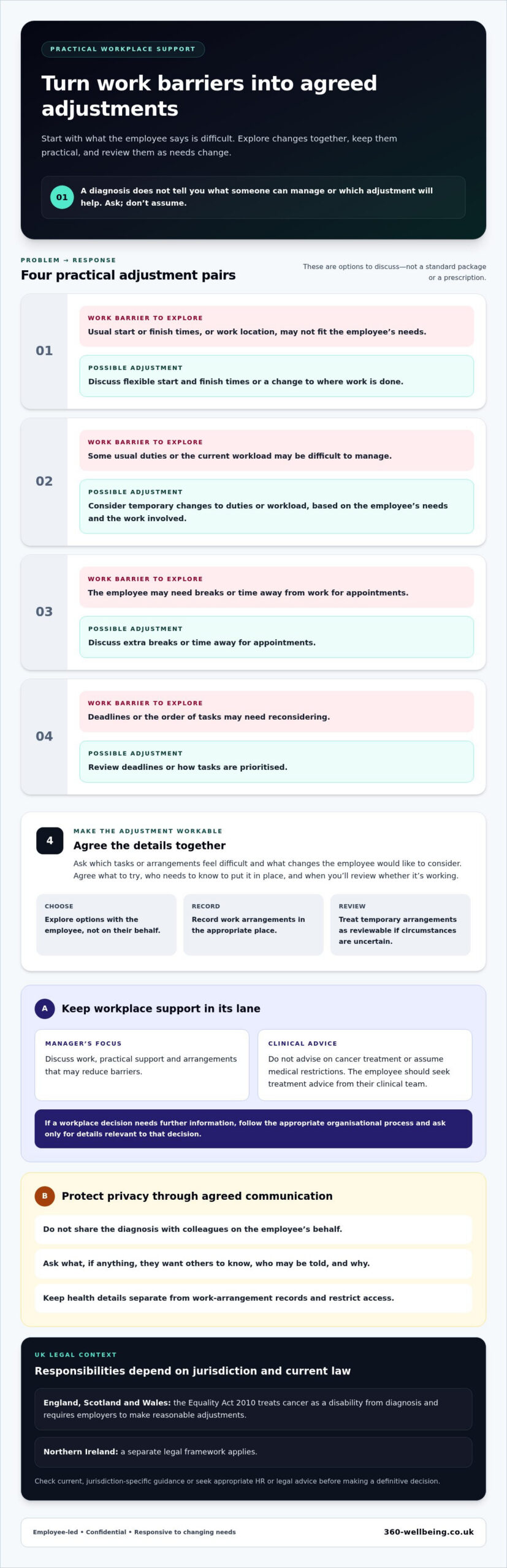
Depending on the employee’s needs and the work involved, options to explore might include:
- Flexible start and finish times or changes to where work is done.
- Temporary changes to duties or workload.
- Extra breaks or time away for appointments.
- A review of deadlines or how tasks are prioritised.
These are examples, not prescriptions. Ask which tasks or arrangements feel difficult and what changes the employee would like to consider. A temporary adjustment may help while circumstances are uncertain. Agree when you’ll review it and how you’ll assess whether it’s working.
Keep responsibilities clear. Managers can discuss work and practical support, but shouldn’t advise on cancer treatment or make assumptions about medical restrictions. The employee should seek treatment advice from their clinical team. If a workplace decision requires further information, follow your organisation’s appropriate process and ask only for details relevant to that decision.
Legal responsibilities depend on the relevant UK jurisdiction and current law. In England, Scotland and Wales, the Equality Act 2010 treats cancer as a disability from diagnosis and requires employers to make reasonable adjustments. Northern Ireland has a separate legal framework. Check current, jurisdiction-specific guidance or seek appropriate HR or legal advice before making a definitive decision.
Discussing adjustments without making assumptions
Use specific, work-focused questions: “Which parts of your usual day are proving difficult?” and “Would you like to explore a temporary change?” Explain which options may be workable, then agree what to try, who needs to know to put it in place and when you’ll review it. Record the work arrangements in the appropriate place, keeping health details separate and access restricted.
Respecting privacy and agreeing communication
Don’t share the diagnosis with colleagues on the employee’s behalf. Ask what, if anything, they want others to know, who may be told and why. Agree how often you’ll make contact, which method suits them and who their workplace contact will be during absence. Handle sensitive information discreetly and in line with your workplace policy and applicable data protection requirements.
Workplace adjustments are one part of a broader support picture. General wellbeing resources, such as employee wellbeing support, can complement agreed work changes and appropriate cancer care, but they don’t replace either.
Compare practical adjustments with health and wellbeing support
Workplace adjustments, clinical care and employee wellbeing resources can all contribute to a supportive approach, but they serve different purposes. Keeping those roles distinct helps you respond to practical needs without stepping into clinical decisions or suggesting that a workplace benefit can replace cancer care.
| Support type | What it can help with | Examples |
|---|---|---|
| Workplace adjustments | Reducing work-related barriers and making agreed duties or schedules more manageable. | Flexible hours, adjusted duties, extra breaks or time for appointments. |
| Clinical care | Diagnosis, treatment decisions and advice about health or symptoms. | Care and guidance from the employee’s relevant healthcare professionals. |
| General wellbeing resources | Additional support for general health, emotional wellbeing or wider life concerns. | Virtual GP access, mental health support, an Employee Assistance Programme (EAP) or financial support. |
Think of these as complementary layers, not alternatives. An employee might agree a change to their working hours with their manager while discussing treatment and its possible effects with their clinical team. They may choose to coordinate those conversations, but it’s their decision what information to share at work. No adjustment is automatically right for everyone, and it shouldn’t be presented as medically recommended unless that advice comes from an appropriate clinician.
Keep work decisions and clinical advice distinct
Managers can discuss role requirements, schedules and practical changes. Clinicians advise on diagnosis and treatment. If an employee says a task or schedule is difficult, explore what might help at work without asking them to justify a treatment choice or predict how they’ll feel. The employee can discuss work plans with their healthcare team and decide what guidance, if any, they want to share.
Consider wider wellbeing resources
Some needs sit alongside work arrangements and cancer care. Access to a Virtual GP provides a general health resource, but it isn’t a cancer specialist or treatment service. Mental health support or an EAP can offer a separate route for emotional support. Financial support may help with wider money concerns, but it isn’t cancer-specific advice. These resources are optional, and each employee should be able to choose what feels useful.
A joined-up employee benefit can make different forms of general wellbeing support accessible in one place, while keeping clinical care and individual adjustments in their proper roles. Explore 360 Wellbeing employee support as one possible layer of broader workplace support for employees with cancer, alongside appropriate care and the practical arrangements agreed with the employee.
Create a flexible support plan from diagnosis through return to work
A useful plan turns a supportive conversation into clear, manageable next steps. It should reflect what the employee says they need now, while leaving room to change course. Workplace support for employees with cancer works best when arrangements are agreed together, kept practical and reviewed as circumstances develop.
- Listen. Ask what the employee wants you to understand about work at this point and what feels most pressing. Don’t assume they want to continue working, take leave or make a return plan yet.
- Agree support. Set out any changes to duties, hours, workload or flexibility. If the employee is taking leave, ask whether they’d like contact during their absence, how often and by what method.
- Document. Record agreed work arrangements, who is responsible for putting them in place and any communication preferences. Keep the record focused on what’s needed at work and handle sensitive information discreetly.
- Review. Set a date for the next conversation, even if the purpose is simply to check whether the current arrangement still suits. A review date gives the employee a clear opportunity to raise changes without needing to have everything worked out now.
- Adapt. Update the plan when the employee’s stated needs or work circumstances change. An arrangement that helps at one point may need adjusting later.
Agreeing a plan during work or absence
If the employee continues working, clarify priorities and what can be paused, shared or changed. During absence, don’t assume they want regular updates about work. Agree whether contact is welcome, who will make it and what it should cover. If wider money concerns arise, an employer guide to financial support for employees can help you consider general workplace resources without assuming what the employee needs.
Planning a supportive return to work
If the employee wants to explore returning, discuss together what a manageable start might look like. This could include a gradual or adjusted return, but there’s no single approach that suits everyone. Review hours, workload, responsibilities and appointment needs, then agree when you’ll check in. Keep the conversation open so the plan can be revisited if the arrangements aren’t working as expected.
Use this checklist at each review:
- Workload: Are priorities and responsibilities manageable?
- Contact: Do the contact method and frequency still suit the employee?
- Adjustments: Are current arrangements helping, or should you explore changes?
- Next review: Have you agreed a date for the next conversation?
For additional general wellbeing resources alongside individual workplace arrangements, explore 360 Wellbeing employee support.
Build compassionate workplace support with 360 Wellbeing
A wellbeing platform can add another layer to workplace support for employees with cancer, but it works best as part of a wider, employee-led approach. Managers still have a central role: listen to the employee, agree practical work arrangements and review what’s helpful. Benefits can give employees access to broader resources without requiring them to use a particular service or share more than they choose.
360 Wellbeing brings together general health, mental wellbeing and practical support through one employee benefits platform. These resources can support different needs, but they aren’t a cancer-specific programme, diagnosis or treatment service. They don’t replace NHS or other appropriate cancer care, occupational health advice or adjustments agreed at work.
A broader wellbeing platform for employee needs
Different employees may value different forms of support, and preferences can shift over time. A platform with several types of resources lets employers share options without assuming one benefit will suit everyone. For example, an employee may value access to a UK-registered GP for general health support, while another may prefer help with emotional wellbeing or a practical concern outside work.
- 24/7 Virtual GP: General health support through access to a UK-registered GP. This isn’t specialist cancer care or a substitute for treatment from the employee’s clinical team.
- Mental health support and EAP: Separate options for emotional wellbeing and broader personal support.
- Other practical resources: Life coaching, physiotherapy, financial support and legal support are available for general needs, not as cancer-specific services.
Present these as choices, not instructions. An employee might not want to use a benefit or may already have support that works for them. Share information discreetly, explain where employees can find the relevant details and let them decide whether an option is right for them. Don’t suggest that using a benefit is a condition of receiving workplace support.
Make support accessible, personal and ongoing
Benefits are most useful when employees know they exist and can consider them without pressure. Explain available resources in a sensitive, general way rather than singling out an employee or linking a particular benefit to their diagnosis. If someone asks about a resource, explain its general purpose while respecting their privacy and choice.
Keep workplace conversations going separately. Check whether agreed adjustments remain useful, whether the employee’s preferred contact arrangements have changed and whether there’s anything new they want to discuss. A wellbeing platform can sit alongside that ongoing dialogue, helping employers offer a broader range of support while keeping the employee in control.
If you’re exploring a more joined-up approach to employee wellbeing, discover 360 Wellbeing for your workforce as one layer of support alongside individual adjustments and appropriate cancer care.
Make your next step a more supportive workplace
The next step doesn’t need to be a perfect plan. It can be a commitment to keep listening, make space for honest conversations and review arrangements as the employee’s needs evolve. That steady, respectful approach makes workplace support for employees with cancer personal rather than prescriptive, while giving managers a clearer way to respond with care.
Broader wellbeing resources can sit alongside this commitment, offering employees options that may be useful at different times. 360 Wellbeing includes 24/7 access to a UK-registered GP, mental health support and an Employee Assistance Programme, as well as financial and legal support, life coaching and physiotherapy. These are general wellbeing resources, not cancer diagnosis or treatment, and they don’t replace appropriate care or individual workplace adjustments.
Consider how your organisation can make wellbeing support accessible while keeping each employee in control of what they choose to use. Explore 360 Wellbeing employee support as you shape a thoughtful approach for your workforce. Small, considered actions can help create a workplace where people feel respected and supported.
Frequently Asked Questions
What support should an employer offer an employee with cancer?
Offer practical, individual support that helps the employee manage work without asking them to share more than they choose. Identify a consistent workplace contact and clarify who can approve changes to workload or schedules. Explain relevant workplace processes, such as how to report absence or request time for appointments. Workplace support for employees with cancer should also leave room for the person to decline an option or revisit it later.
Can an employee with cancer ask for reasonable adjustments at work?
Yes. In England, Scotland and Wales, the Equality Act 2010 treats cancer as a disability from diagnosis, and employers have a duty to consider reasonable adjustments. What’s reasonable depends on the circumstances and the specific barrier at work. Northern Ireland has a separate legal framework, so employers should check the rules that apply there. If you’re unsure how to handle a request, seek appropriate HR or legal guidance.
What should I say to an employee who has told me they have cancer?
Thank them for telling you, acknowledge that it may be difficult to share and ask what they’d like you to know about work. For example: “Thank you for telling me. What would be helpful for us to discuss today?” Don’t rush to reassure them that everything will be fine or ask for treatment details. If they aren’t ready to discuss practical changes, agree when and how you can check in again.
How can I support an employee with cancer who is off work?
Agree whether the employee wants contact during their absence, and make sure messages follow that preference. Keep communication focused on matters they’ve agreed to discuss, such as essential workplace updates or a possible check-in date. Don’t expect them to provide regular medical reports in a personal conversation. Follow your organisation’s absence process and make it clear they can raise work-related questions when they feel ready.
Should an employee tell colleagues about their cancer diagnosis?
No. The employee should decide whether to tell colleagues and what information to share. If changes to duties affect the team, ask what explanation they’re comfortable with and share only what’s needed to put the arrangement into practice. For instance, a colleague may only need to know that responsibilities are temporarily changing, not why. Don’t confirm or discuss someone’s diagnosis without their agreement.
Can an employee return to work during or after cancer treatment?
Yes, if the employee wants to explore working during treatment or returning afterwards. The right timing and working pattern depend on their circumstances, role and preferences. Discuss possible duties and hours without treating a return as proof that they’re fully recovered. The employee can seek guidance from their healthcare team about health-related questions, while managers focus on work arrangements and keep plans open to review.
Can an employee wellbeing platform replace specialist cancer support?
No. A wellbeing platform can provide general resources, but it doesn’t replace cancer diagnosis, treatment or advice from the employee’s clinical team. For example, 360 Wellbeing offers access to a UK-registered GP, mental health support and an Employee Assistance Programme, alongside other general resources. These options may complement appropriate cancer care and workplace arrangements, but employees should choose what suits them and continue to access care for their cancer needs.