A freelance contract can offer flexibility without providing the safety net of employee benefits. A benefits package for freelance contractors in the UK usually isn’t automatic: self-employed contractors generally need to provide for their own holidays, sickness and time away for a birth or adoption. By contrast, employees are entitled to at least 5.6 weeks’ paid holiday a year, according to GOV.UK, and eligible employees can receive Statutory Sick Pay for up to 28 weeks.
If you’re weighing up freelance work, the freedom to choose projects and how you work may be a big draw. It’s also worth planning for what happens when you’re unwell, taking leave or between contracts, so you can better understand the impact on your income and wellbeing.
This guide explains how employment status affects holiday pay, sick pay and family-related leave, and why gaps between contracts can matter. It also covers support that may complement the protections available under your working arrangement.
Key Takeaways
- Separate the protections tied to employee status from the provisions you’ll need to plan for yourself, especially when illness or family leave affects your income.
- Understand why the way you work and how you’re engaged can shape your rights, tax arrangements and access to workplace benefits.
- Compare what contractor memberships, unions and professional associations may provide, and consider which forms of practical support matter most to you.
- Explore how wellbeing support, including virtual GP access, mental health support, physiotherapy and rewards, can complement your broader financial planning.
Holiday, sick pay and maternity leave
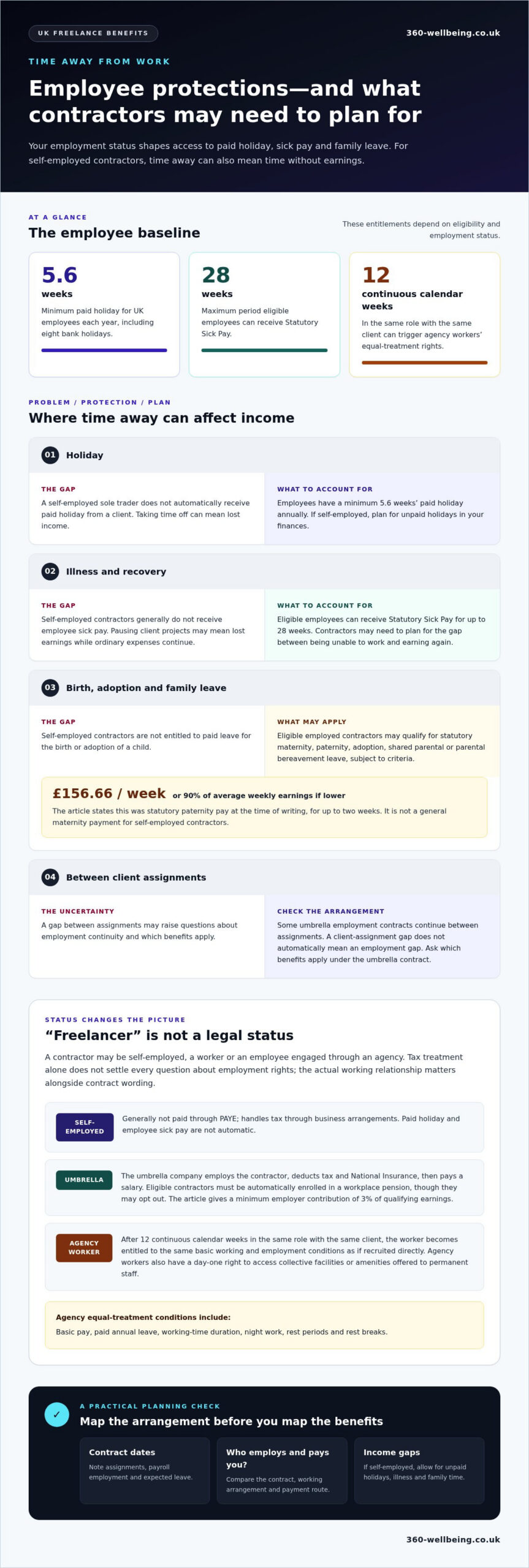
Employees in the UK are entitled to a minimum of 5.6 weeks’ paid holiday annually, according to GOV.UK. That statutory entitlement includes eight bank holidays. A self-employed sole trader doesn’t automatically receive paid holiday from a client, so time away from work can mean lost income. The practical difference is whether the arrangement provides employee rights or you’re running your own business.
Eligible employees can receive Statutory Sick Pay for up to 28 weeks. Self-employed contractors generally don’t receive employee sick pay when illness prevents them from working. That can leave a gap between being unable to take on work and receiving income again. For example, a sole trader who pauses client projects during recovery must plan for both lost earnings and ordinary expenses.
Self-employed contractors aren’t entitled to paid leave for the birth or adoption of a child. Eligible employed contractors may qualify for statutory maternity, paternity, adoption, shared parental or parental bereavement leave, subject to the relevant criteria. This distinction matters when comparing employment through payroll with working as a sole trader. The contract label alone doesn’t define every right: the actual working relationship and employment status matter too.
At the time of writing, statutory paternity pay was £156.66 per week, or 90% of average weekly earnings if lower, for up to two weeks. Eligible employees may qualify for statutory paternity pay, subject to the relevant criteria. These figures concern paternity pay, not a general maternity payment for self-employed contractors. If you’re planning time away for a new child, distinguish paid leave from any separate income support you may qualify for.
An umbrella company employs a contractor and pays a salary after deducting tax and National Insurance. Some umbrella employment contracts continue between assignments, which may preserve employment with the same umbrella company after a contract ends. Ask the umbrella company to explain which employment benefits apply. A gap between client assignments doesn’t automatically mean there’s a gap in employment.
Agency workers may have additional protections. Under the Agency Worker Regulations, a worker who completes 12 continuous calendar weeks in the same role with the same client becomes entitled to the same basic working and employment conditions as if recruited directly. These conditions include paid annual leave. Agency workers also have a day-one right to access collective facilities or amenities offered to the client’s permanent staff.
For a clearer picture, map your contract dates, payroll employment and any leave you expect to take. If you’re self-employed, set aside money for unpaid holidays, illness and family time. If you’re employed through an umbrella company or agency, understand which benefits depend on your status and qualifying criteria. Flexibility can suit your working pattern, but it doesn’t automatically include the holiday or sick pay employees receive.
How does employment status affect benefits for UK freelancers and contractors?
Your employment status determines which workplace rights and benefits apply. “Freelancer” describes a way of working, not a legal status. A contractor may be self-employed, a worker or an employee engaged through an agency. HMRC may also treat someone as self-employed for tax purposes even when their employment-law status differs. Tax treatment alone doesn’t settle every question about employment rights.
UK contractor rules changed on 6 April 2021, and employment status and tax arrangements may have changed as a result, according to HM Revenue & Customs. The working relationship matters alongside the contract wording. Bidding for work, quoting a price, and working without direct supervision can point towards self-employment. If the client controls the work more closely, the circumstances may indicate a different status. Status can affect rights and responsibilities, including access to employee benefits.
How you’re paid is another useful distinction. An umbrella company employs a contractor, deducts tax and National Insurance, then pays a salary. An agency that employs someone through its payroll makes employment-related deductions before paying their salary. A self-employed person isn’t paid through PAYE and generally handles tax through their business arrangements. For a limited company contractor, tax and National Insurance may involve both PAYE and Self Assessment.
Workplace pensions can also depend on employment arrangements. Eligible umbrella-employed contractors must be automatically enrolled, although they may opt out. Both the umbrella company and contractor contribute. At the time of writing, the minimum employer contribution for an eligible umbrella-employed contractor’s workplace pension was 3% of qualifying earnings, according to The Pensions Regulator. This is distinct from a self-employed person making personal contributions to their own pension plan.
Agency workers have a separate route to equal treatment. Under the Agency Worker Regulations 2010, agency workers in the UK who work in the same role for the same client for 12 continuous calendar weeks become entitled to the same basic working and employment conditions as if recruited directly by the client, according to UK legislation. These conditions include basic pay, paid annual leave, working-time duration, night work, rest periods and rest breaks.
To understand your position, compare the contract, the actual working arrangement, and who employs and pays you. For example, an agency worker and a sole trader may perform similar work for one client, yet have different routes to benefits. Getting status wrong can mean unpaid tax, penalties, or lost benefit entitlements. If wellbeing support would complement your existing arrangements, explore practical wellbeing support as part of your wider planning.
What benefits packages do UK contractor memberships, unions, or professional associations offer?
Membership benefits can complement statutory rights, but they don’t turn self-employment into employment. A professional association, trade union or contractor network may offer a different mix of support. A benefits package for freelance contractors in the UK can complement membership support, not replace personal financial planning. Compare the package with the risks you face, such as a disputed invoice, a skills gap or limited professional contacts.
Professional associations often focus on a particular occupation or sector. Member resources may include technical guidance, training, professional development and opportunities to connect with peers. A freelance designer, for example, might value industry events and learning resources, while a construction contractor may prioritise trade-specific guidance. Choose a membership related to your work so its resources support the professional decisions you make.
Some memberships provide advice or practical resources for running a business, covering areas such as contracts, invoicing, tax administration or client disputes. General guidance isn’t the same as individual legal or accountancy advice. If a package offers support for a particular issue, find out how members access it and what it covers before relying on it during a disagreement.
Unions may represent workers’ interests and provide access to workplace advice or collective support. Their relevance depends on your working arrangement and needs. A genuinely self-employed sole trader may have different priorities from an agency worker raising concerns about treatment at a client’s workplace. Consider whether you need individual advice, representation, peer support or help understanding workplace conditions.
Membership packages may also include discounts, events or specialist resources. These are most useful when they fit your routine and working costs. A contractor who attends industry events, for instance, may value networking more than a discount they rarely use. Check whether benefits apply to your membership category and whether using them involves separate terms or an additional charge.
When shaping a benefits package for UK freelance contractors, list the support you’d actually use and compare it with membership benefits. Consider professional guidance, training, networking, business resources and relevant representation. Also think about whether the membership remains useful between contracts. Membership can add practical support, but it doesn’t automatically provide paid holiday, sick pay or pension contributions.
Practical support can also come in other forms. Some UK umbrella companies and workplace wellbeing providers like 360 Wellbeing offer benefits such as private healthcare, mental health resources, gym memberships and perk boxes. Compare their relevance with your everyday needs.
360 Wellbeing: 24/7 Virtual GP
360 Wellbeing offers a 24/7 Virtual GP, alongside support that can complement the protections attached to your employment status. If you work independently or manage a small business, access to wellbeing services can form part of a broader approach to looking after your health while working.
Its support includes Mental Health Support, Physiotherapy and 360 Rewards, bringing physical, mental and everyday wellbeing into view. These services don’t replace statutory employment rights or income planning, but they can add practical support beyond the benefits connected to a contract or payroll arrangement.
If you’re considering wellbeing support as part of your wider benefits approach, visit 360-wellbeing.co.uk to explore 360 Wellbeing.
Build support around the way you work
Your next step is to shape support around the realities of self-employment: the work you do, the income patterns you manage and the kind of wellbeing help you value. A benefits package for freelance contractors in the UK can combine personal financial planning, relevant professional membership and practical health support. The balance will look different for every contractor, so focus on what would make your working life more sustainable.
Wellbeing deserves a place in that plan, alongside the protections and provisions connected to your employment status. 360 Wellbeing offers a 24/7 Virtual GP, Mental Health Support and 360 Rewards, bringing health and everyday support into the wider picture.
Contact 360 Wellbeing about your options and explore how wellbeing support could fit your needs. A thoughtful plan can help you approach freelance work with greater clarity and confidence.
Frequently Asked Questions
What benefits are freelance contractors in the UK entitled to by law?
Legal entitlements depend on whether you’re an employee, worker or genuinely self-employed; “freelancer” alone doesn’t determine your rights. A self-employed person generally doesn’t receive employee benefits, but may still have health and safety protection and, in some cases, protection against discrimination. You can also be employed and self-employed at the same time, so rights from an employed role may apply alongside your freelance work.
What should UK freelancers include in a personal benefits budget or package?
Plan for predictable costs as well as interruptions to your income. Set aside money for tax, pension contributions, business expenses and periods without paid work, then consider how you’ll cover time off for illness or family responsibilities. You could also budget for professional development and wellbeing support that suits your work. Review your plan when your income, workload or working arrangements change, and keep tax funds separate from everyday spending.


